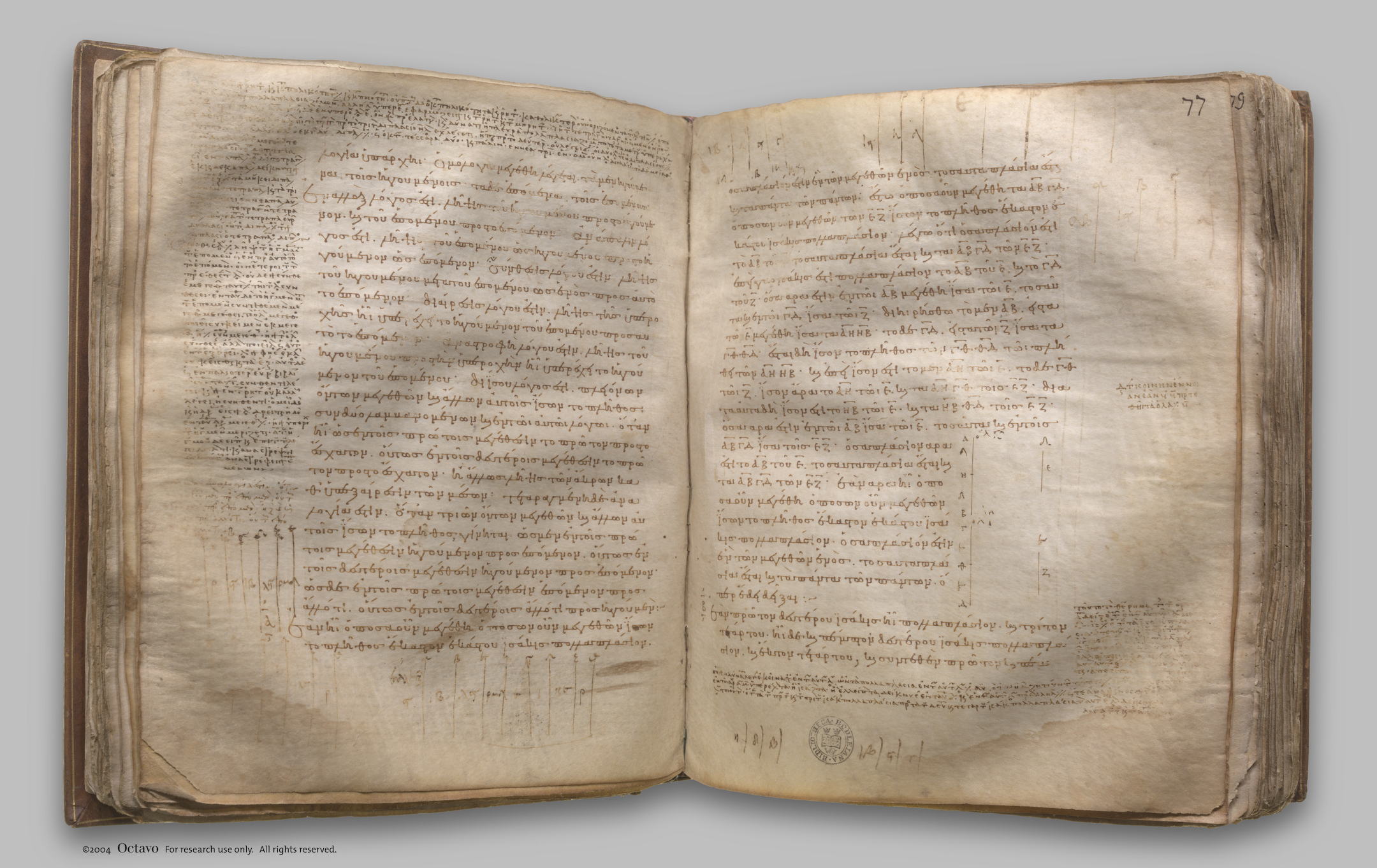
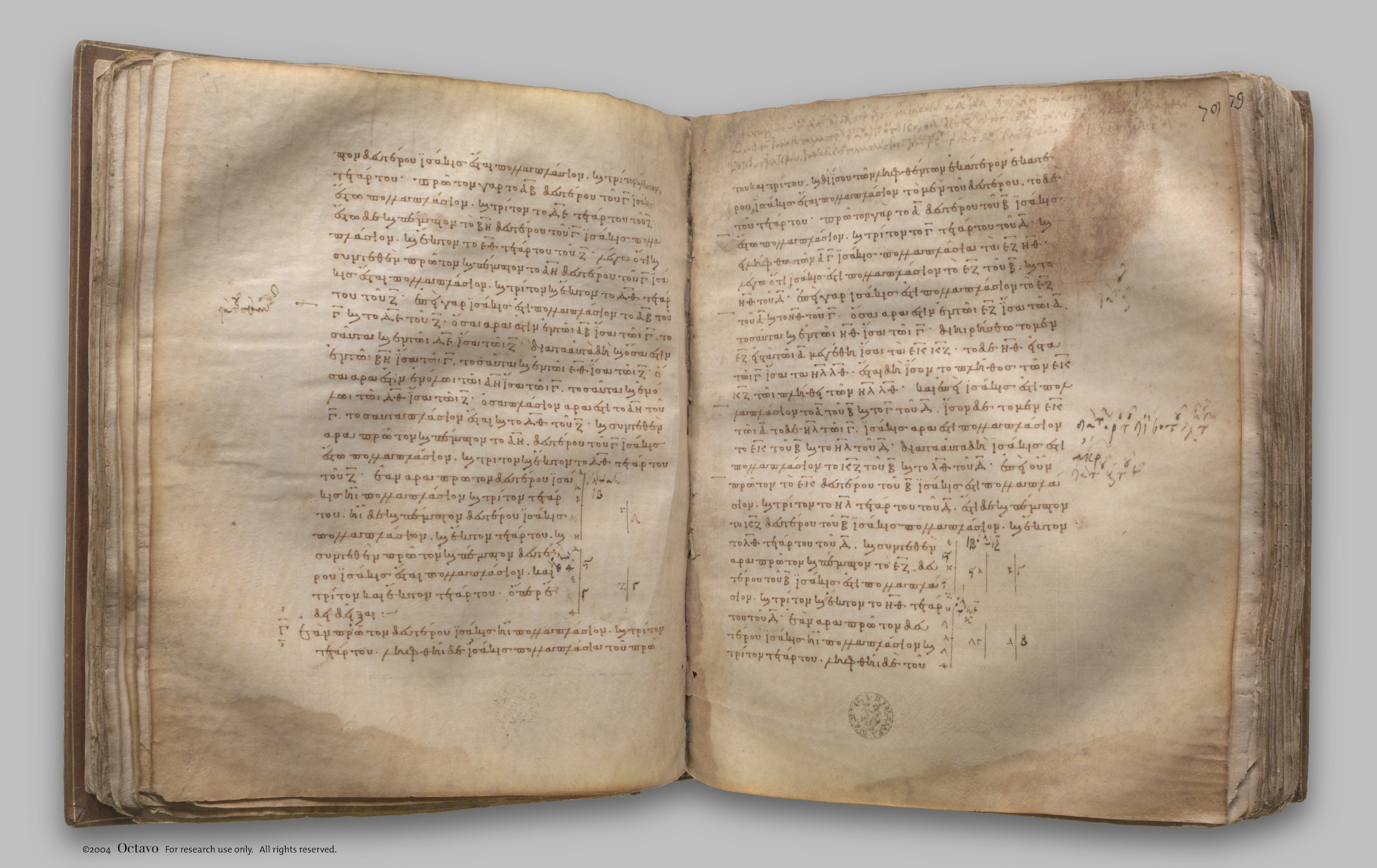
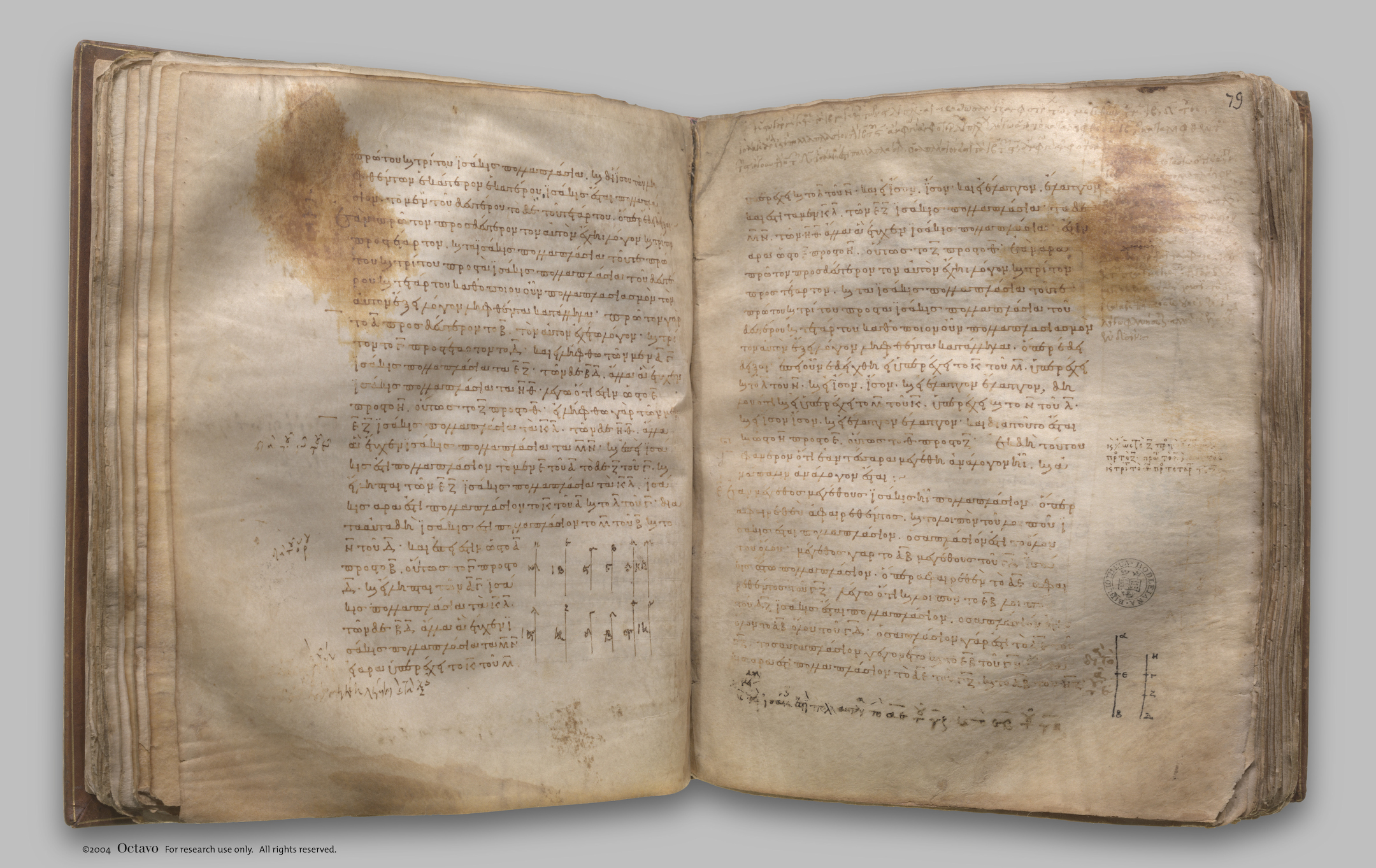
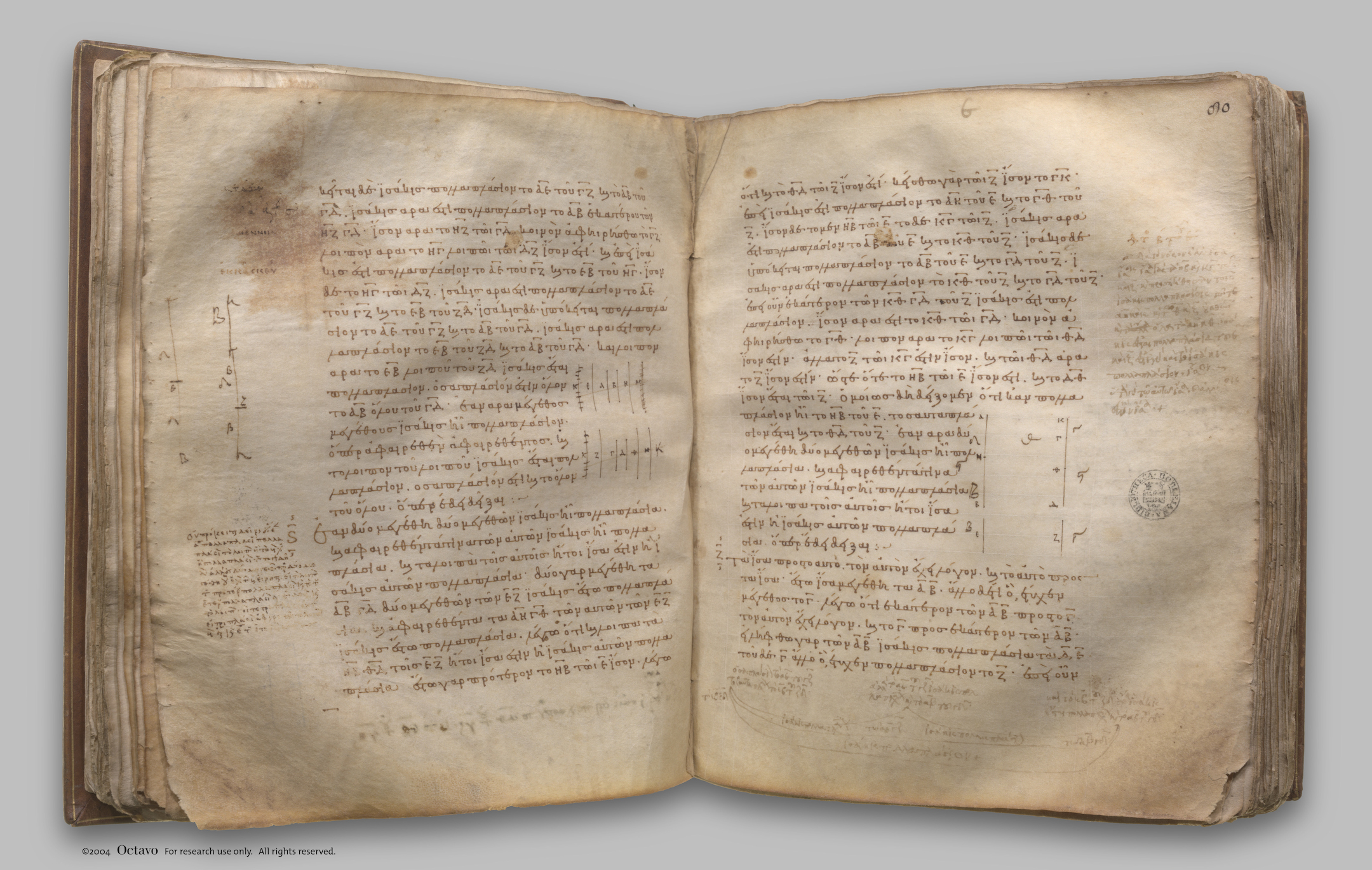



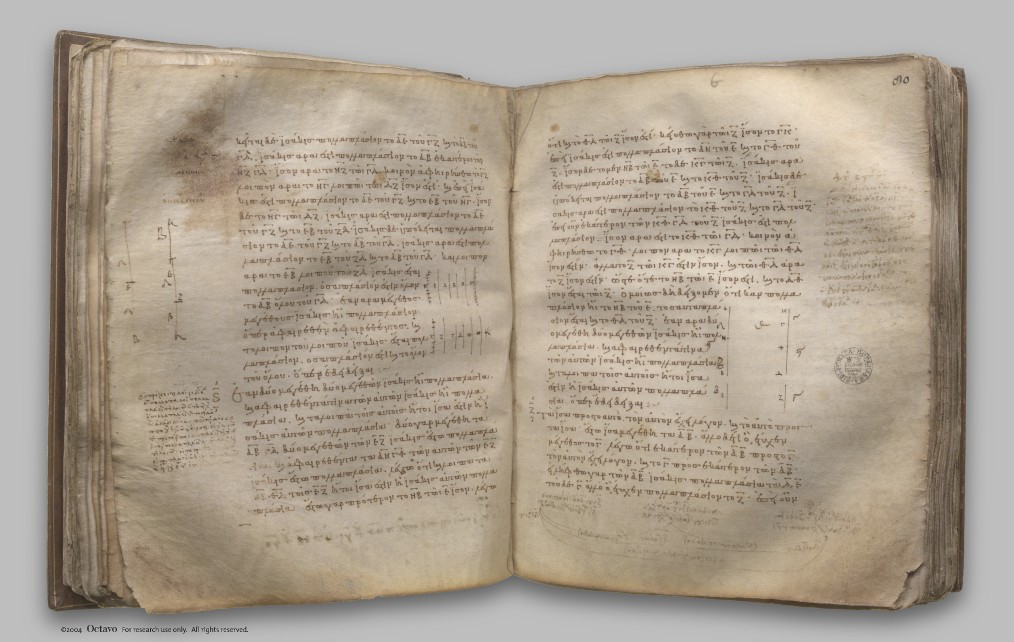
Proposition 5.7
You may also enter Greek text in the search box, e.g. cut and paste from the Greek text on this site.
| elem.5.1 | If there be any number of magnitudes whatever which are, respectively, equimultiples of any magnitudes equal in multitude, then, whatever multiple one of the magnitudes is of one, that multiple also will all be of all. | f. 081 digilib |
| elem.5.2 | If a first magnitude be the same multiple of a second that a third is of a fourth, and a fifth also be the same multiple of the second that a sixth is of the fourth, the sum of the first and fifth will also be the same multiple of the second that the sum of the third and sixth is of the fourth. | f. 081 digilib |
| elem.5.3 | If a first magnitude be the same multiple of a second that a third is of a fourth, and if equimultiples be taken of the first and third, then also ex aequali the magnitudes taken will be equimultiples respectively, the one of the second and the other of the fourth. | f. 082 digilib |
| elem.5.4 | If a first magnitude have to a second the same ratio as a third to a fourth, any equimultiples whatever of the first and third will also have the same ratio to any equimultiples whatever of the second and fourth respectively, taken in corresponding order. | f. 083 digilib |
| elem.5.5 | If a magnitude be the same multiple of a magnitude that a part subtracted is of a part subtracted, the remainder will also be the same multiple of the remainder that the whole is of the whole. | f. 083 digilib |
| elem.5.6 | If two magnitudes be equimultiples of two magnitudes, and any magnitudes subtracted from them be equimultiples of the same, the remainders also are either equal to the same or equimultiples of them. | f. 084 digilib |
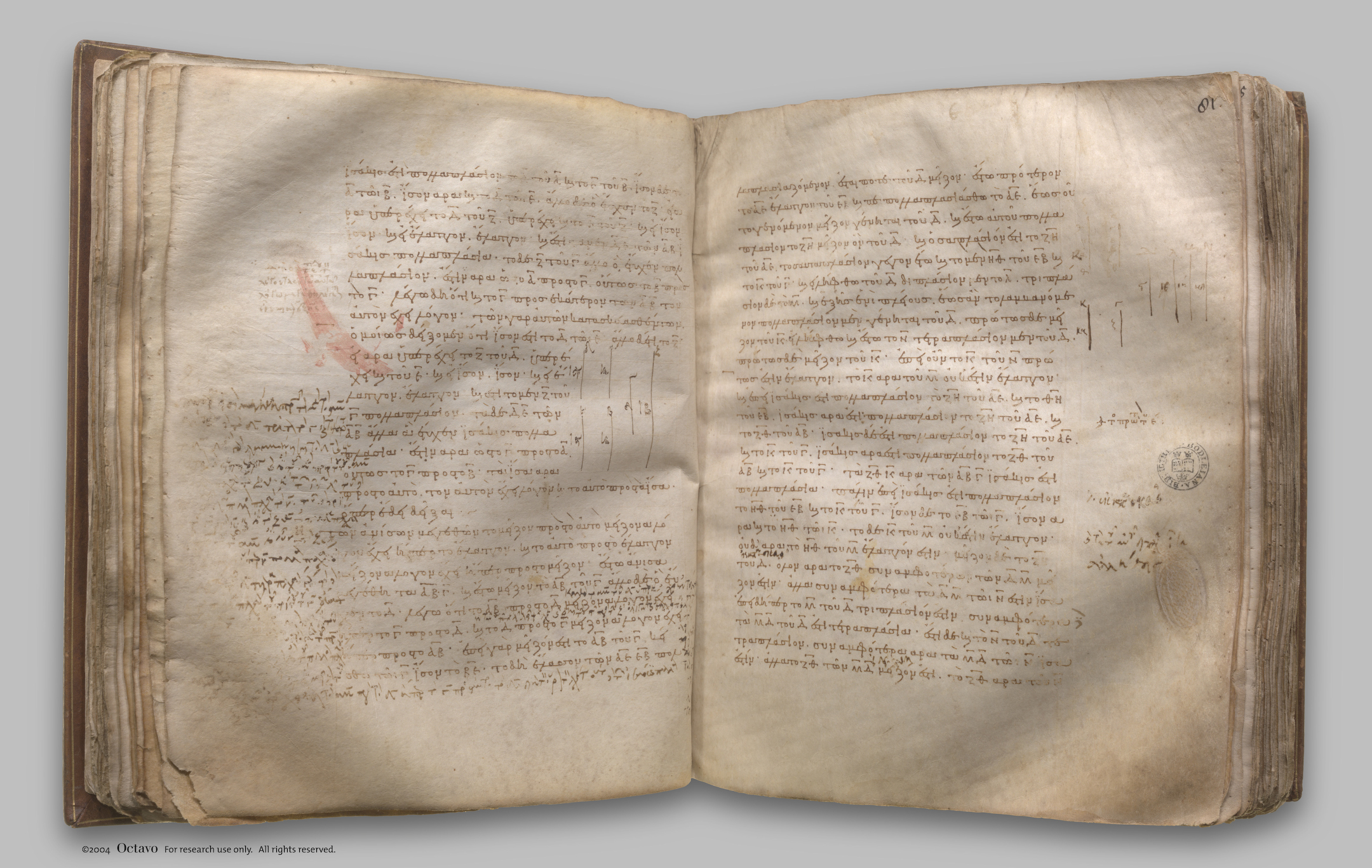
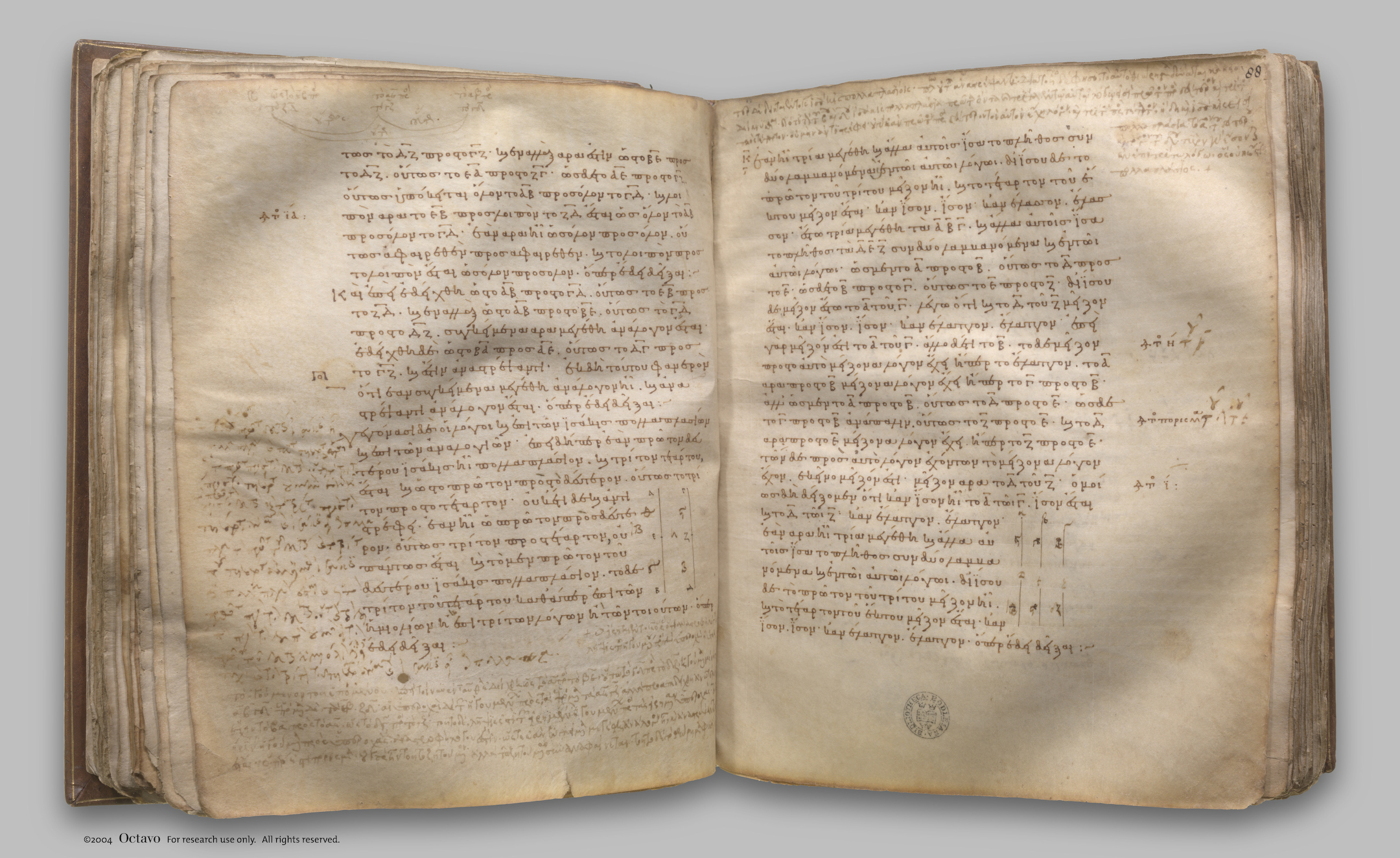
| elem.5.7 | Equal magnitudes have to the same the same ratio, as also has the same to equal magnitudes. | f. 084 digilib |
| elem.5.8 | Of unequal magnitudes, the greater has to the same a greater ratio than the less has; and the same has to the less a greater ratio than it has to the greater. | f. 085 digilib |
| elem.5.9 | Magnitudes which have the same ratio to the same are equal to one another; and magnitudes to which the same has the same ratio are equal. | f. 086 digilib |
| elem.5.10 | Of magnitudes which have a ratio to the same, that which has a greater ratio is greater; and that to which the same has a greater ratio is less. | f. 086 digilib |
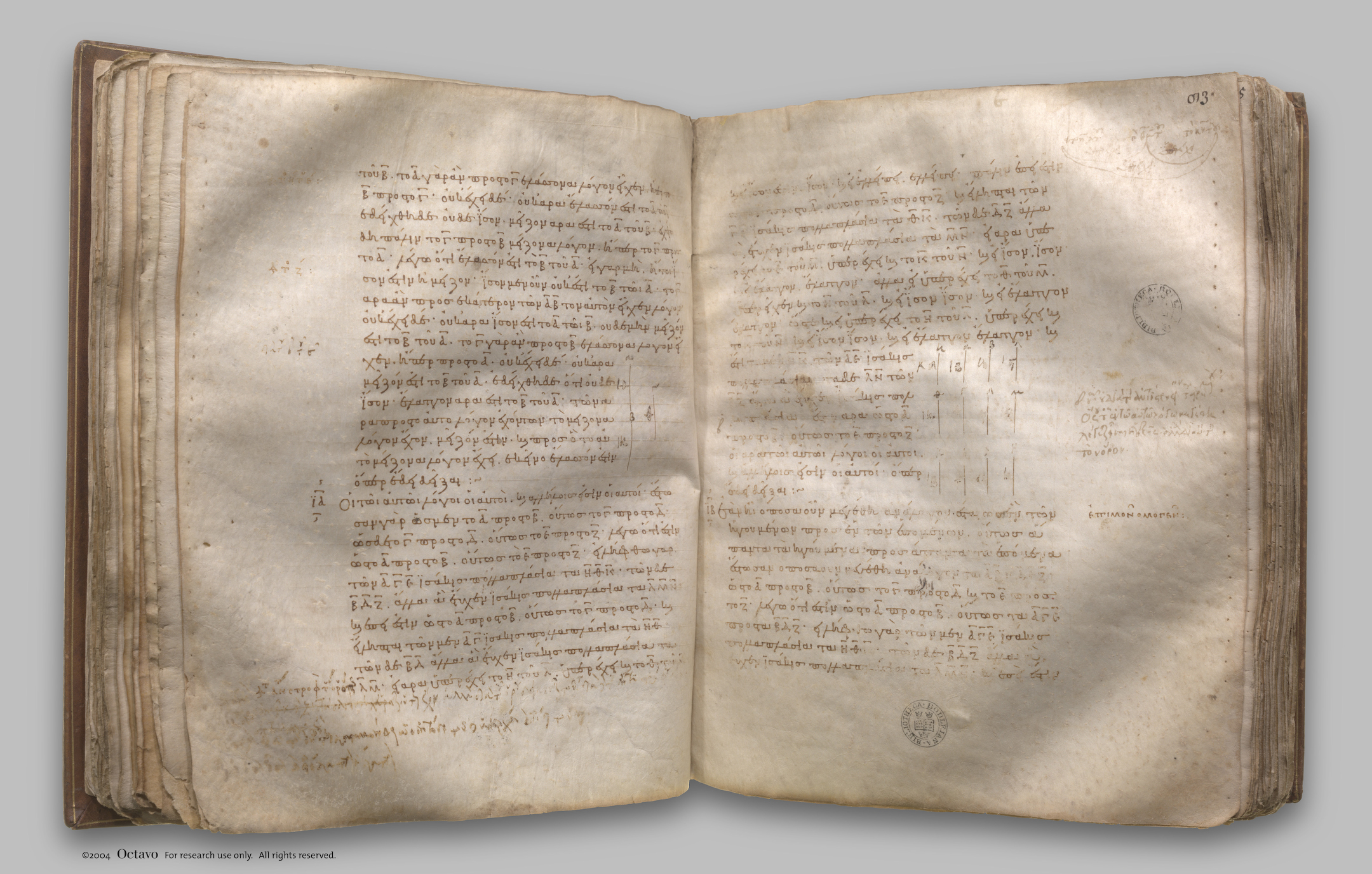
| elem.5.11 | Ratios which are the same with the same ratio are also the same with one another. | f. 087 digilib |
| elem.5.12 | If any number of magnitudes be proportional, as one of the antecedents is to one of the consequents, so will all the antecedents be to all the consequents. | f. 087 digilib |
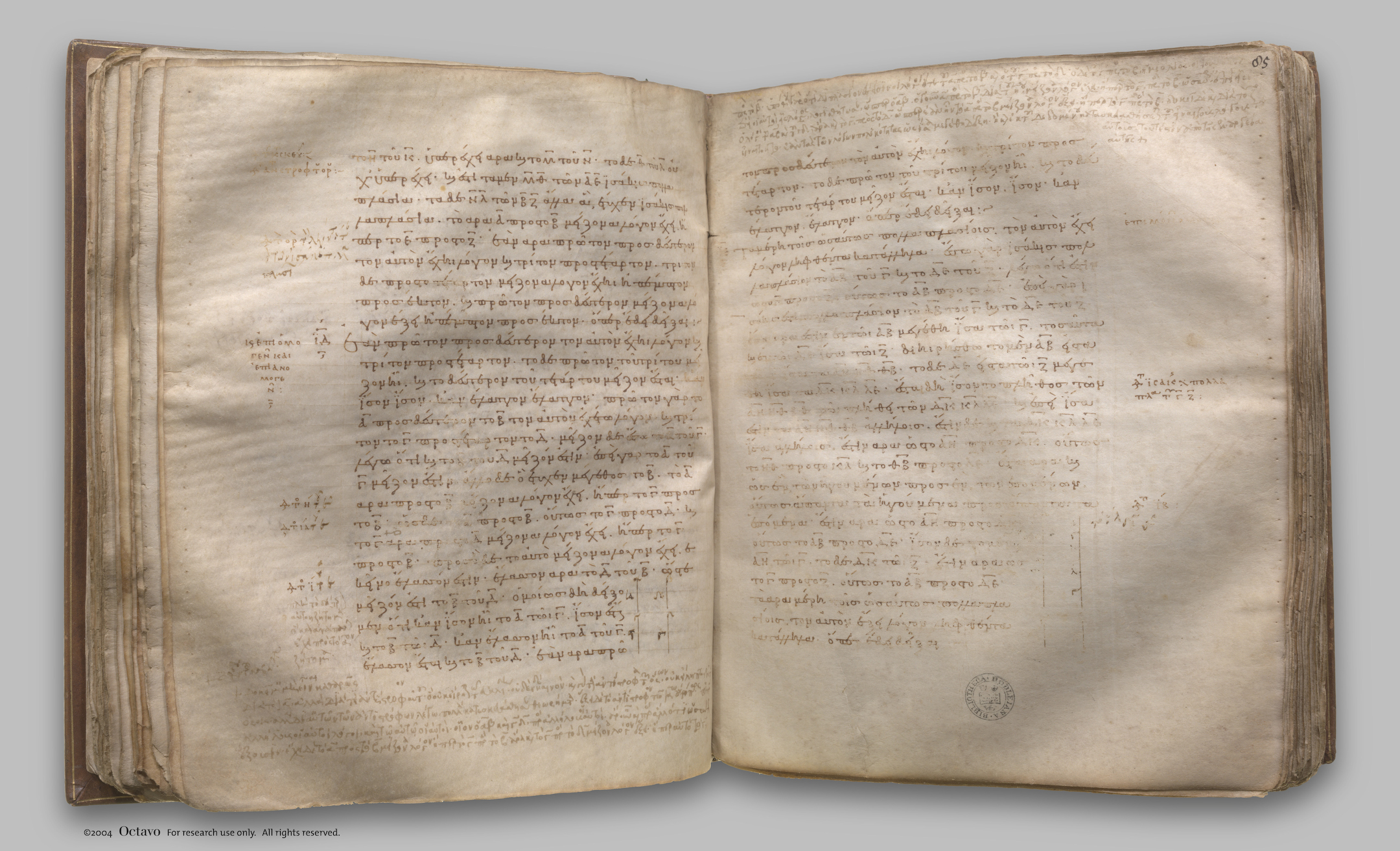
| elem.5.13 | If a first magnitude have to a second the same ratio as a third to a fourth, and the third have to the fourth a greater ratio than a fifth has to a sixth, the first will also have to the second a greater ratio than the fifth to the sixth. | f. 088 digilib |
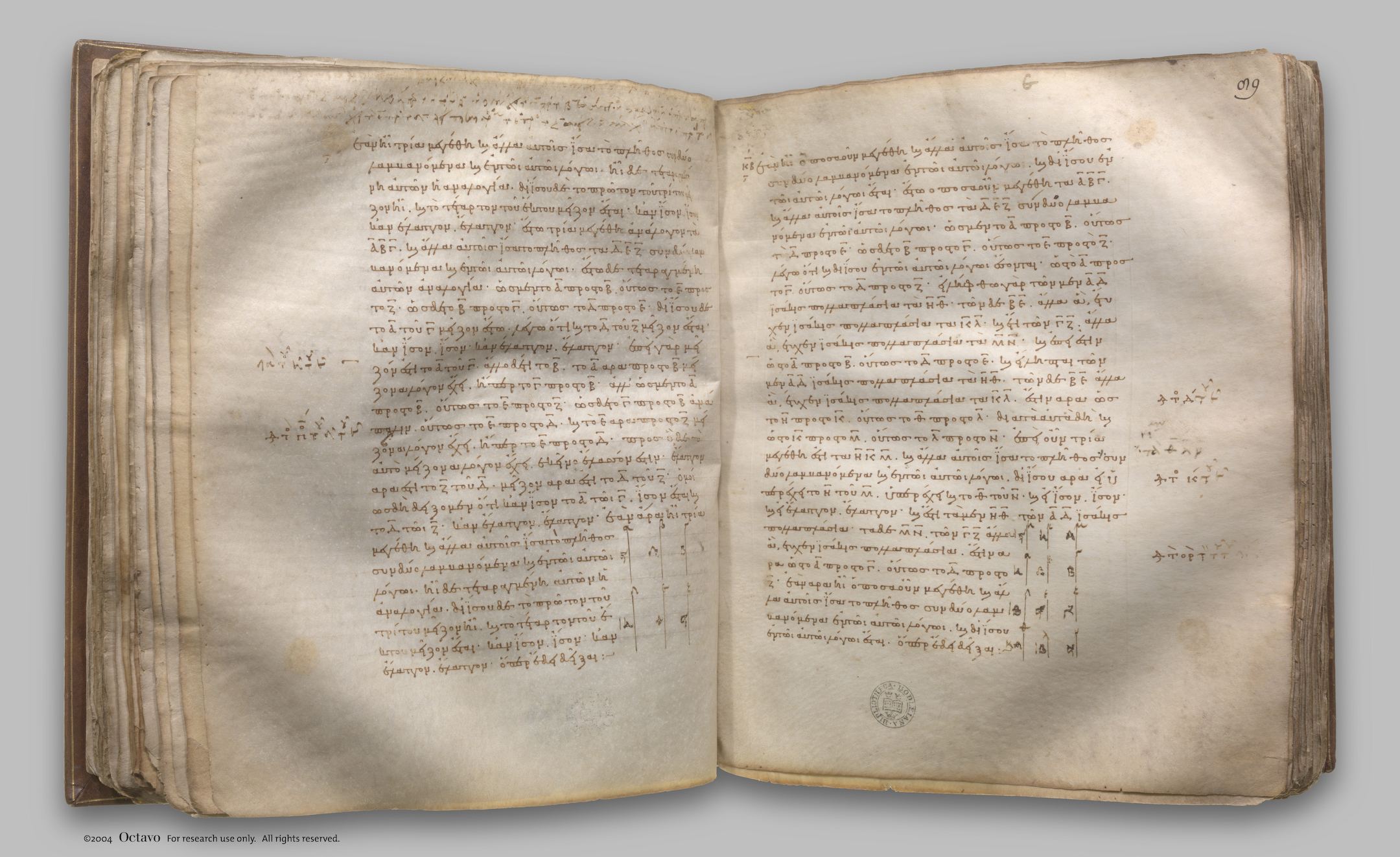
| elem.5.14 | If a first magnitude have to a second the same ratio as a third has to a fourth, and the first be greater than the third, the second will also be greater than the fourth; if equal, equal; and if less, less. | f. 089 digilib |
| elem.5.15 | Parts have the same ratio as the same multiples of them taken in corresponding order. | f. 089 digilib |
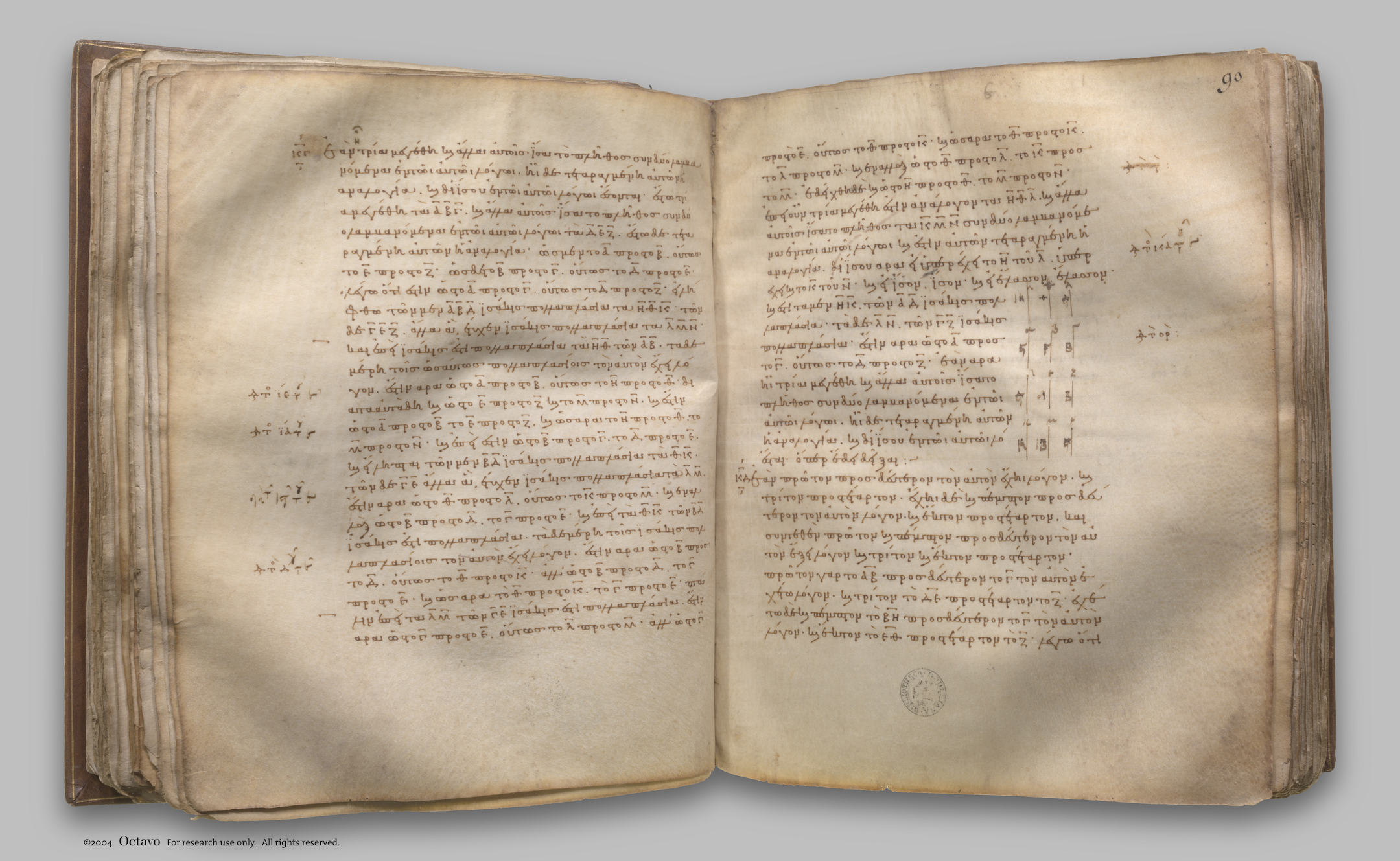
| elem.5.16 | If four magnitudes be proportional, they will also be proportional alternately. | f. 090 digilib |
| elem.5.17 | If magnitudes be proportional componendo, they will also be proportional separando. | f. 090 digilib |
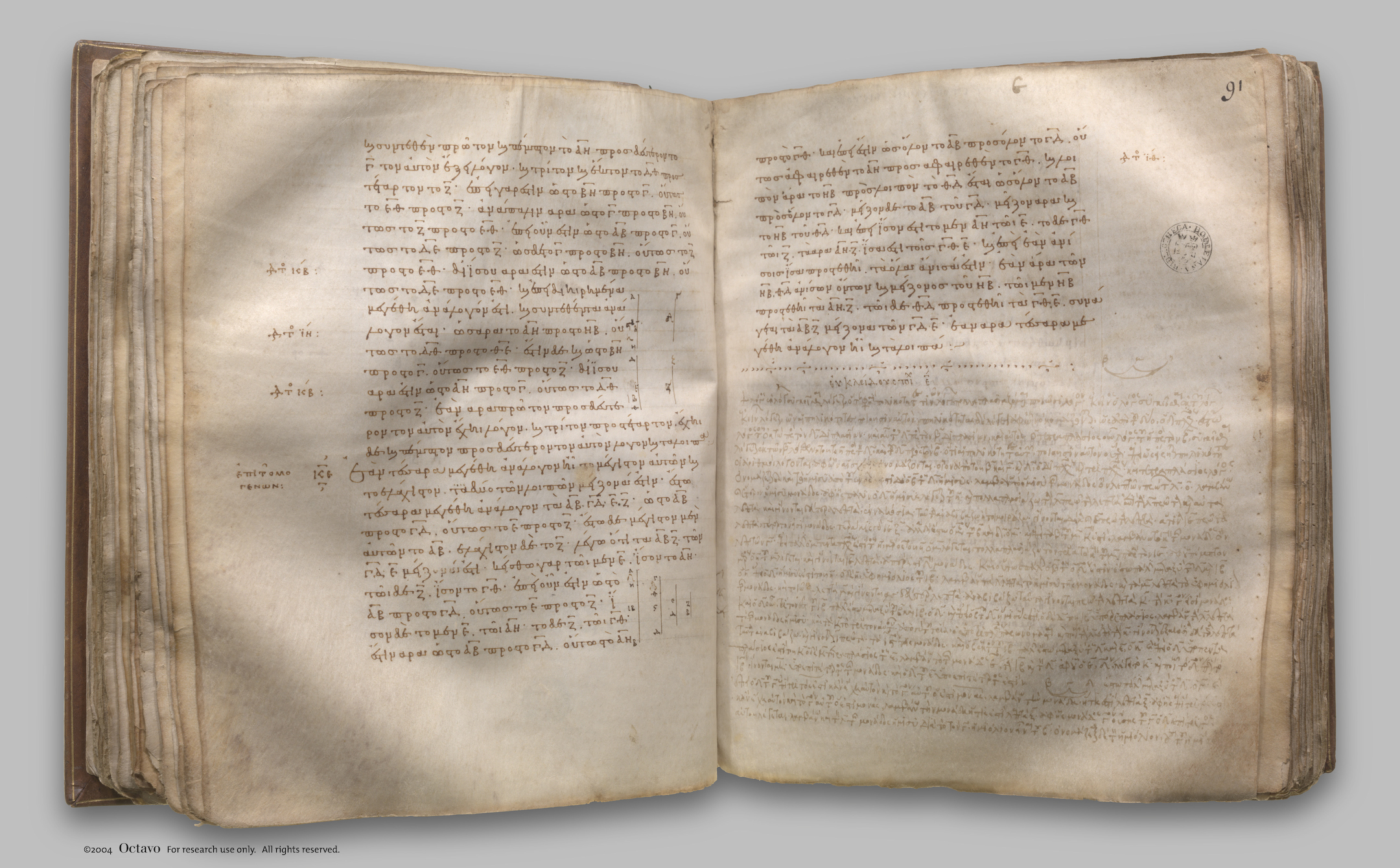
| elem.5.18 | If magnitudes be proportional separando, they will also be proportional componendo. | f. 091 digilib |
| elem.5.19 | If, as a whole is to a whole, so is a part subtracted to a part subtracted, the remainder will also be to the remainder as whole to whole. | f. 091 digilib |
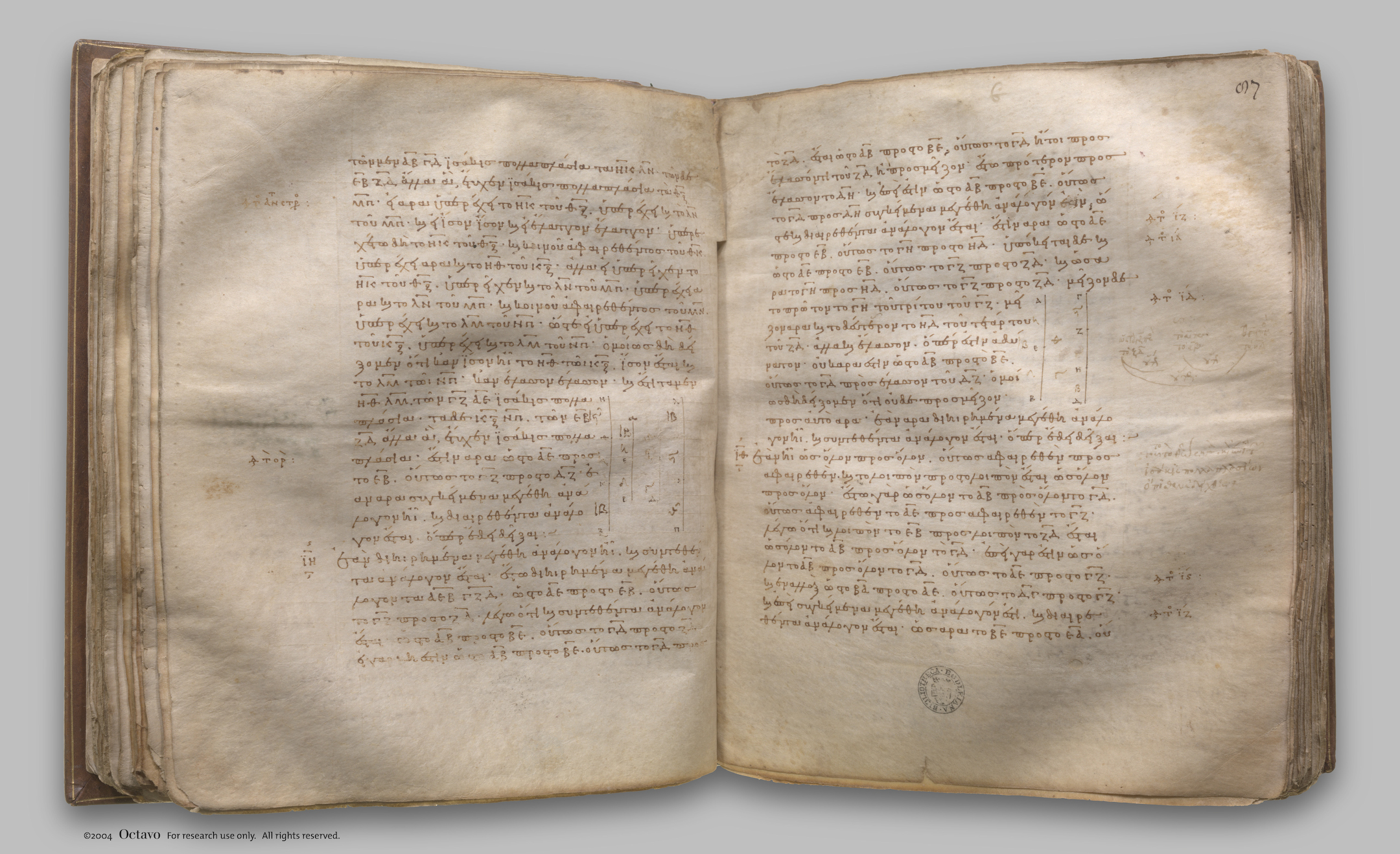
| elem.5.20 | If there be three magnitudes, and others equal to them in multitude, which taken two and two are in the same ratio, and if ex aequali the first be greater than the third, the fourth will also be greater than the sixth; if equal, equal; and, if less, less. | f. 092 digilib |
| elem.5.21 | If there be three magnitudes, and others equal to them in multitude, which taken two and two together are in the same ratio, and the proportion of them be perturbed, then, if ex aequali the first magnitude is greater than the third, the fourth will also be greater than the sixth; if equal, equal; and if less, less. | f. 093 digilib |
| elem.5.22 | If there be any number of magnitudes whatever, and others equal to them in multitude, which taken two and two together are in the same ratio, they will also be in the same ratio ex aequali. | f. 093 digilib |
| elem.5.23 | If there be three magnitudes, and others equal to them in multitude, which taken two and two together are in the same ratio, and the proportion of them be perturbed, they will also be in the same ratio ex aequali. | f. 094 digilib |
| elem.5.24 | If a first magnitude have to a second the same ratio as a third has to a fourth, and also a fifth have to the second the same ratio as a sixth to the fourth, the first and fifth added together will have to the second the same ratio as the third and sixth have to the fourth. | f. 094 digilib |
| elem.5.25 | If four magnitudes be proportional, the greatest and the least are greater than the remaining two. | f. 095 digilib |
Clay Mathematics Institute Historical Archive
Published May 8, 2008. Copyright 2008, Clay Mathematics Institute
Proposition 5.7
You may also enter Greek text in the search box, e.g. cut and paste from the Greek text on this site.