
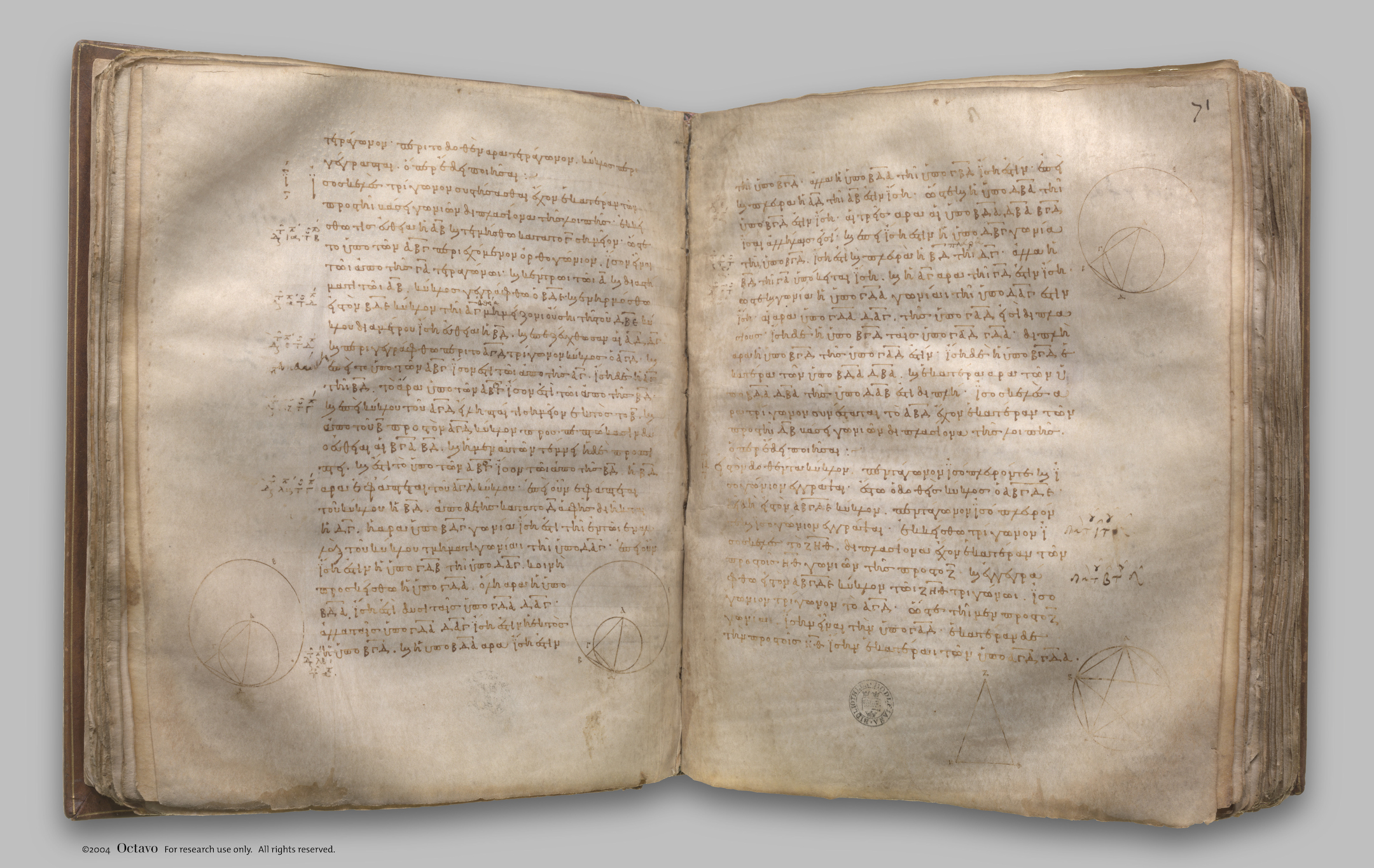
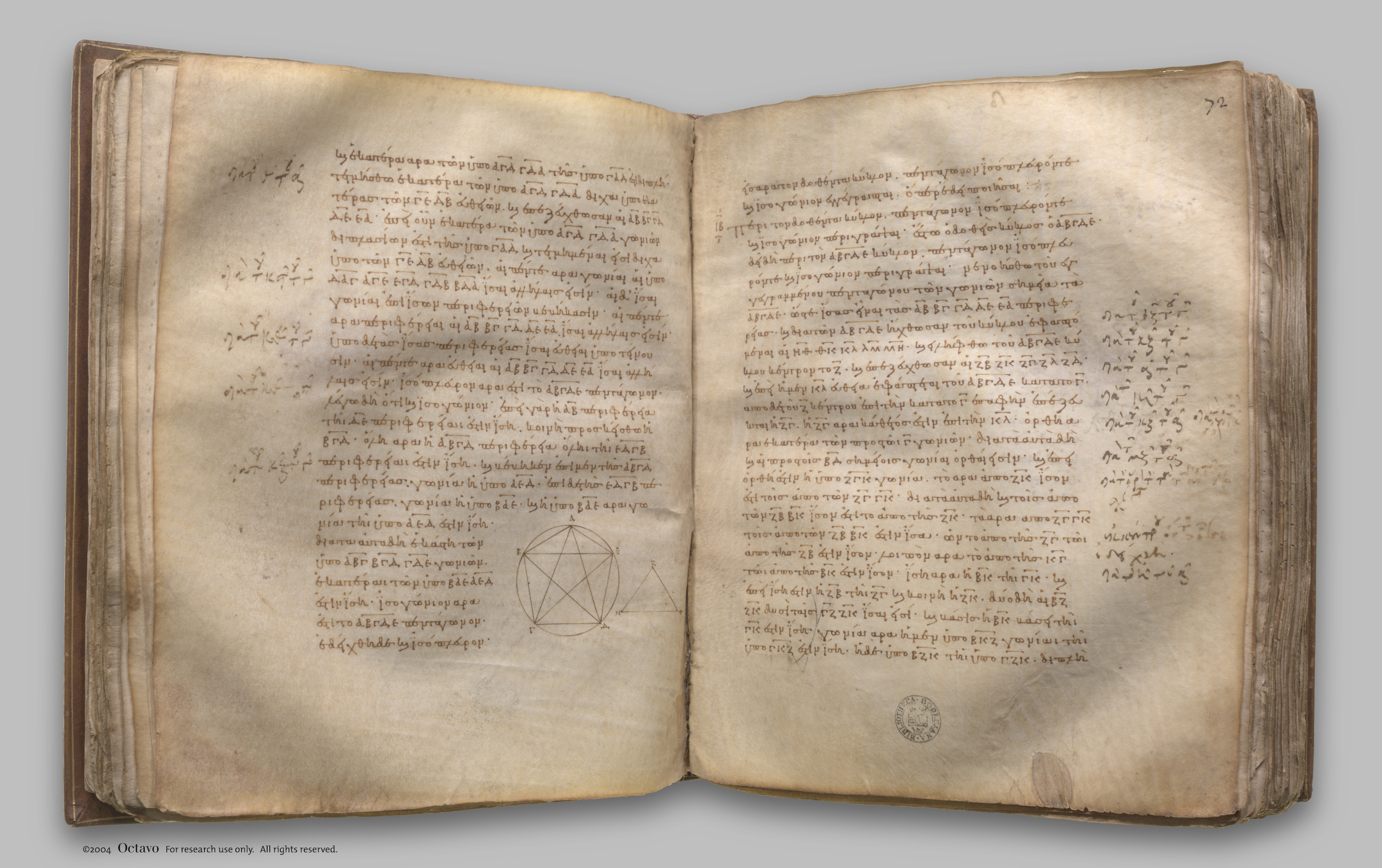
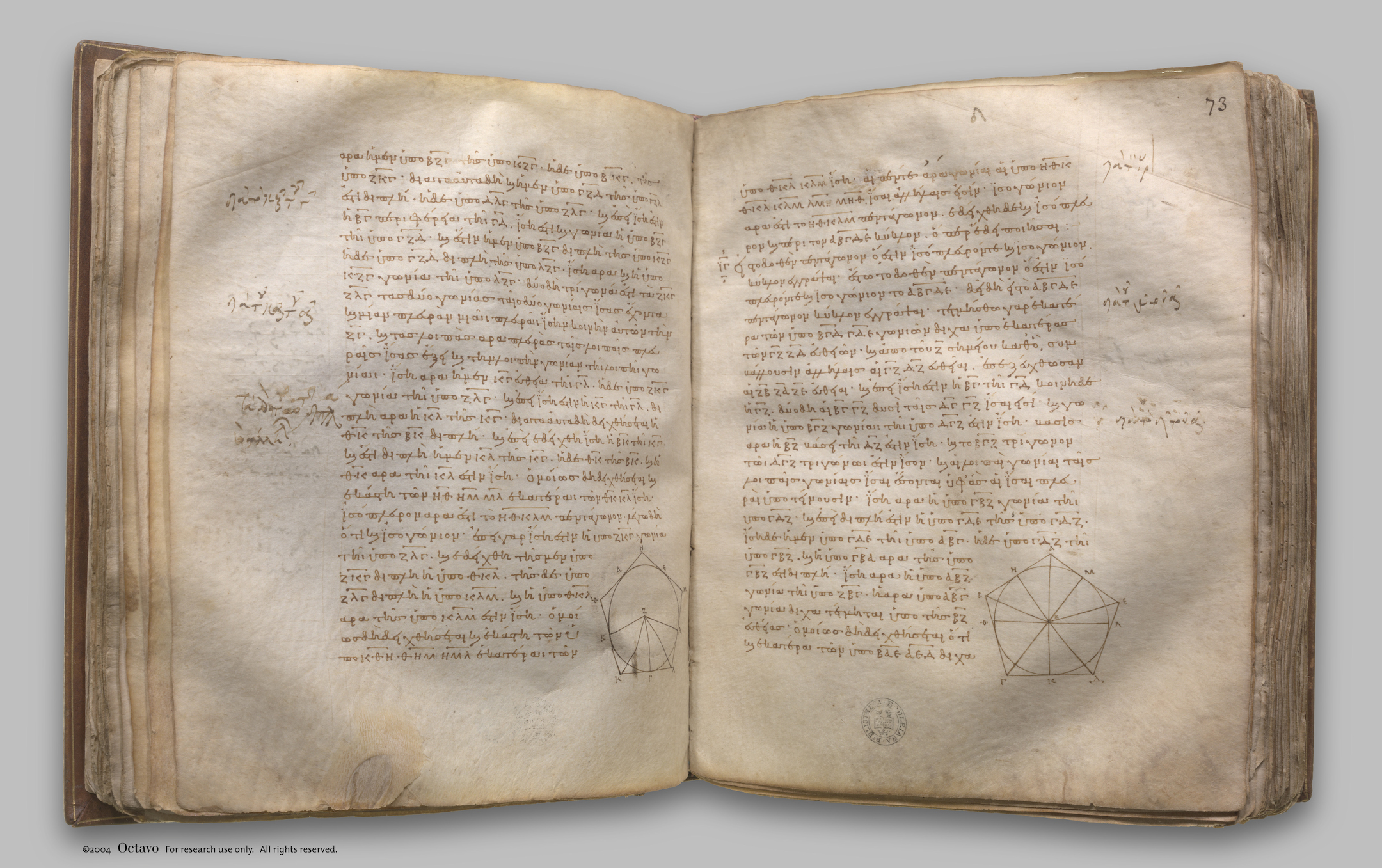
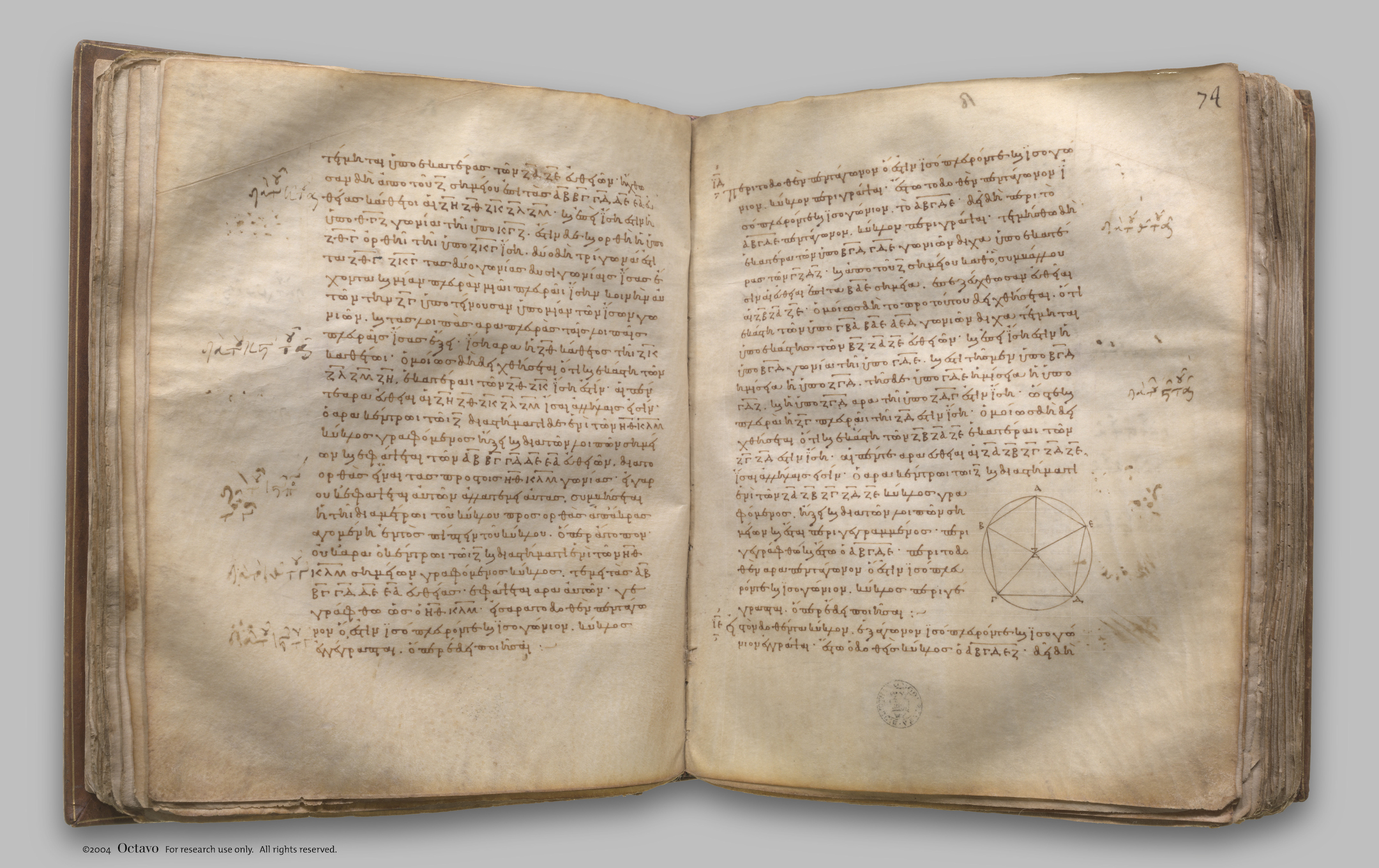
Proposition 4.2
You may also enter Greek text in the search box, e.g. cut and paste from the Greek text on this site.
| elem.4.1 | Into a given circle to fit a straight line equal to a given straight line which is not greater than the diameter of the circle. | f. 070 digilib |
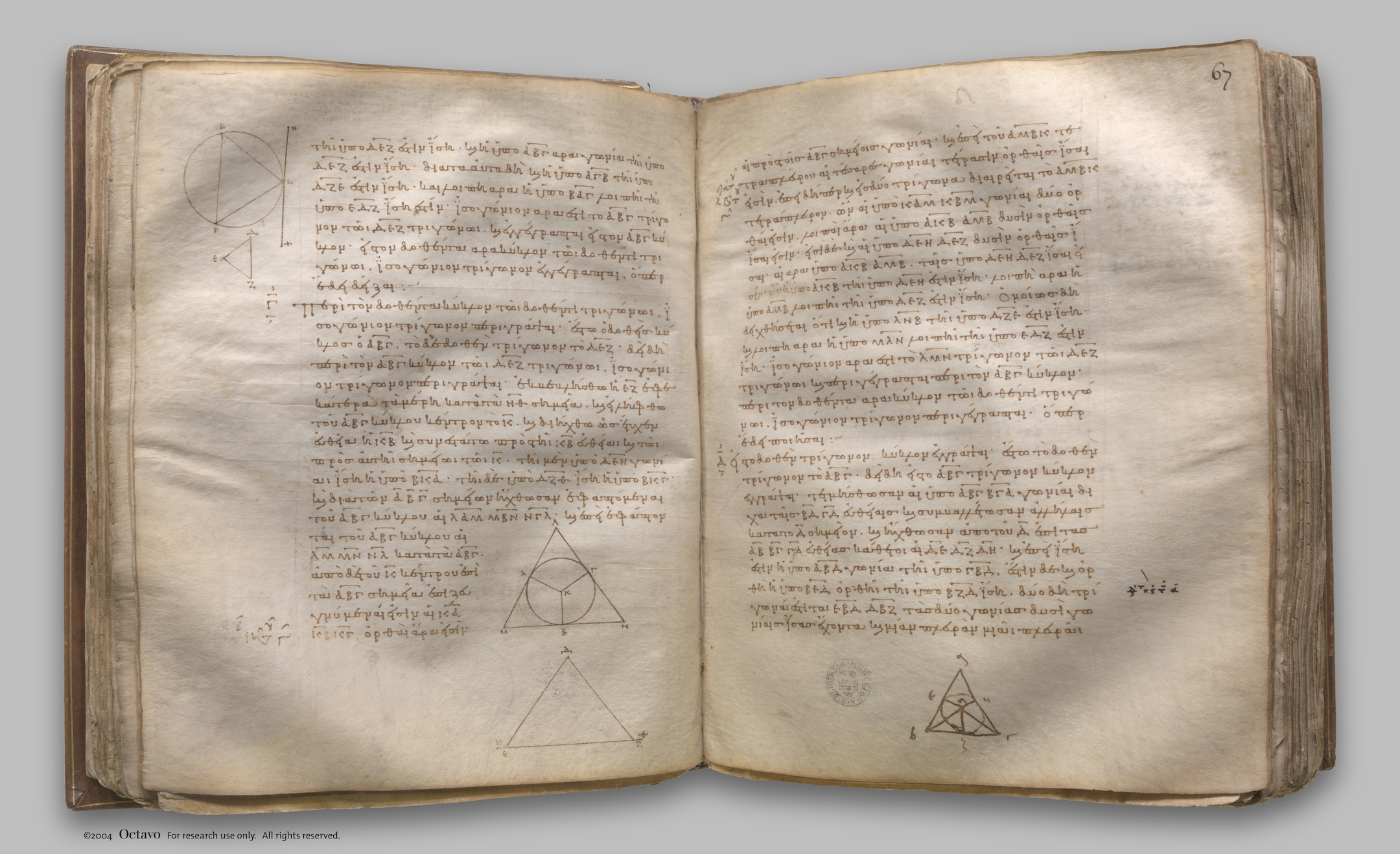
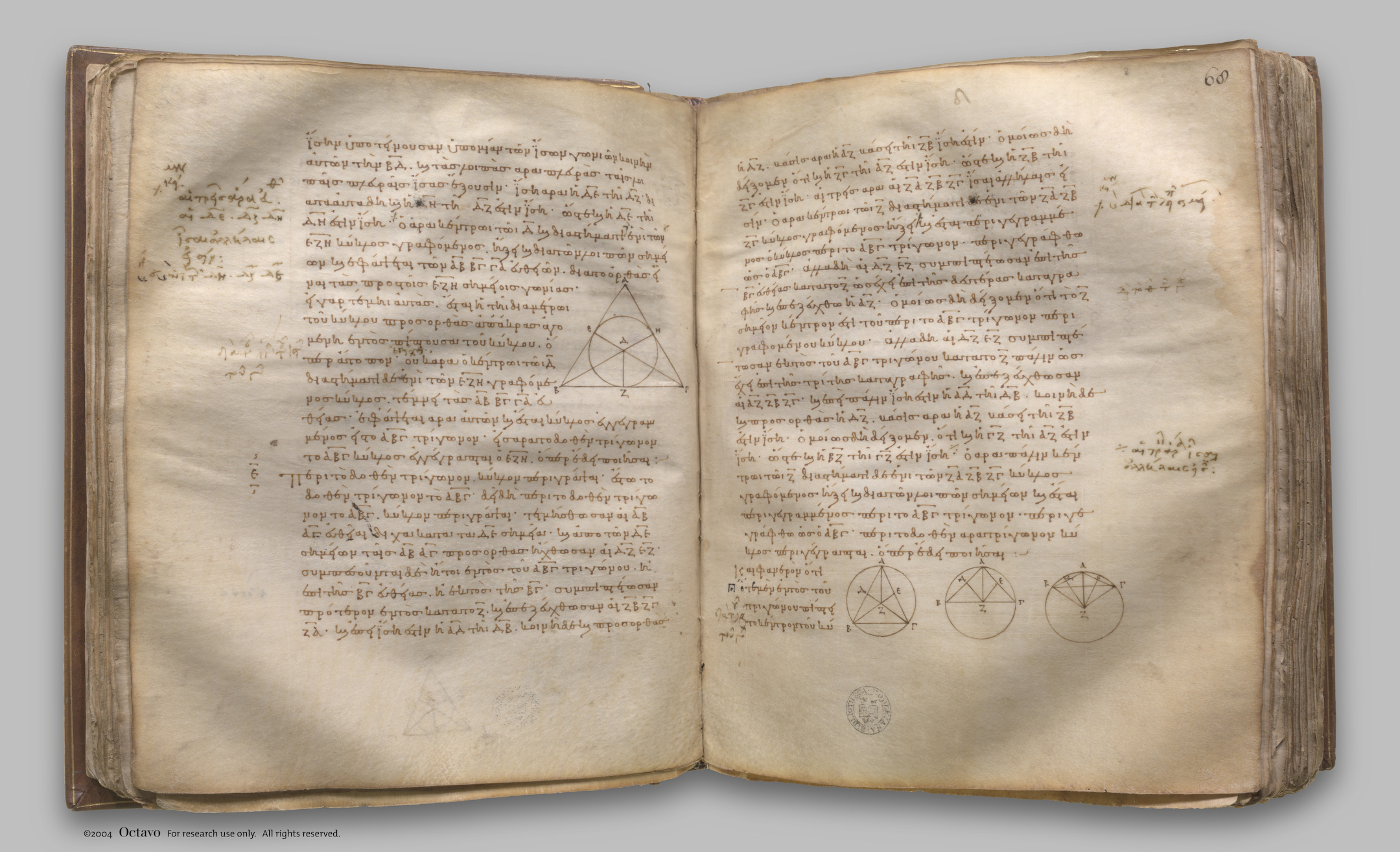
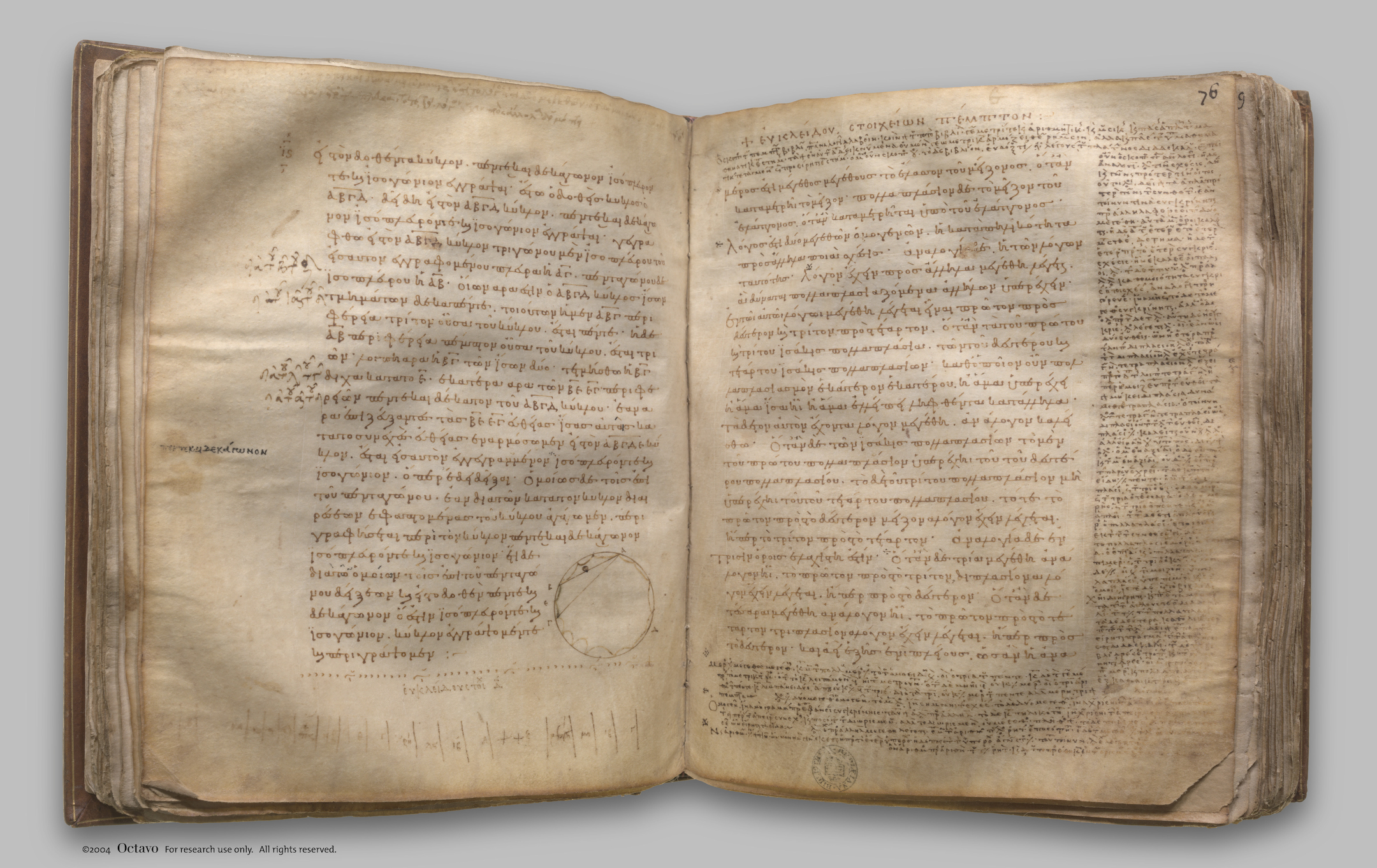
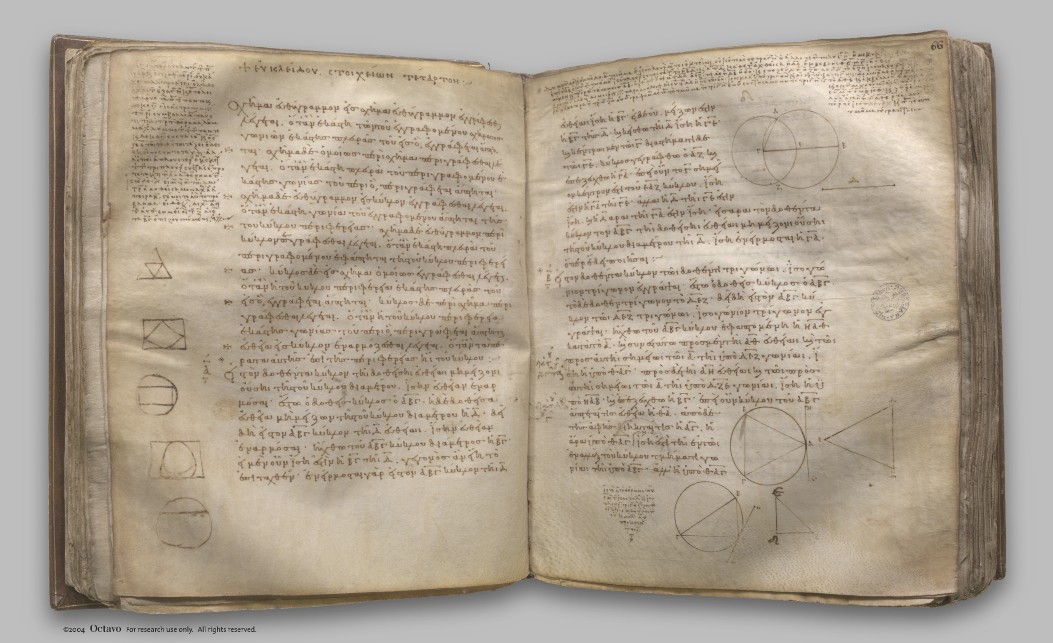
| elem.4.2 | In a given circle to inscribe a triangle equiangular with a given triangle. | f. 070 digilib |
| elem.4.3 | About a given circle to circumscribe a triangle equiangular with a given triangle. | f. 071 digilib |
| elem.4.4 | In a given triangle to inscribe a circle. | f. 071 digilib |
| elem.4.5 | About a given triangle to circumscribe a circle. | f. 072 digilib |
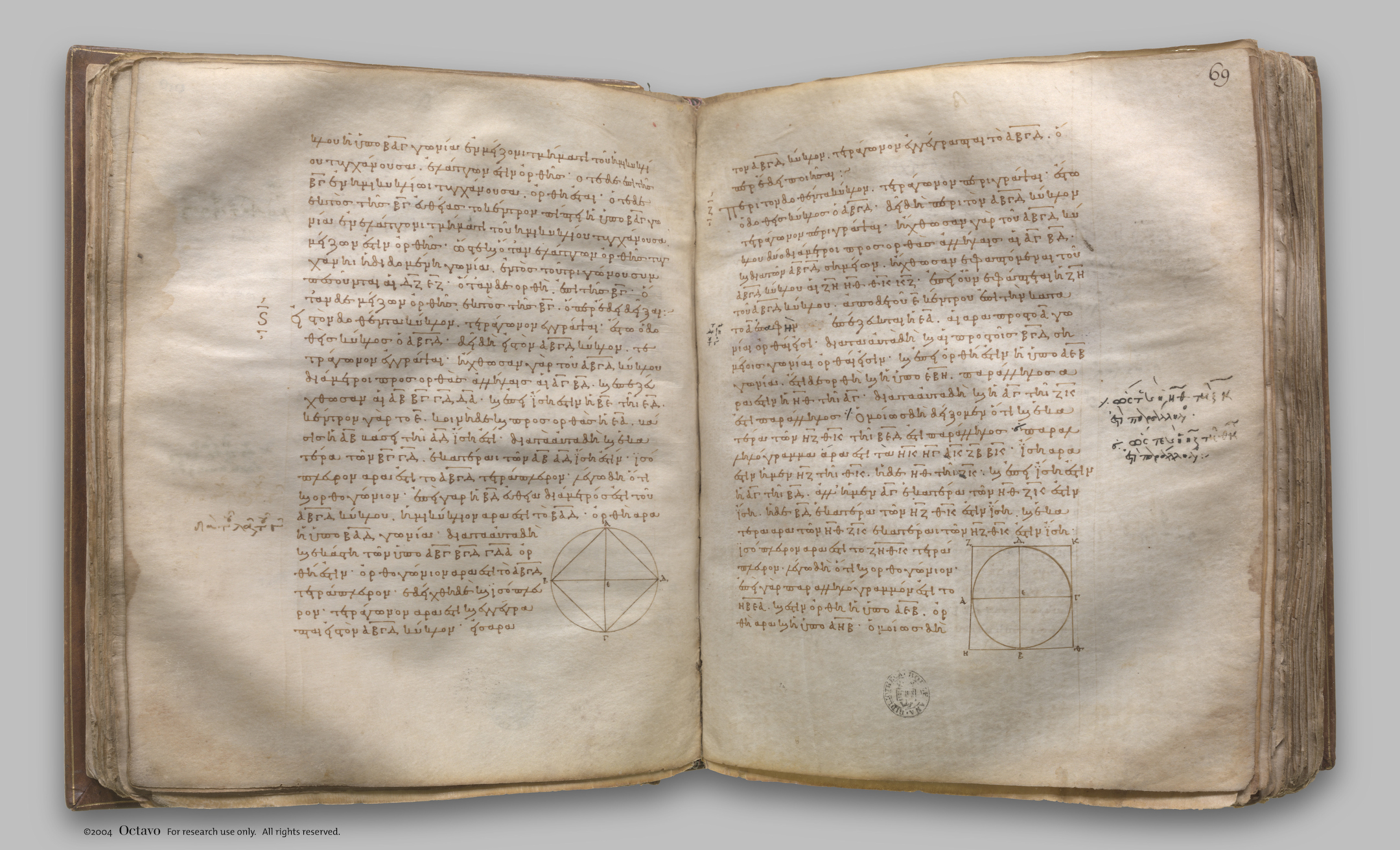
| elem.4.6 | In a given circle to inscribe a square. | f. 073 digilib |
| elem.4.7 | About a given circle to circumscribe a square. | f. 073 digilib |
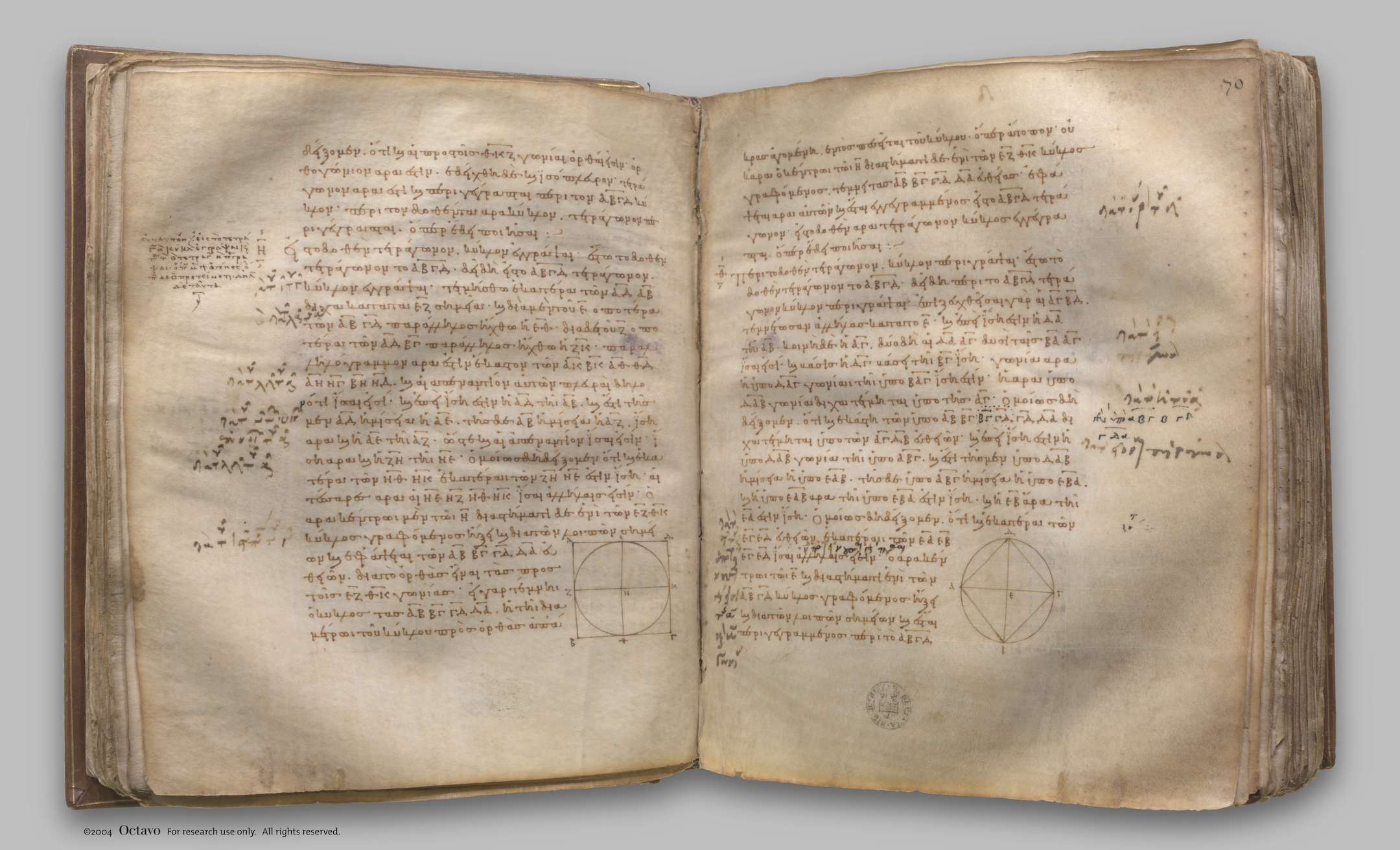
| elem.4.8 | In a given square to inscribe a circle. | f. 074 digilib |
| elem.4.9 | About a given square to circumscribe a circle. | f. 074 digilib |
| elem.4.10 | To construct an isosceles triangle having each of the angles at the base double of the remaining one. | f. 075 digilib |
| elem.4.11 | In a given circle to inscribe an equilateral and equiangular pentagon. | f. 075 digilib |
| elem.4.12 | About a given circle to circumscribe an equilateral and equiangular pentagon. | f. 076 digilib |
| elem.4.13 | In a given pentagon, which is equilateral and equiangular, to inscribe a circle. | f. 077 digilib |
| elem.4.14 | About a given pentagon, which is equilateral and equiangular, to circumscribe a circle. | f. 078 digilib |
| elem.4.15 | In a given circle to inscribe an equilateral and equiangular hexagon. | f. 078 digilib |
| elem.4.16 | In a given circle to inscribe a fifteen-angled figure which shall be both equilateral and equiangular. | f. 080 digilib |
Clay Mathematics Institute Historical Archive
Published May 8, 2008. Copyright 2008, Clay Mathematics Institute
Proposition 4.2
You may also enter Greek text in the search box, e.g. cut and paste from the Greek text on this site.