2026 Fields Medals
Date: 23 July 2026
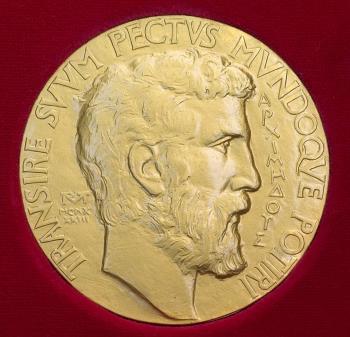
The Clay Mathematics Institute extends its heartfelt congratulations to former Clay Research Fellow John Pardon (2015-2020), to 2026 Clay Research Awardees Yu Deng and Hong Wang, and to Jacob Tsimerman, were awarded the2026 Fields Medals by the IMU at the Opening Ceremony of the International Congress of Mathematicians in Philadelphia, PA, on 23 July.
Yu Deng’s award is “For his work in partial differential equations, including the rigorous derivation of the Boltzmann equation from hard-sphere dynamics for rarefied gases, the derivation of wave kinetic equations from nonlinear dispersive systems, and probabilistic approaches to nonlinear Schrodinger dynamics.” He was earlier awarded a 2026 Clay Research Award, along with Zaher Hani, in recognition of this work. https://www.claymath.org/people/yu-deng/
John Pardon has been awarded the Fields Medal “For his achievements in symplectic geometry including new approaches to virtual fundamental cycles, Fukaya categories of certain manifolds and counting holomorphic curves, and for his contributions to other areas of geometry and topology, including group actions on 3-manifolds and knot theory.” John, who was a Clay Research Fellow from 2015 to 2020, was awarded the 2022 Clay Research Award “in recognition of his wide-ranging and transformative work in geometry and topology, particularly his ground-breaking achievements in symplectic topology”. https://www.claymath.org/people/john-pardon-2/
Jacob Tsimerman’s award is “For his contribution in the recasting of o-minimality as a fundamental method of arithmetic and complex algebraic geometry, and his role in the proof of many central conjectures including Griffiths’ conjecture on the algebraicity of images of the period maps, and the Andre-Oort conjecture for Siegel modular varieties.” His work on the Andre-Oort conjecture was the subject of his Plenary Lecture at the Clay Research Conference in 2022.
Hong Wang’s Fields Medal is “For her work in harmonic analysis and geometric measure theory, including applications of multiscale and decoupling techniques to the local smoothing conjecture for the planar wave equation, and major advances in Fourier restriction, Falconer distance sets, Furstenberg sets in the plane, and the Kakeya problem in three dimensions.” These last two breakthroughs were the main basis for the 2026 Clay Research Award to Hong Wang and her collaborators. https://www.claymath.org/people/hong-wang/