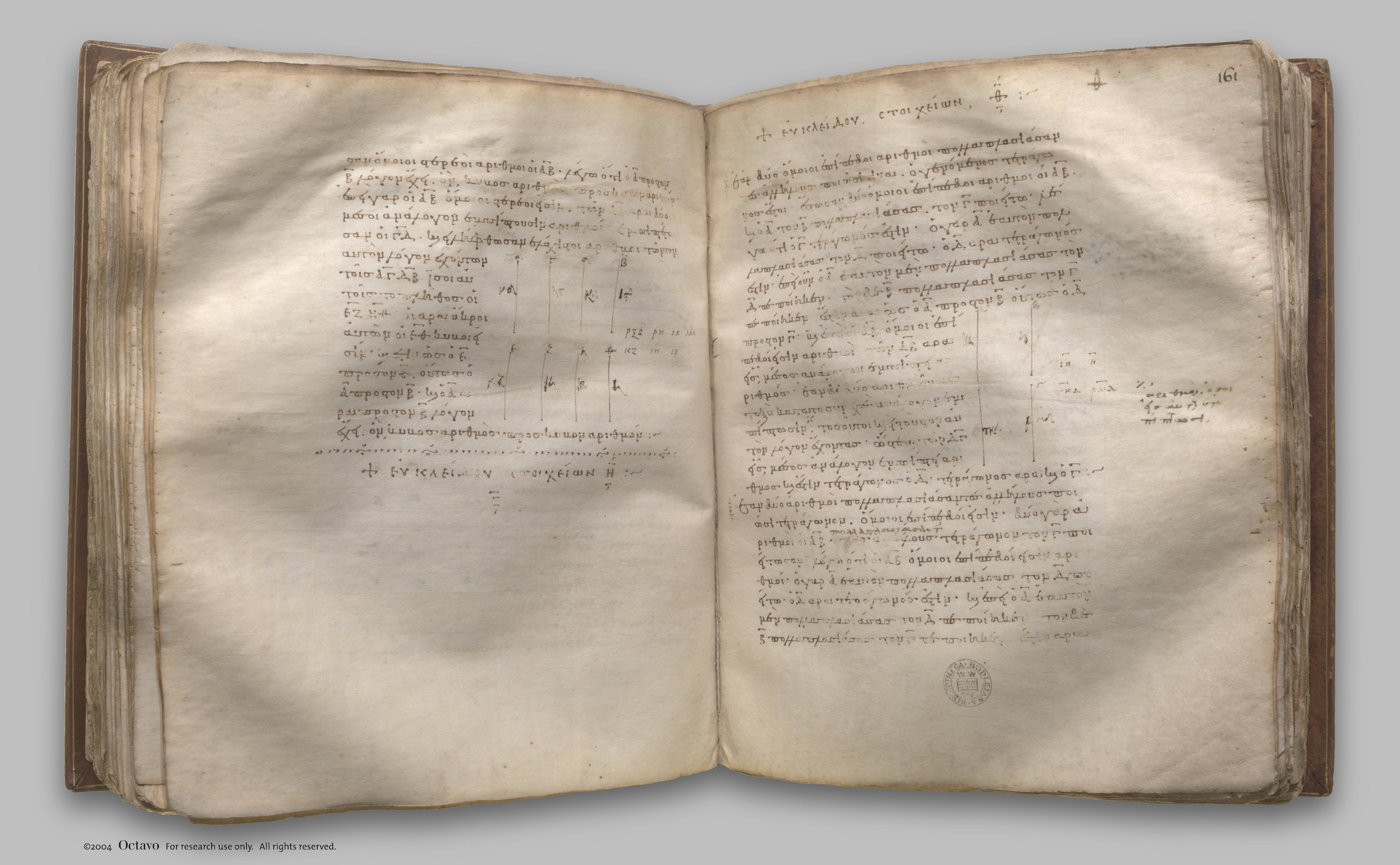
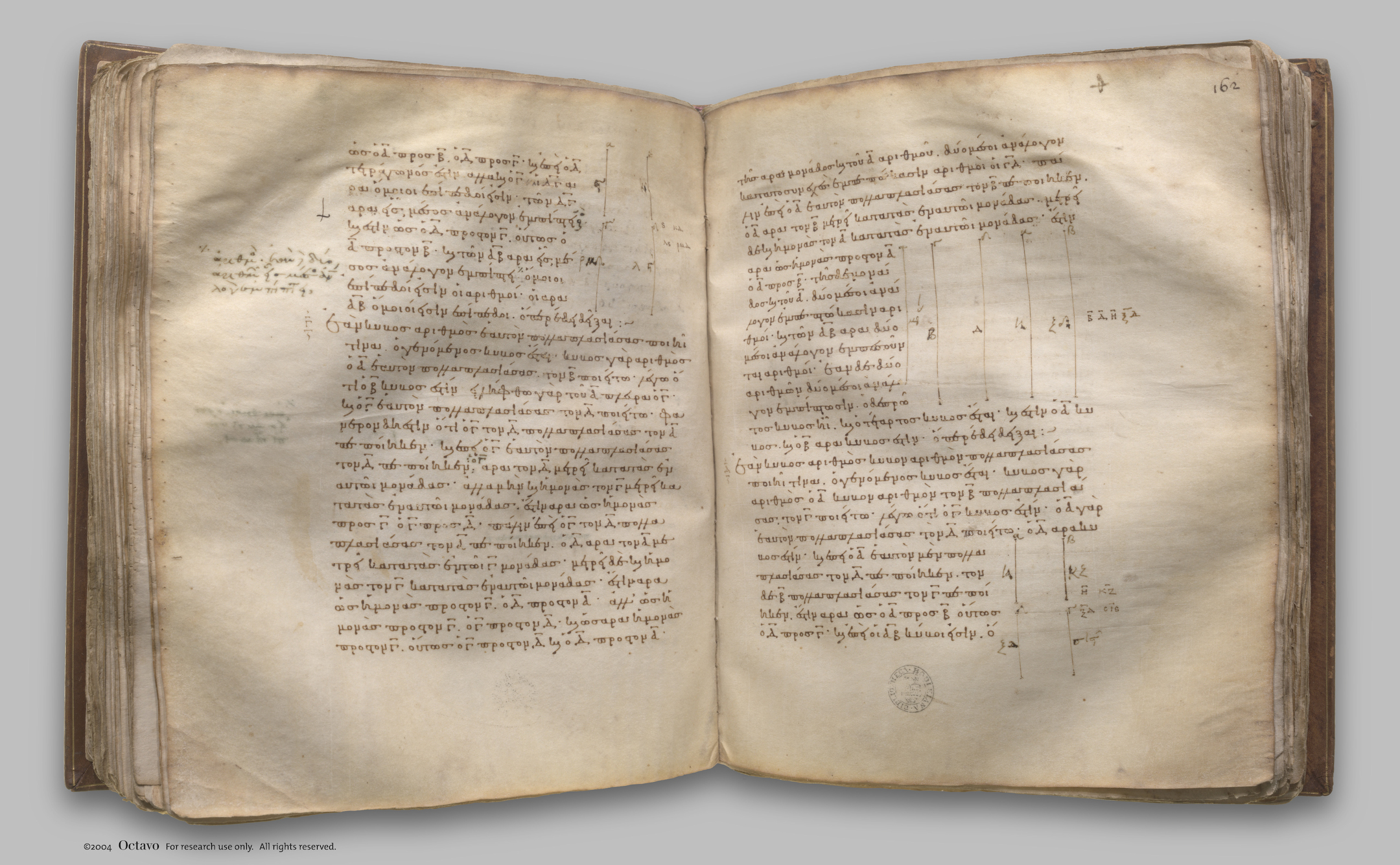

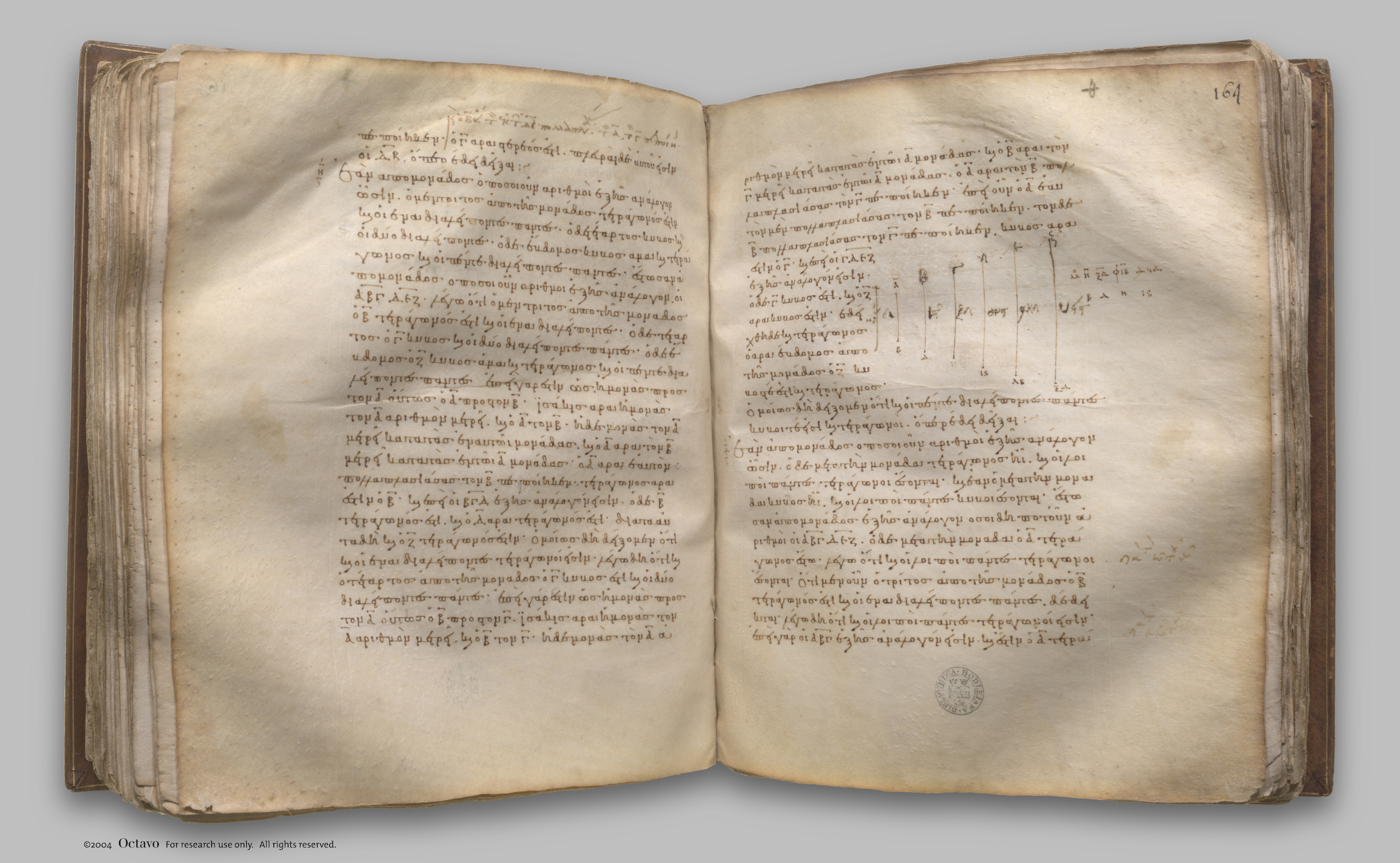
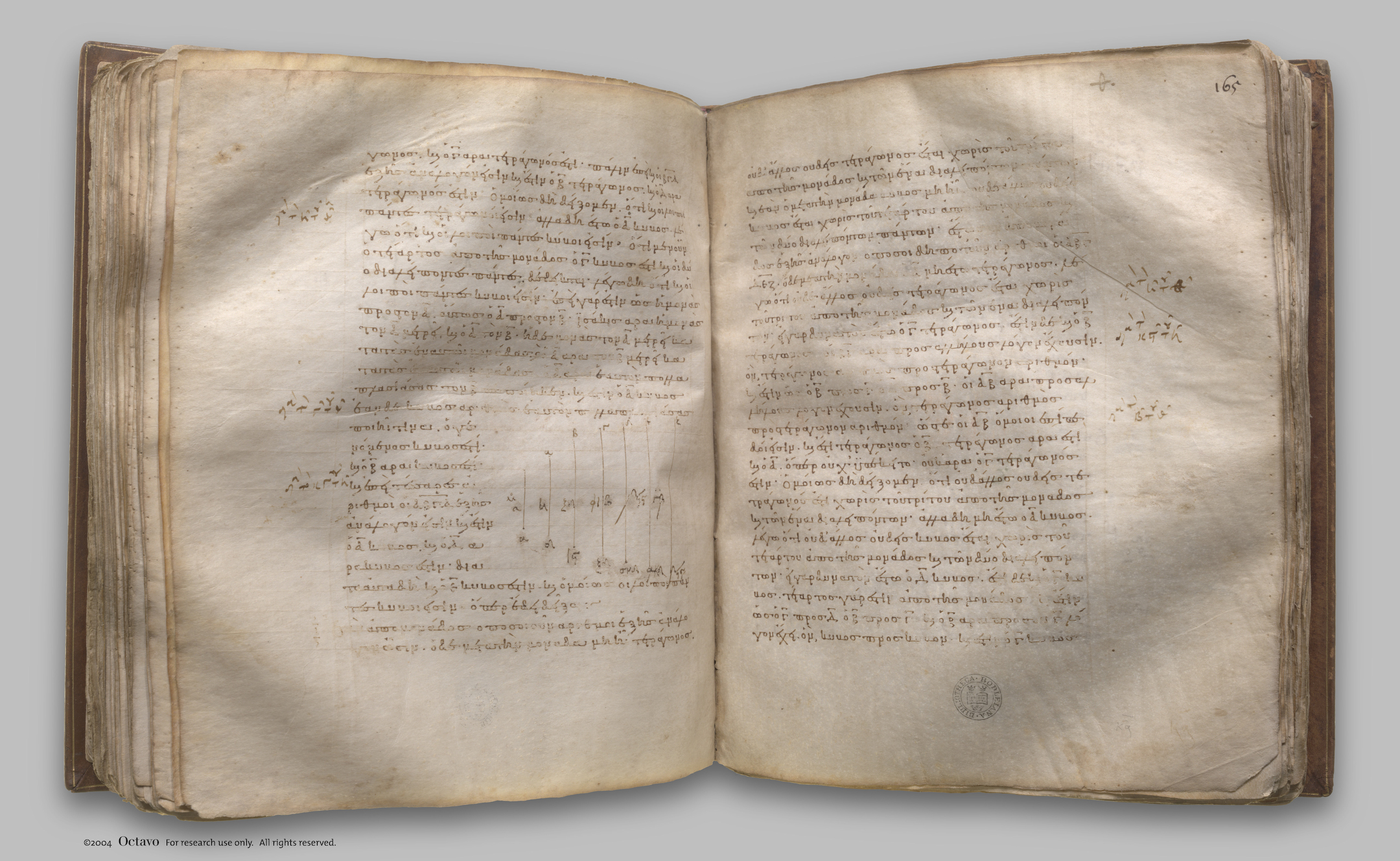

Proposition 9.20
You may also enter Greek text in the search box, e.g. cut and paste from the Greek text on this site.
| elem.9.1 | If two similar plane numbers by multiplying one another make some number, the product will be square. | f. 165 digilib |
| elem.9.2 | If two numbers by multiplying one another make a square number, they are similar plane numbers. | f. 165 digilib |
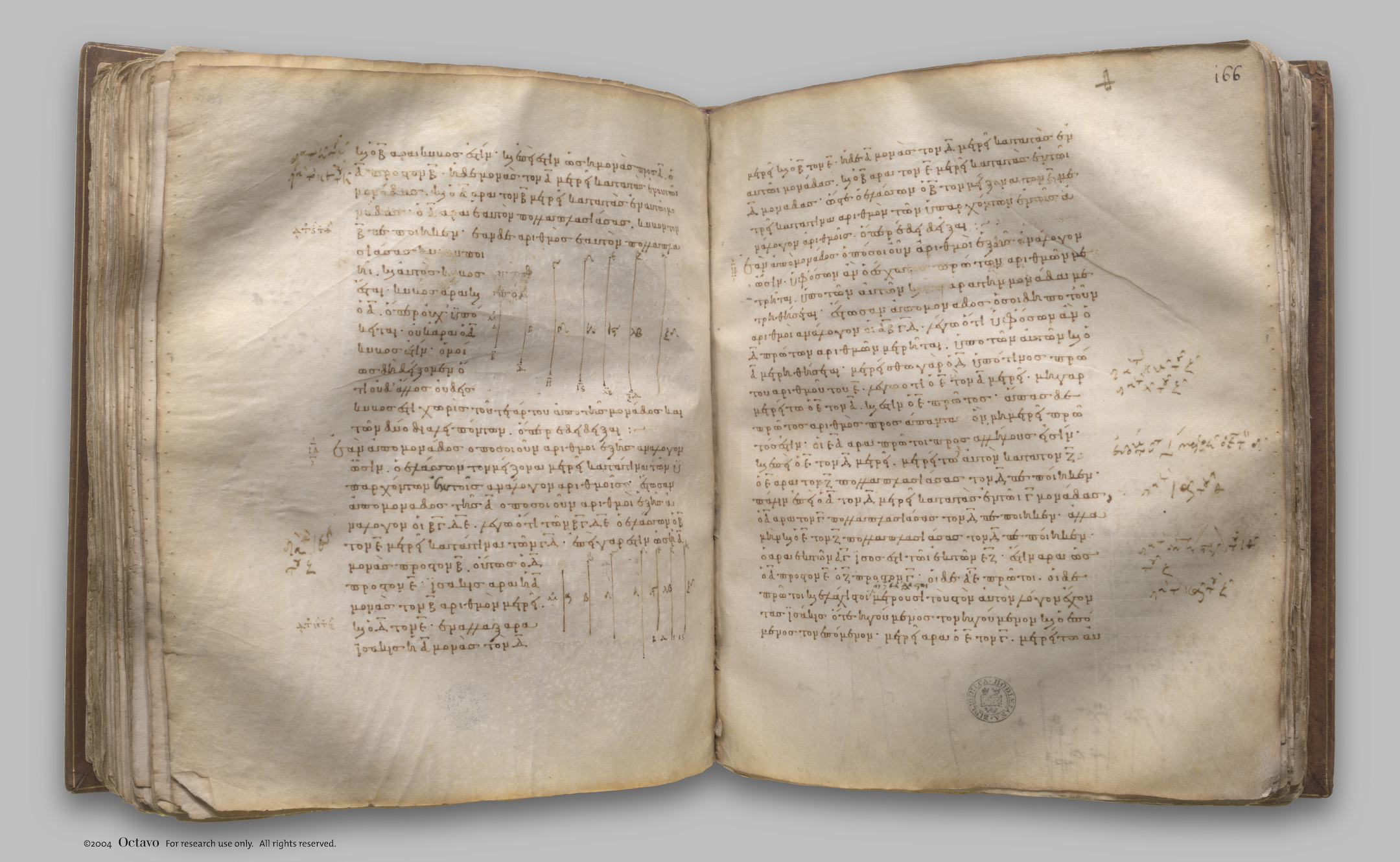
| elem.9.3 | If a cube number by multiplying itself make some number, the product will be cube. | f. 166 digilib |
| elem.9.4 | If a cube number by multiplying a cube number make some number, the product will be cube. | f. 166 digilib |
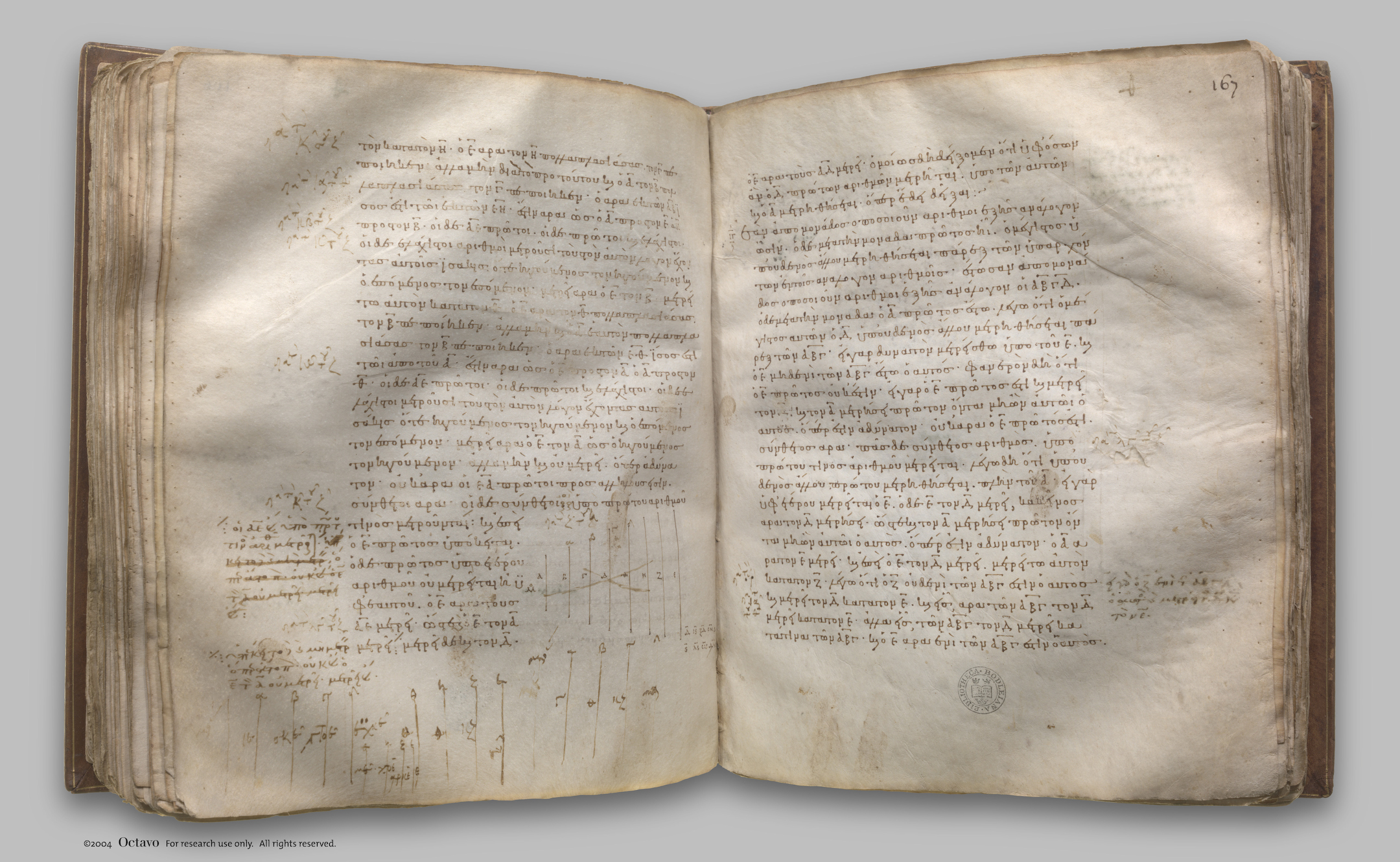
| elem.9.5 | If a cube number by multiplying any number make a cube number, the multiplied number will also be cube. | f. 167 digilib |
| elem.9.6 | If a number by multiplying itself make a cube number, it will itself also be cube. | f. 167 digilib |
| elem.9.7 | If a composite number by multiplying any number make some number, the product will be solid. | f. 167 digilib |
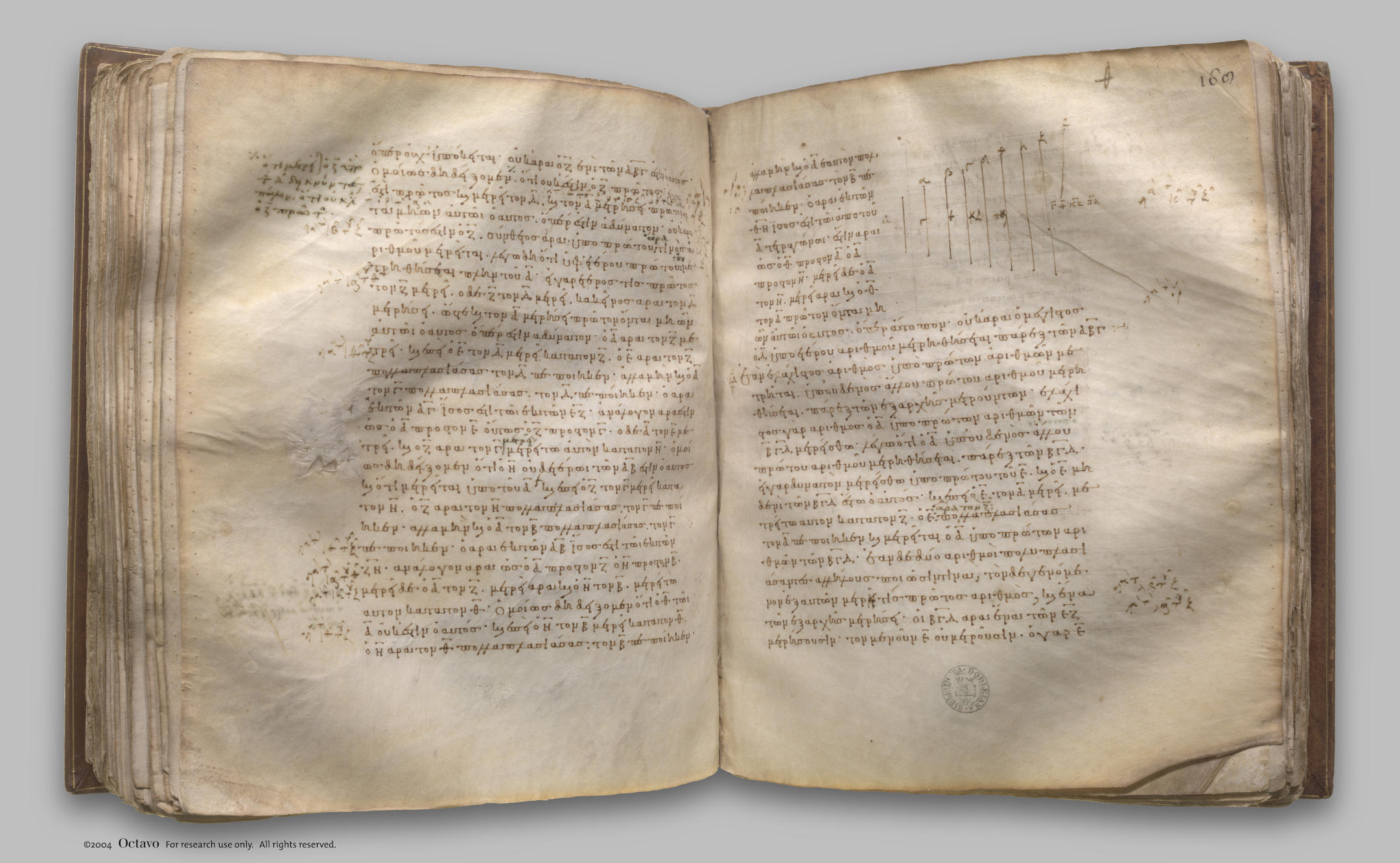
| elem.9.8 | If as many numbers as we please beginning from an unit be in continued proportion, the third from the unit will be square, as will also those which successively leave out one; the fourth will be cube, as will also all those which leave out two; and the seventh will be at once cube and square, as will also those which leave out five. | f. 168 digilib |
| elem.9.9 | If as many numbers as we please beginning from an unit be in continued proportion, and the number after the unit be square, all the rest will also be square. And, if the number after the unit be cube, all the rest will also be cube. | f. 168 digilib |
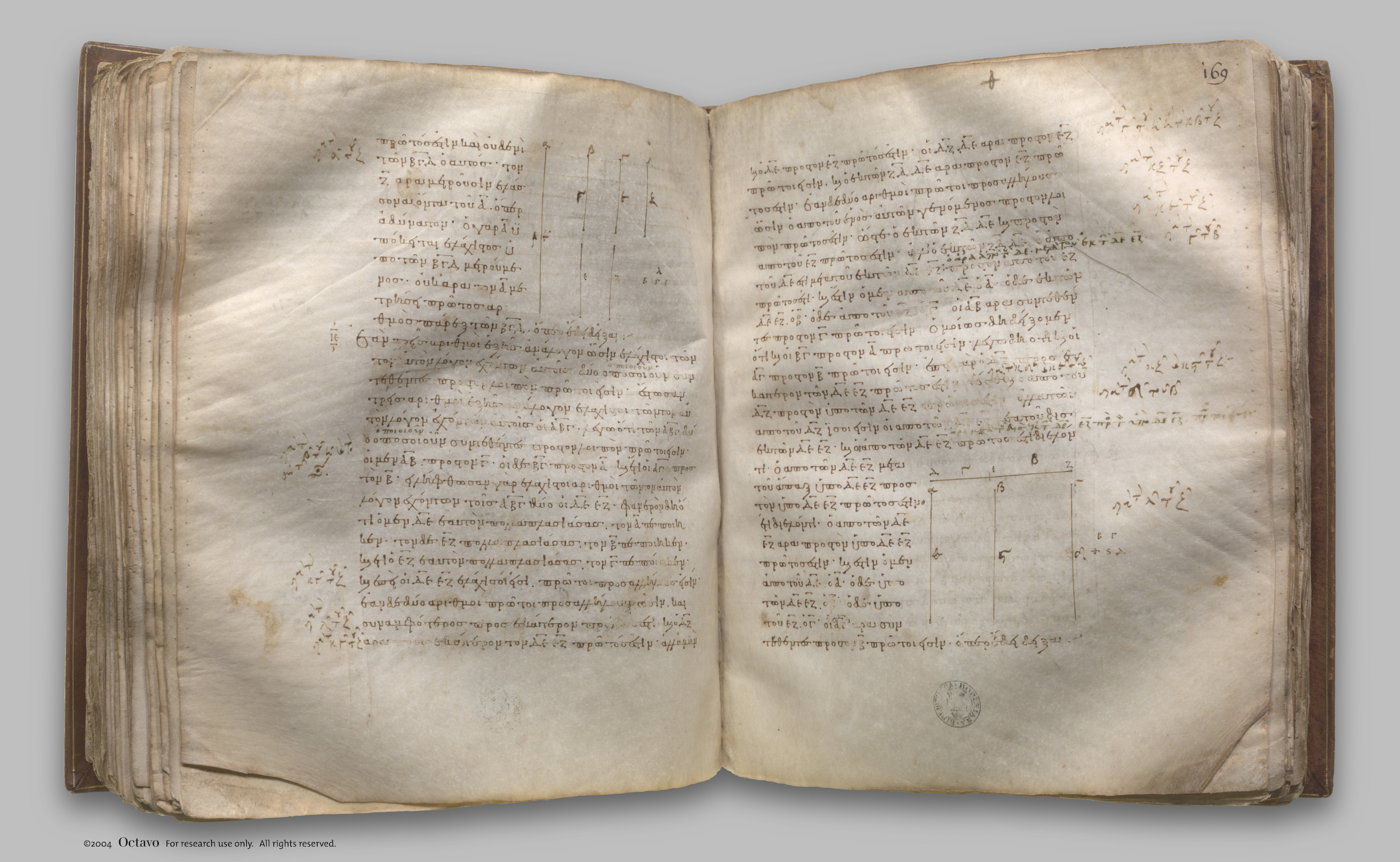
| elem.9.10 | If as many numbers as we please beginning from an unit be in continued proportion, and the number after the unit be not square, neither will any other be square except the third from the unit and all those which leave out one. And, if the number after the unit be not cube, neither will any other be cube except the fourth from the unit and all those which leave out two. | f. 169 digilib |
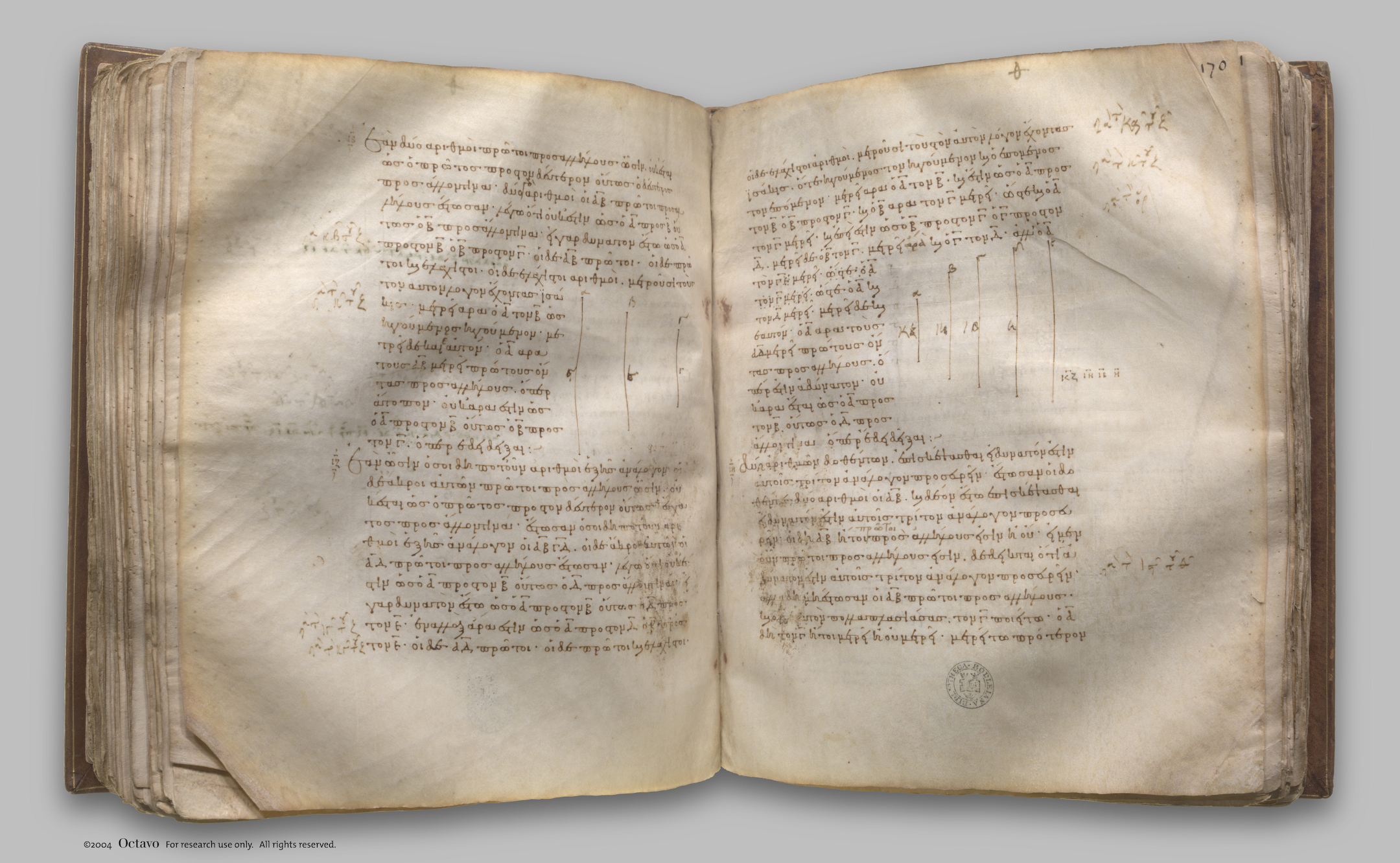
| elem.9.11 | If as many numbers as we please beginning from an unit be in continued proportion, the less measures the greater according to some one of the numbers which have place among the proportional numbers. | f. 170 digilib |
| elem.9.12 | If as many numbers as we please beginning from an unit be in continued proportion, by however many prime numbers the last is measured, the next to the unit will also be measured by the same. | f. 170 digilib |
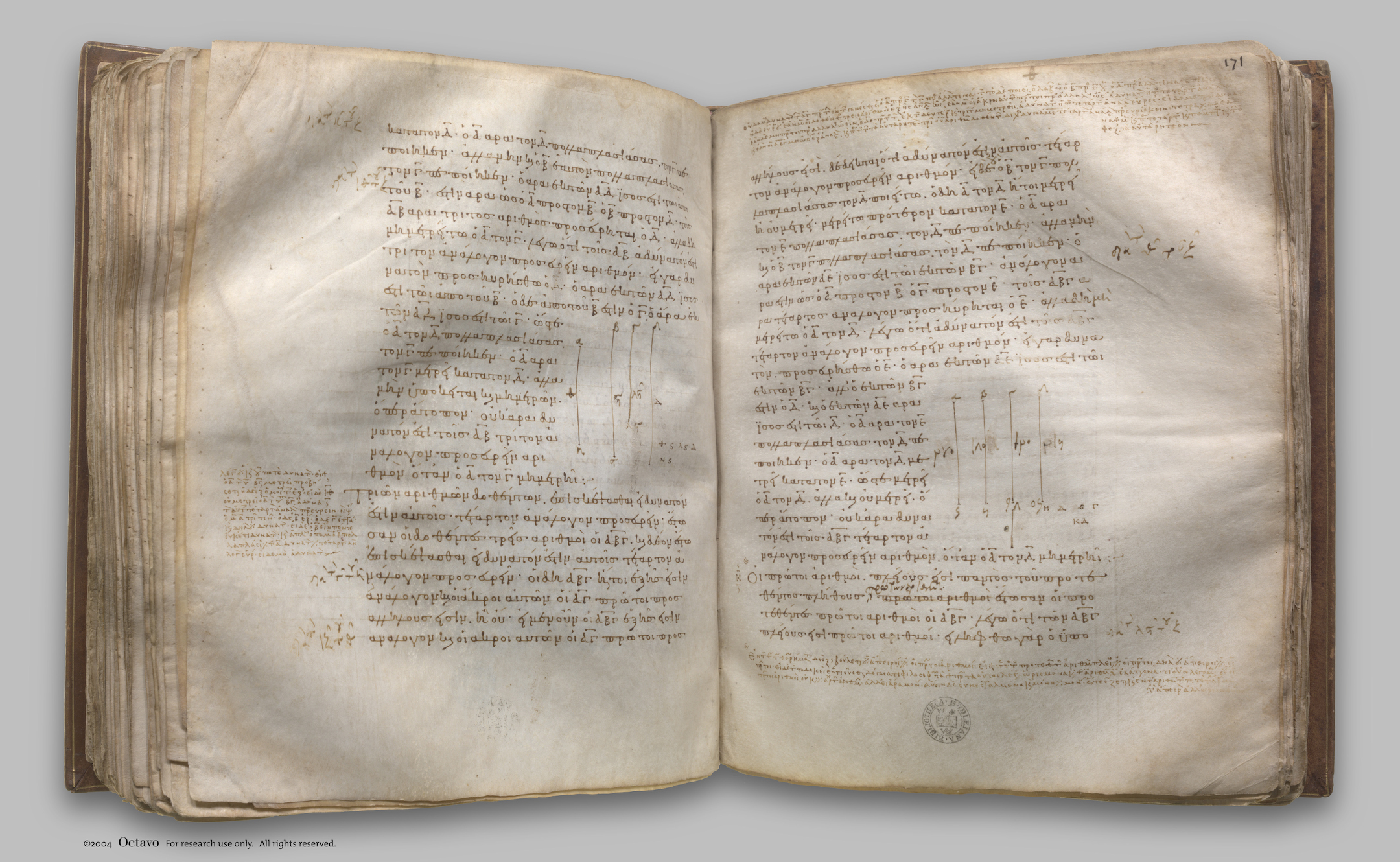
| elem.9.13 | If as many numbers as we please beginning from an unit be in continued proportion, and the number after the unit be prime, the greatest will not be measured by any except those which have a place among the proportional numbers. | f. 171 digilib |
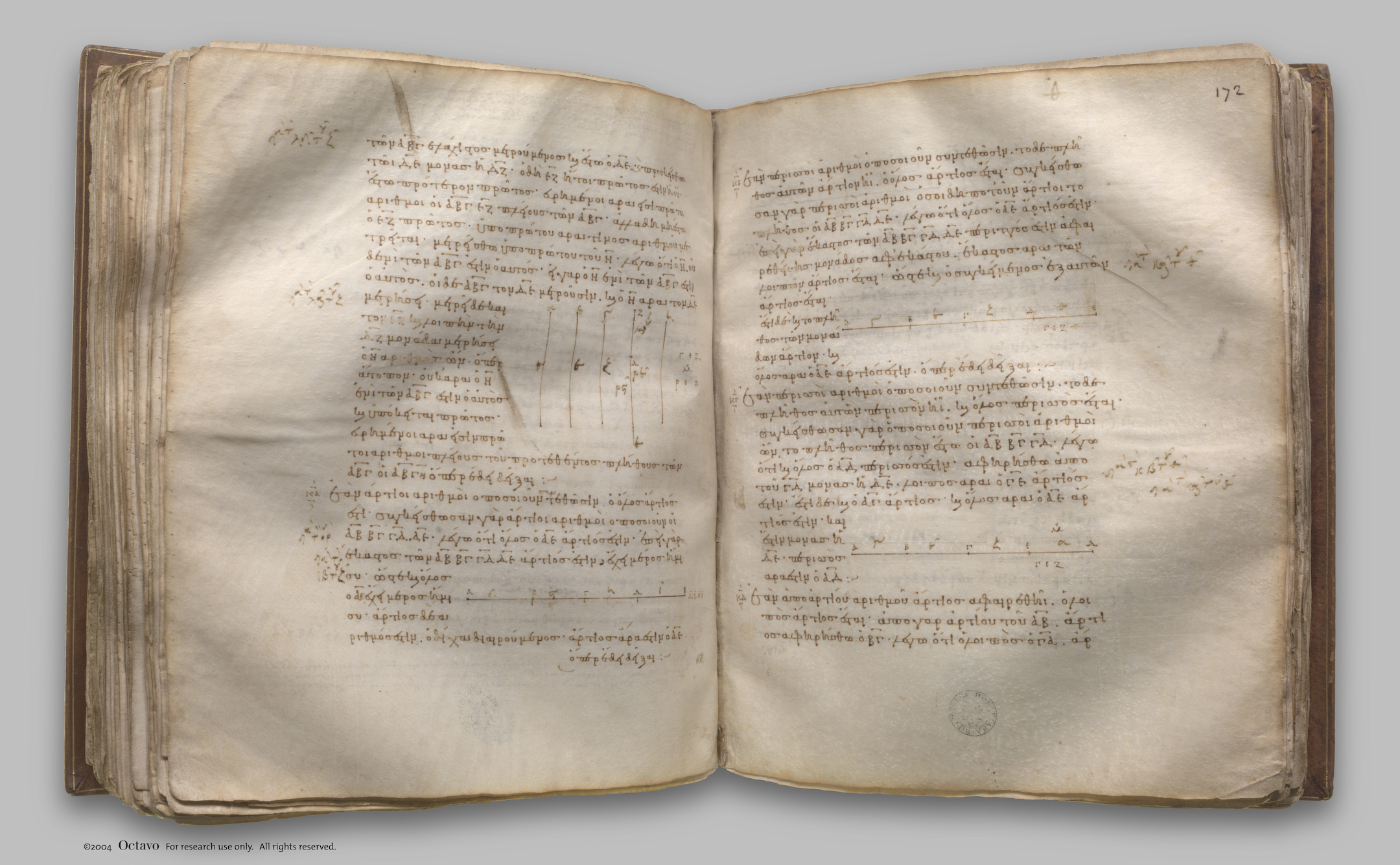
| elem.9.14 | If a number be the least that is measured by prime numbers, it will not be measured by any other prime number except those originally measuring it. | f. 172 digilib |
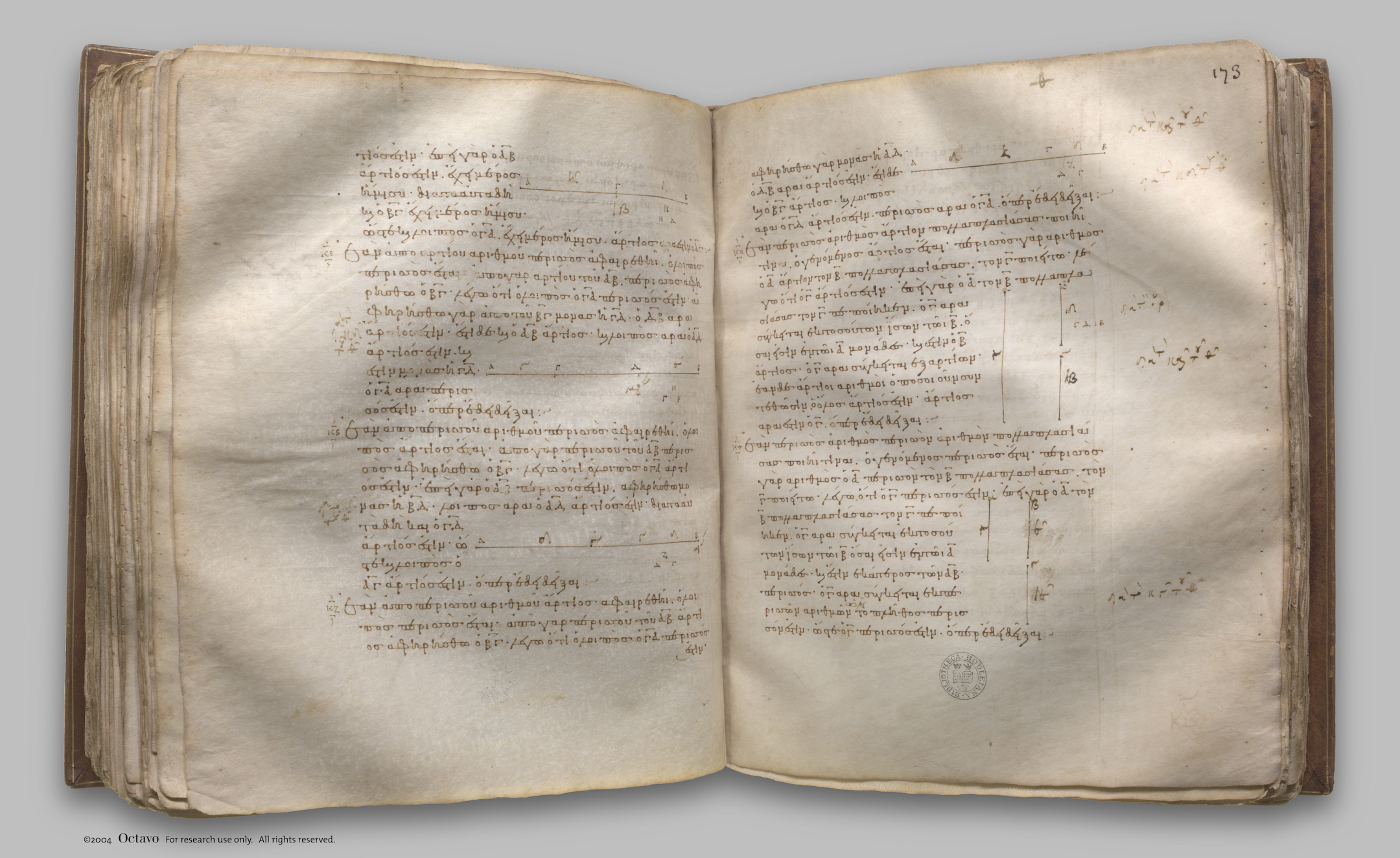
| elem.9.15 | If three numbers in continued proportion be the least of those which have the same ratio with them, any two whatever added together will be prime to the remaining number. | f. 173 digilib |
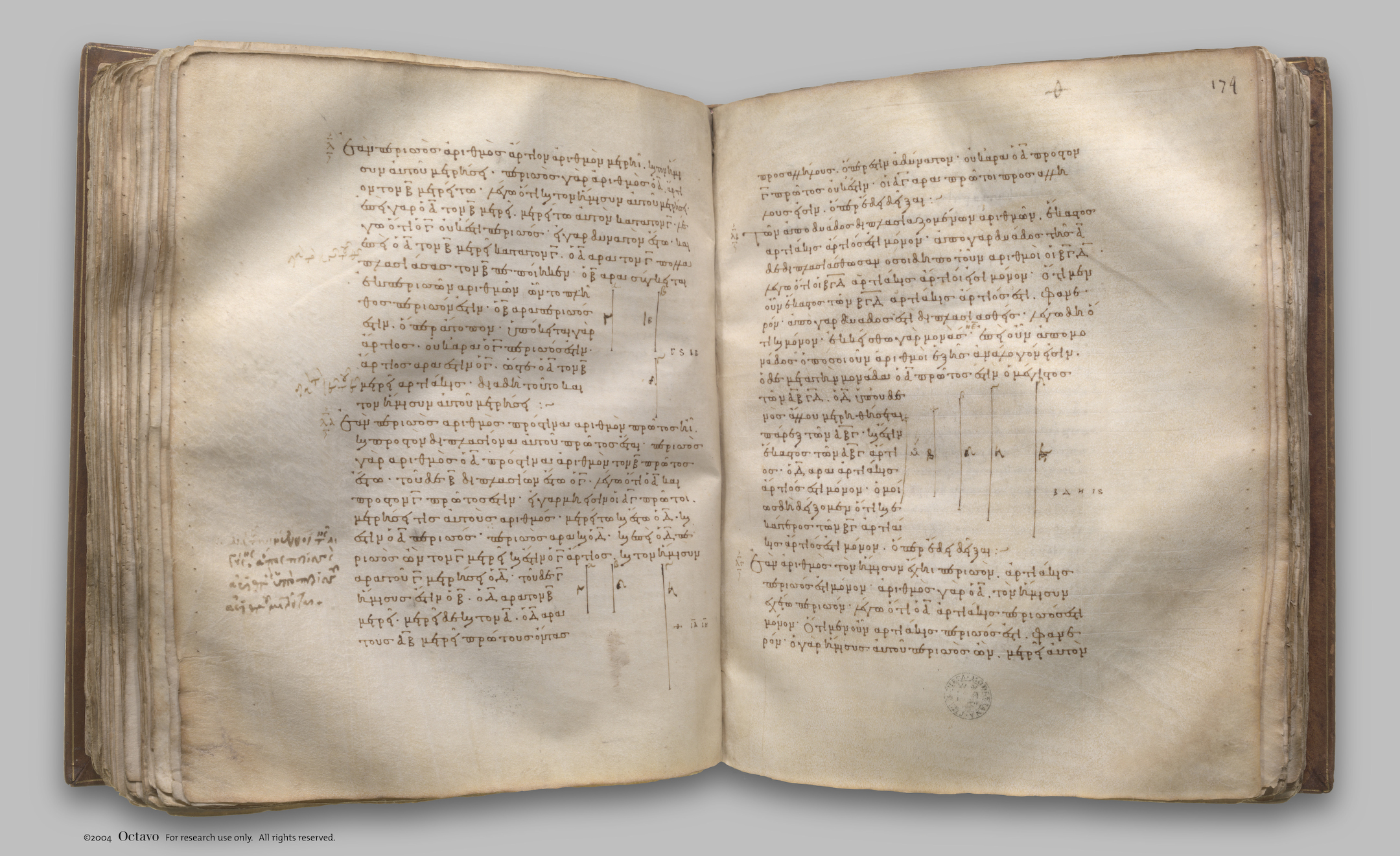
| elem.9.16 | If two numbers be prime to one another, the second will not be to any other number as the first is to the second. | f. 174 digilib |
| elem.9.17 | If there be as many numbers as we please in continued proportion, and the extremes of them be prime to one another, the last will not be to any other number as the first to the second. | f. 174 digilib |
| elem.9.18 | Given two numbers, to investigate whether it is possible to find a third proportional to them. | f. 174 digilib |
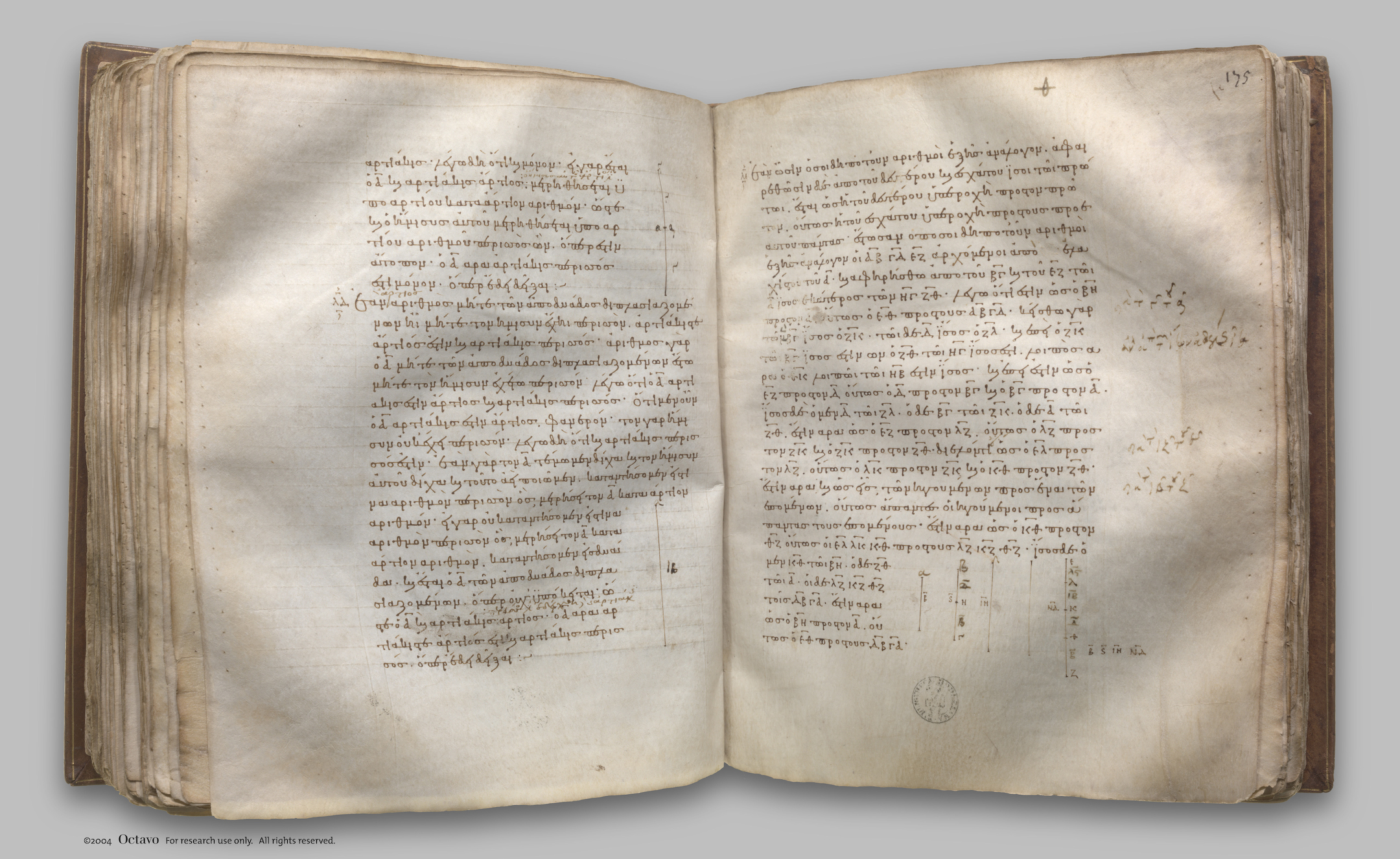
| elem.9.19 | Given three numbers, to investigate when it is possible to find a fourth proportional to them. | f. 175 digilib |
| elem.9.20 | Prime numbers are more than any assigned multitude of prime numbers. | f. 175 digilib |
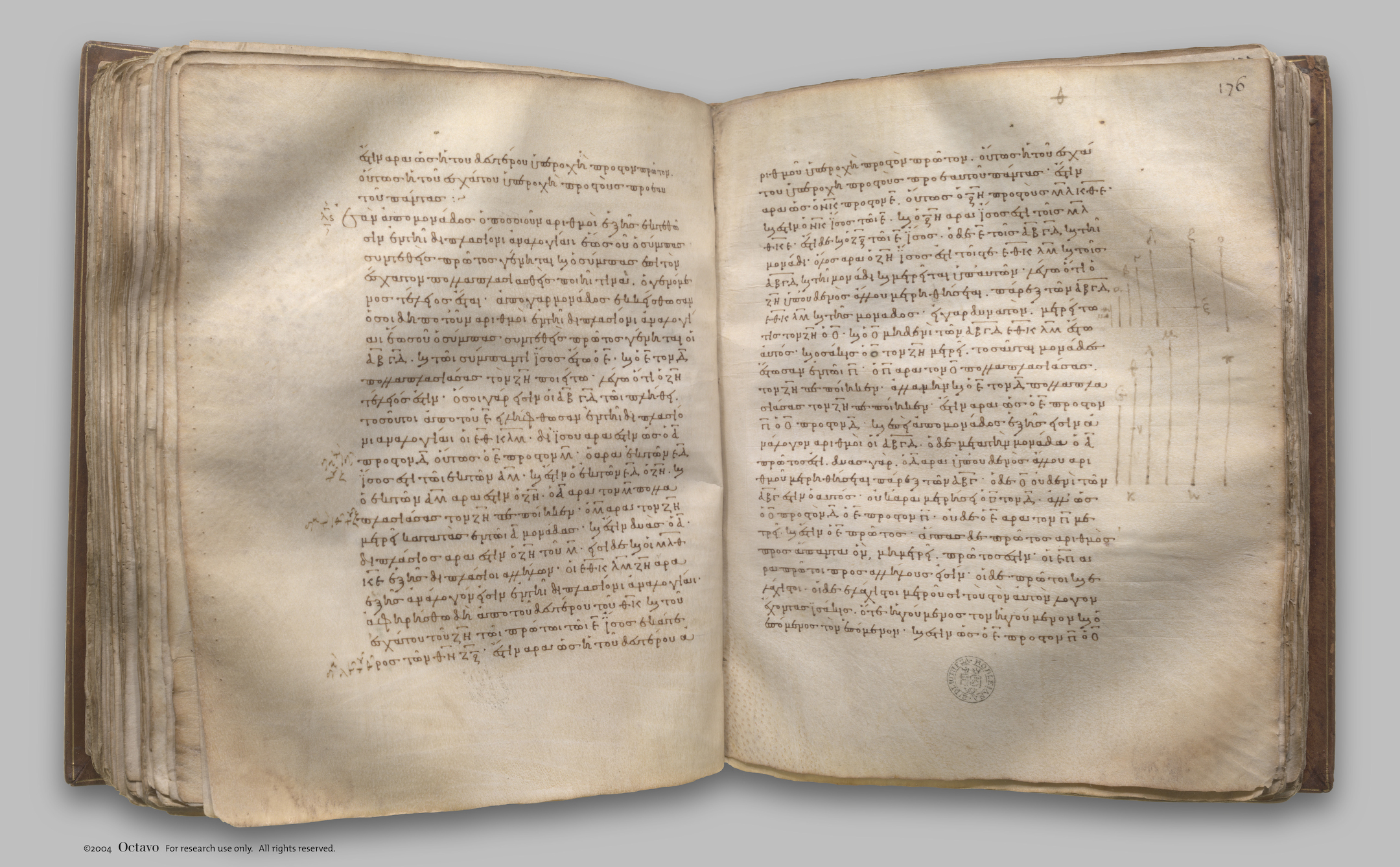
| elem.9.21 | If as many even numbers as we please be added together, the whole is even. | f. 176 digilib |
| elem.9.22 | If as many odd numbers as we please be added together, and their multitude be even, the whole will be even. | f. 176 digilib |
| elem.9.23 | If as many odd numbers as we please be added together, and their multitude be odd, the whole will also be odd. | f. 176 digilib |
| elem.9.24 | If from an even number an even number be subtracted, the remainder will be even. | f. 176 digilib |
| elem.9.25 | If from an even number an odd number be subtracted, the remainder will be odd. | f. 177 digilib |
| elem.9.26 | If from an odd number an odd number be subtracted, the remainder will be even. | f. 177 digilib |
| elem.9.27 | If from an odd number an even number be subtracted, the remainder will be odd. | f. 177 digilib |
| elem.9.28 | If an odd number by multiplying an even number make some number, the product will be even. | f. 177 digilib |
| elem.9.29 | If an odd number by multiplying an odd number make some number, the product will be odd. | f. 177 digilib |
| elem.9.30 | If an odd number measure an even number, it will also measure the half of it. | f. 178 digilib |
| elem.9.31 | If an odd number be prime to any number, it will also be prime to the double of it. | f. 178 digilib |
| elem.9.32 | Each of the numbers which are continually doubled beginning from a dyad is even-times even only. | f. 178 digilib |
| elem.9.33 | If a number have its half odd, it is even-times odd only. | f. 178 digilib |
| elem.9.34 | If a number neither be one of those which are continually doubled from a dyad, nor have its half odd, it is both eventimes even and even-times odd. | f. 179 digilib |
| elem.9.35 | If as many numbers as we please be in continued proportion, and there be subtracted from the second and the last numbers equal to the first, then, as the excess of the second is to the first, so will the excess of the last be to all those before it. | f. 179 digilib |
| elem.9.36 | If as many numbers as we please beginning from an unit be set out continuously in double proportion, until the sum of all becomes prime, and if the sum multiplied into the last make some number, the product will be perfect. | f. 180 digilib |
Clay Mathematics Institute Historical Archive
Published May 8, 2008. Copyright 2008, Clay Mathematics Institute
Proposition 9.20
You may also enter Greek text in the search box, e.g. cut and paste from the Greek text on this site.