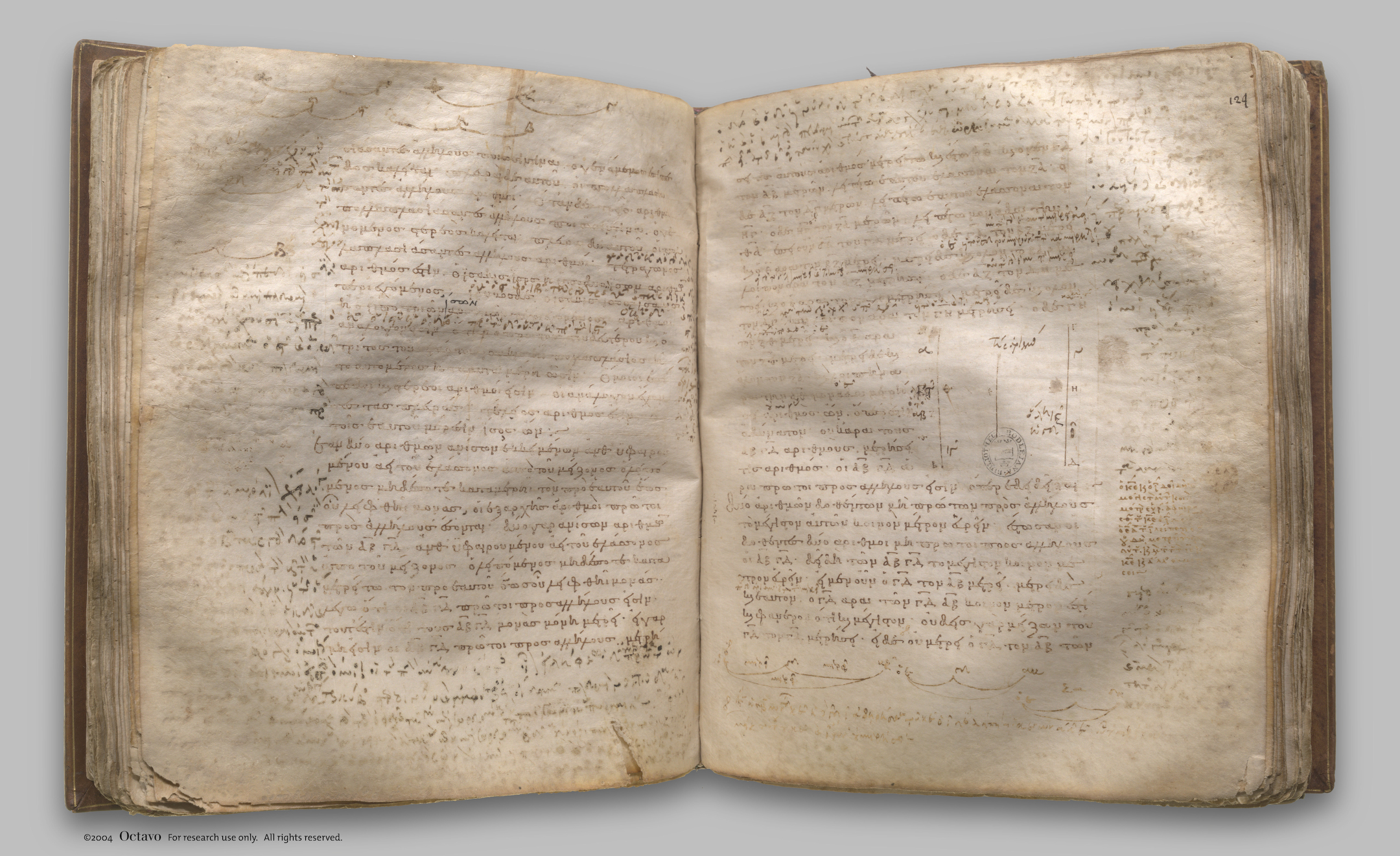
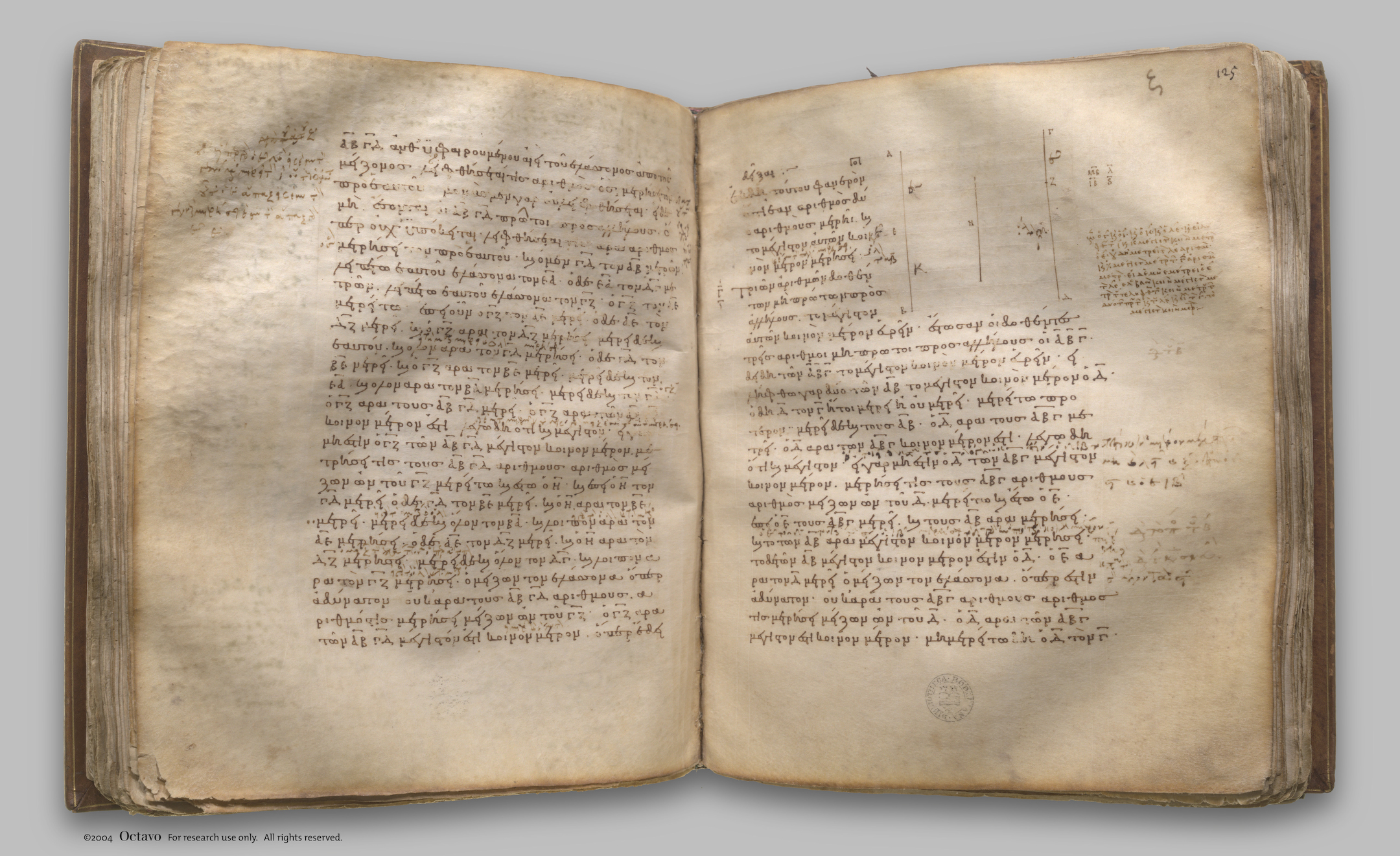
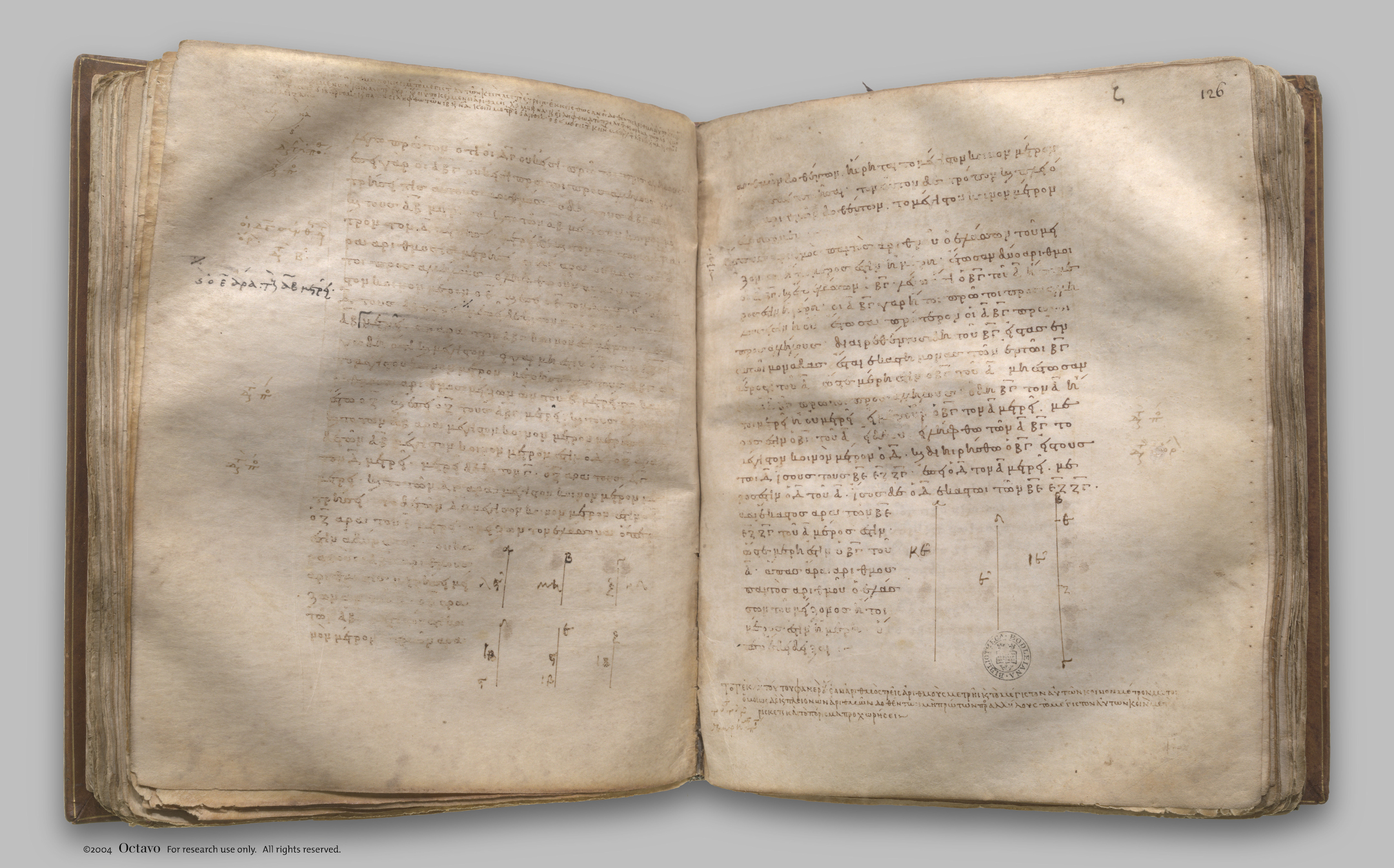
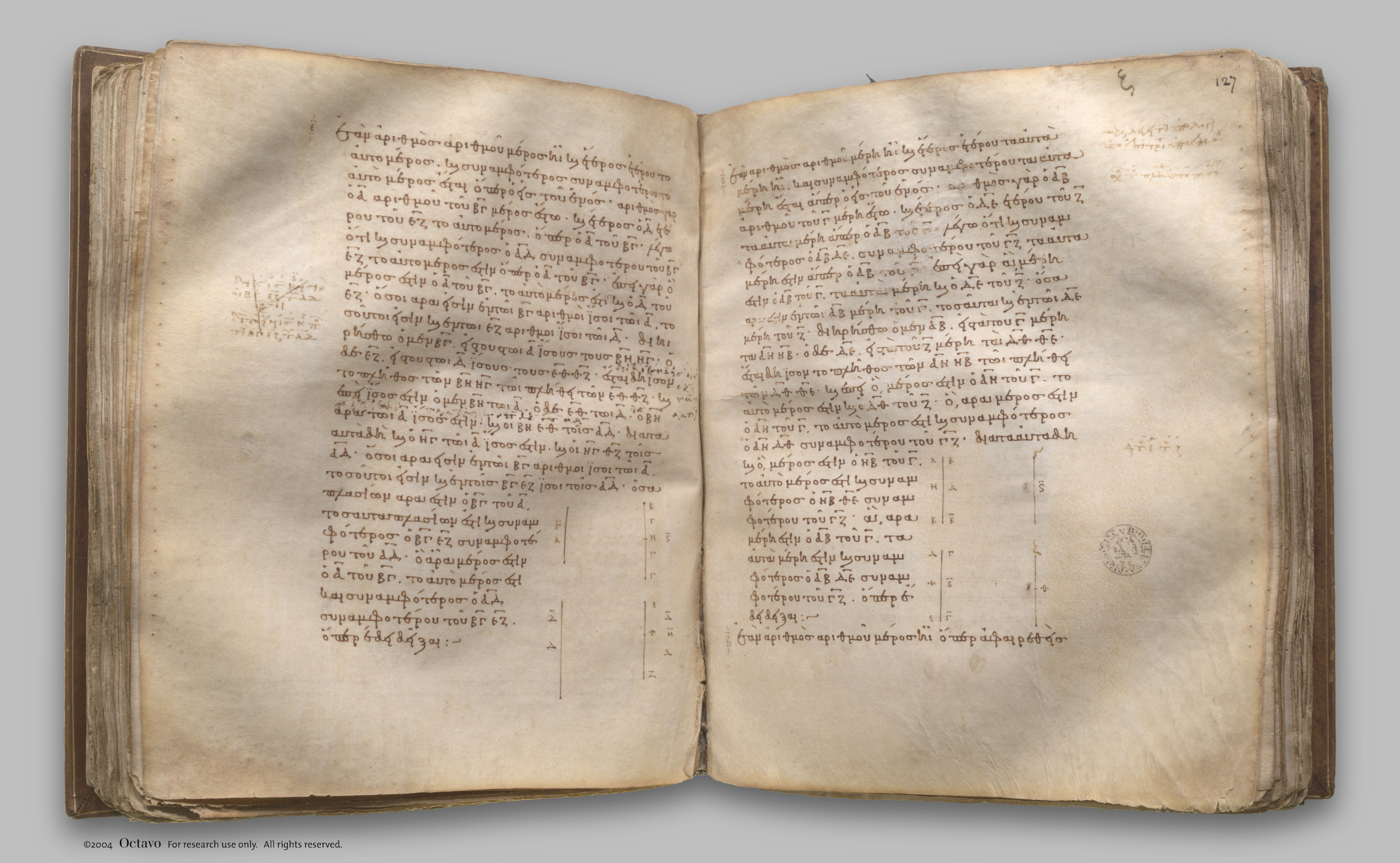

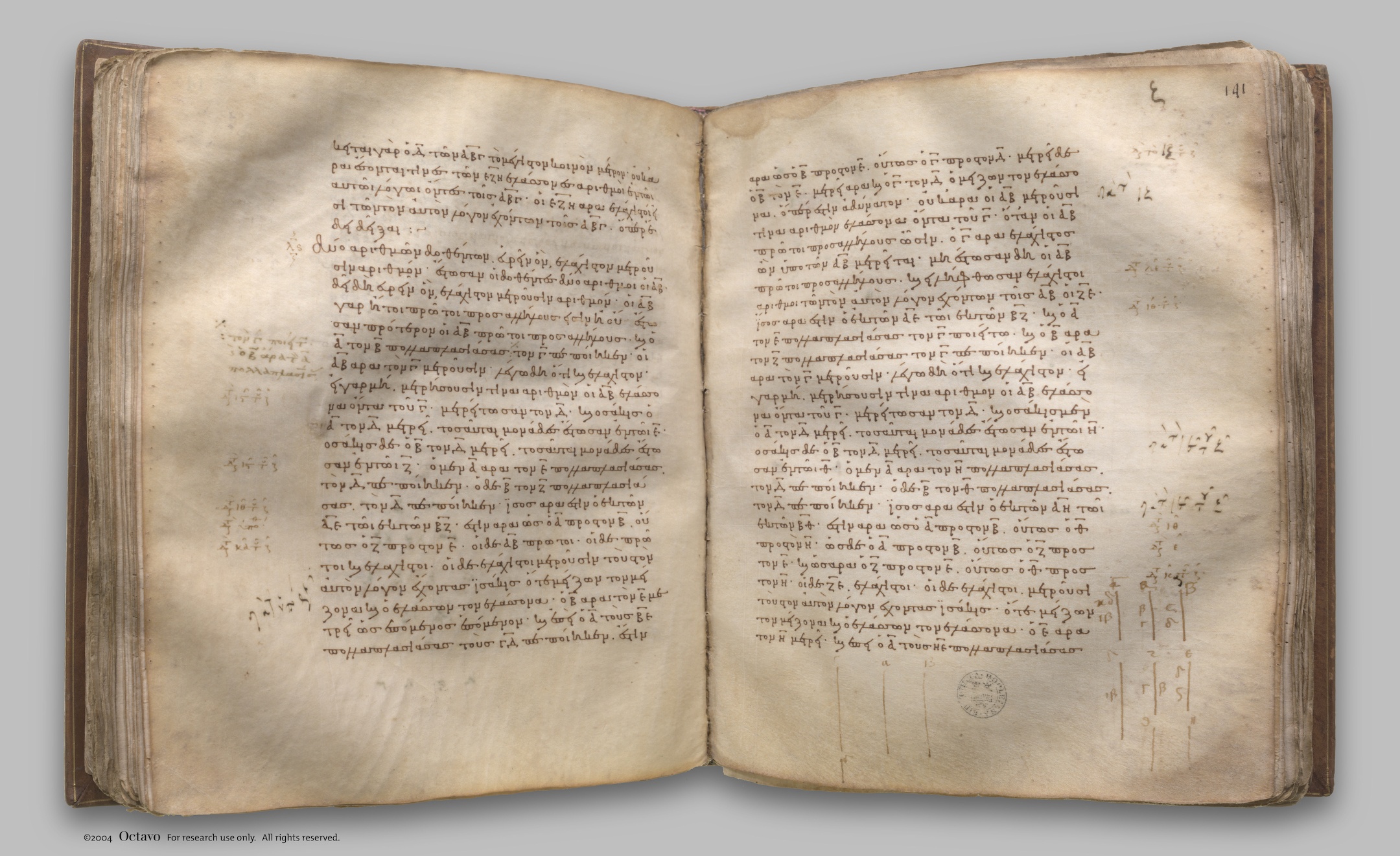
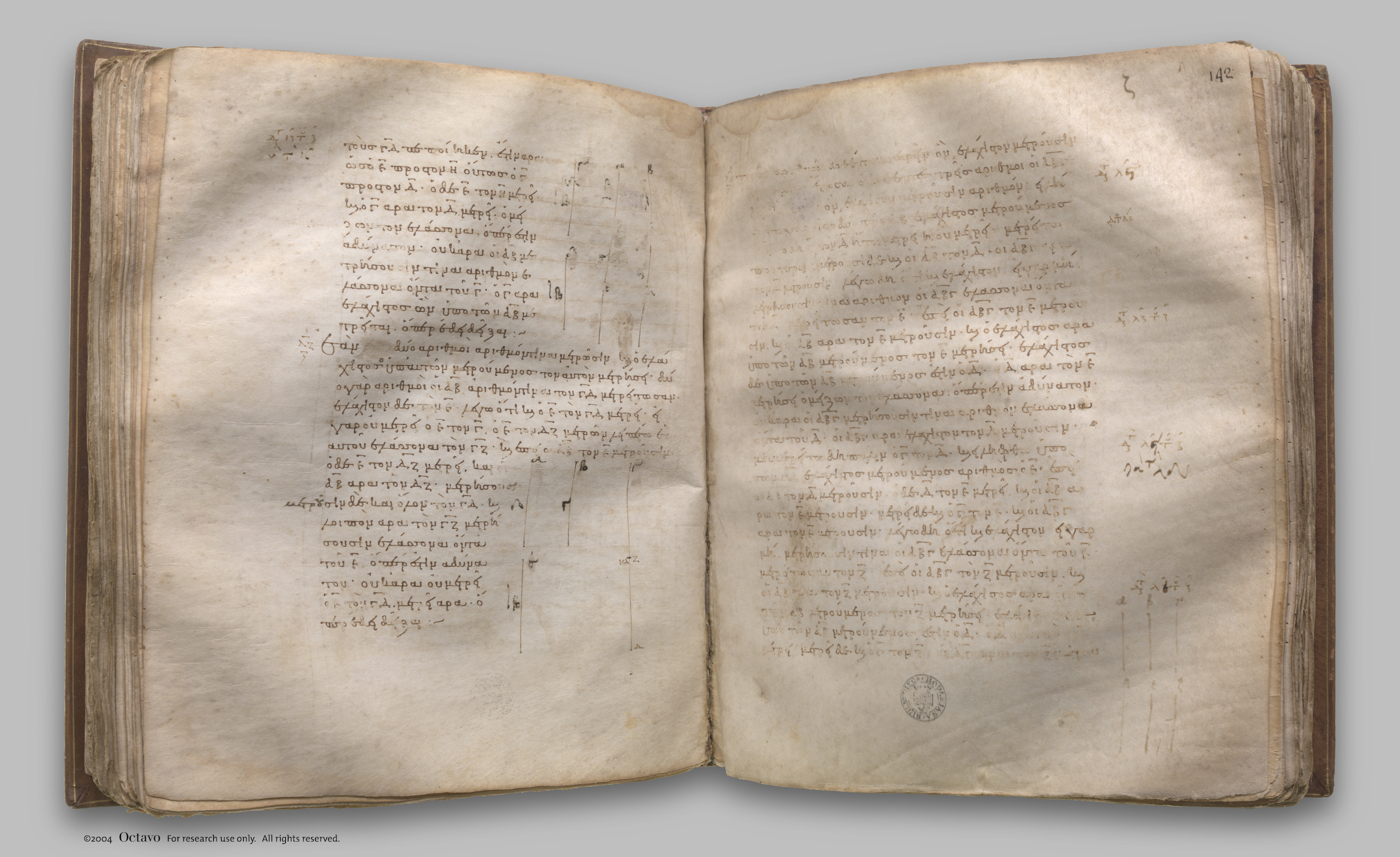

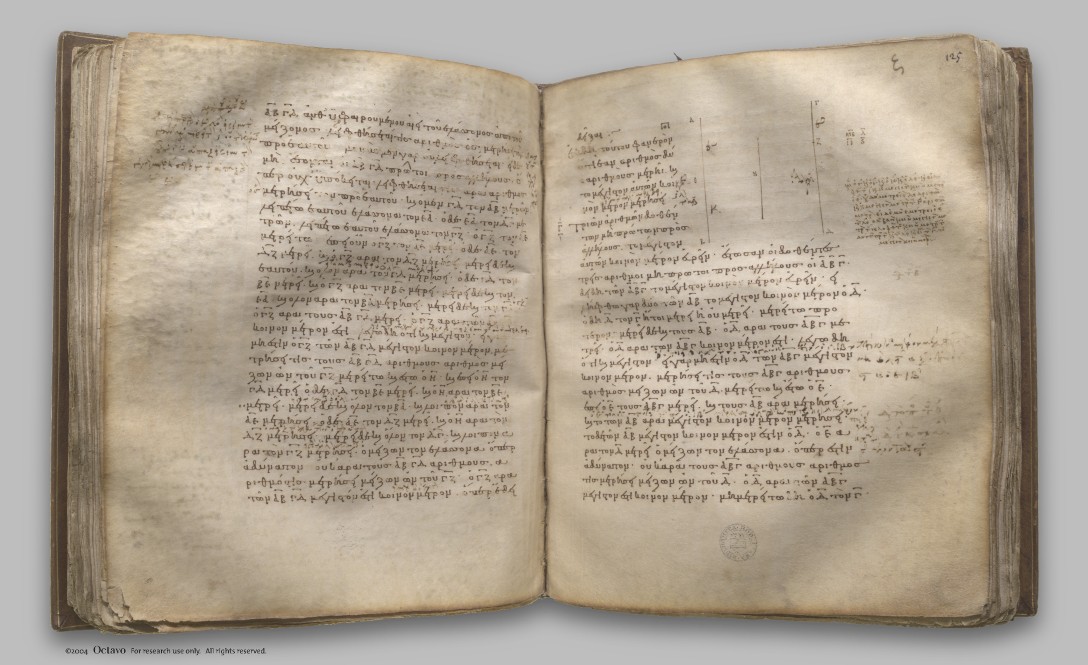
Proposition 7.3
You may also enter Greek text in the search box, e.g. cut and paste from the Greek text on this site.
| elem.7.1 | Two unequal numbers being set out, and the less being continually subtracted in turn from the greater, if the number which is left never measures the one before it until an unit is left, the original numbers will be prime to one another. | f. 128 digilib |
| elem.7.2 | Given two numbers not prime to one another, to find their greatest common measure. | f. 128 digilib |
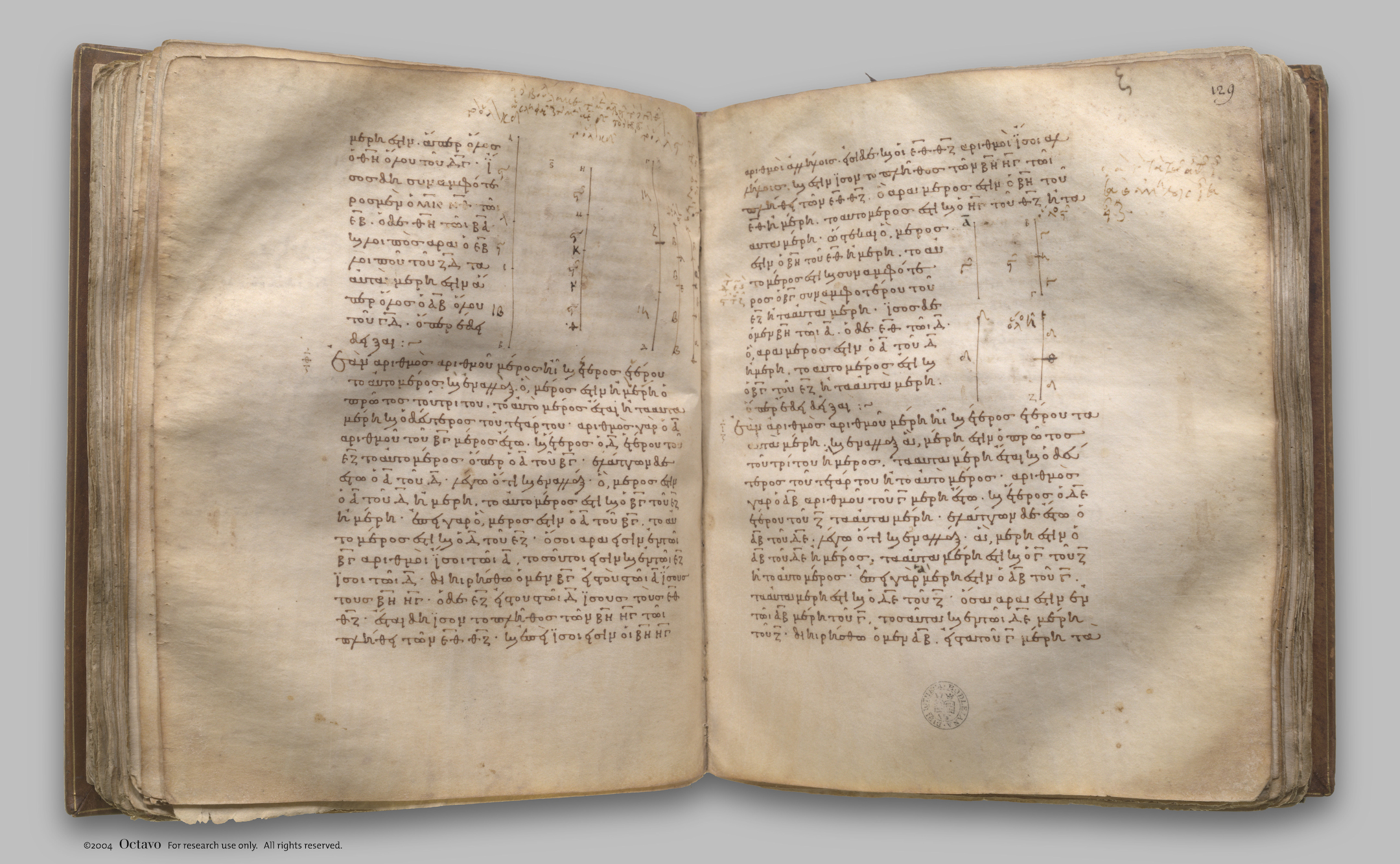
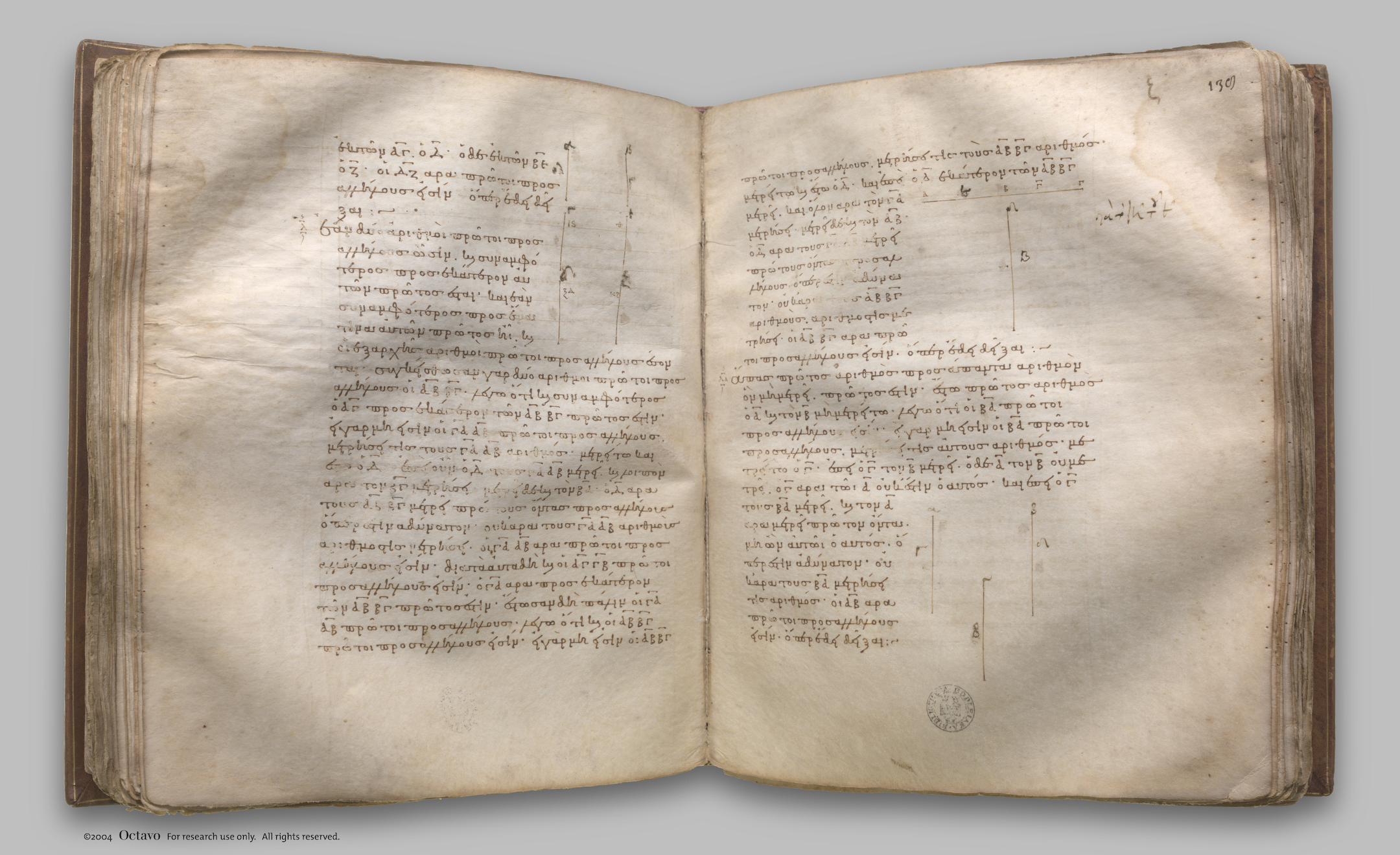
| elem.7.3 | Given three numbers not prime to one another, to find their greatest common measure. | f. 129 digilib |
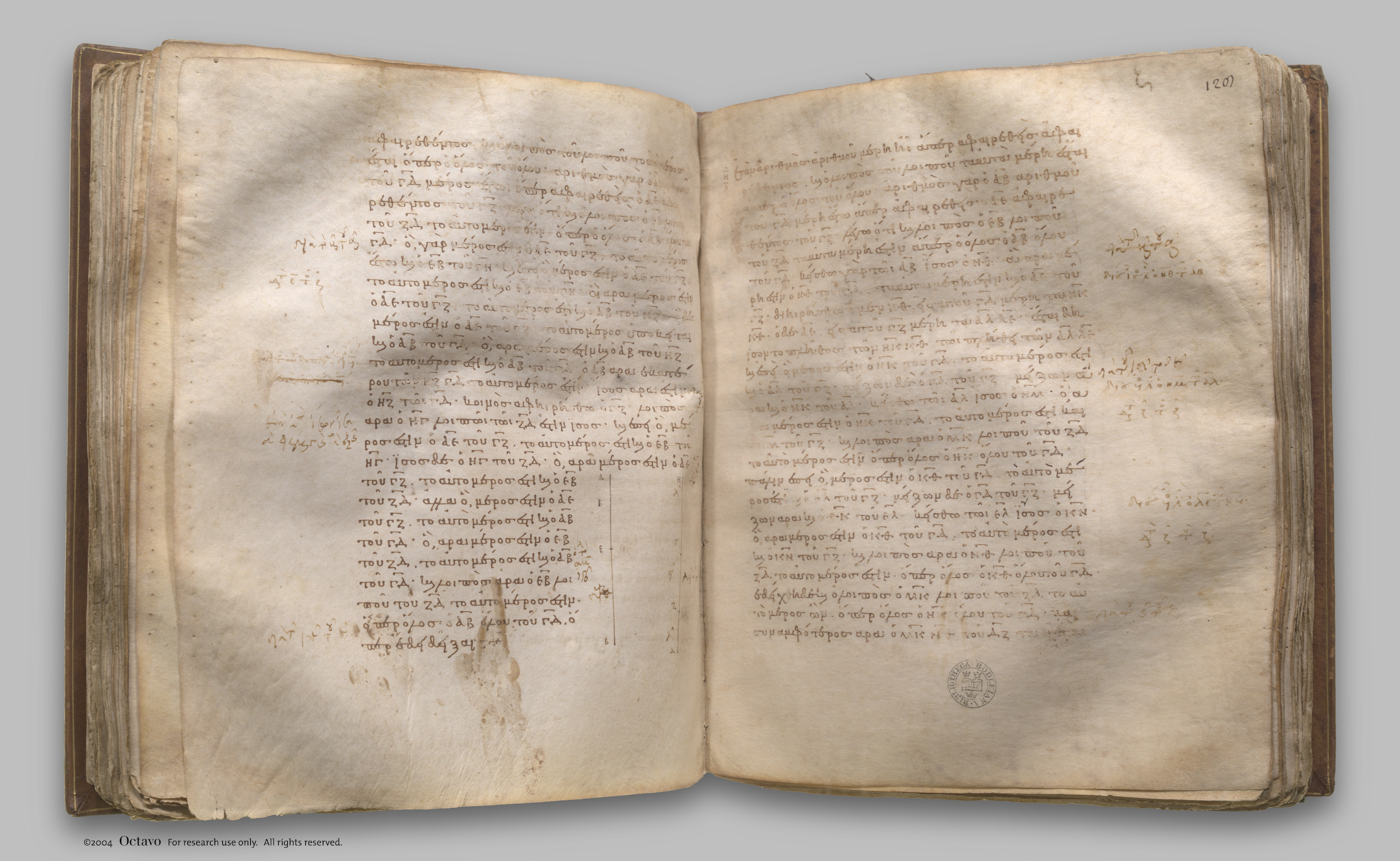
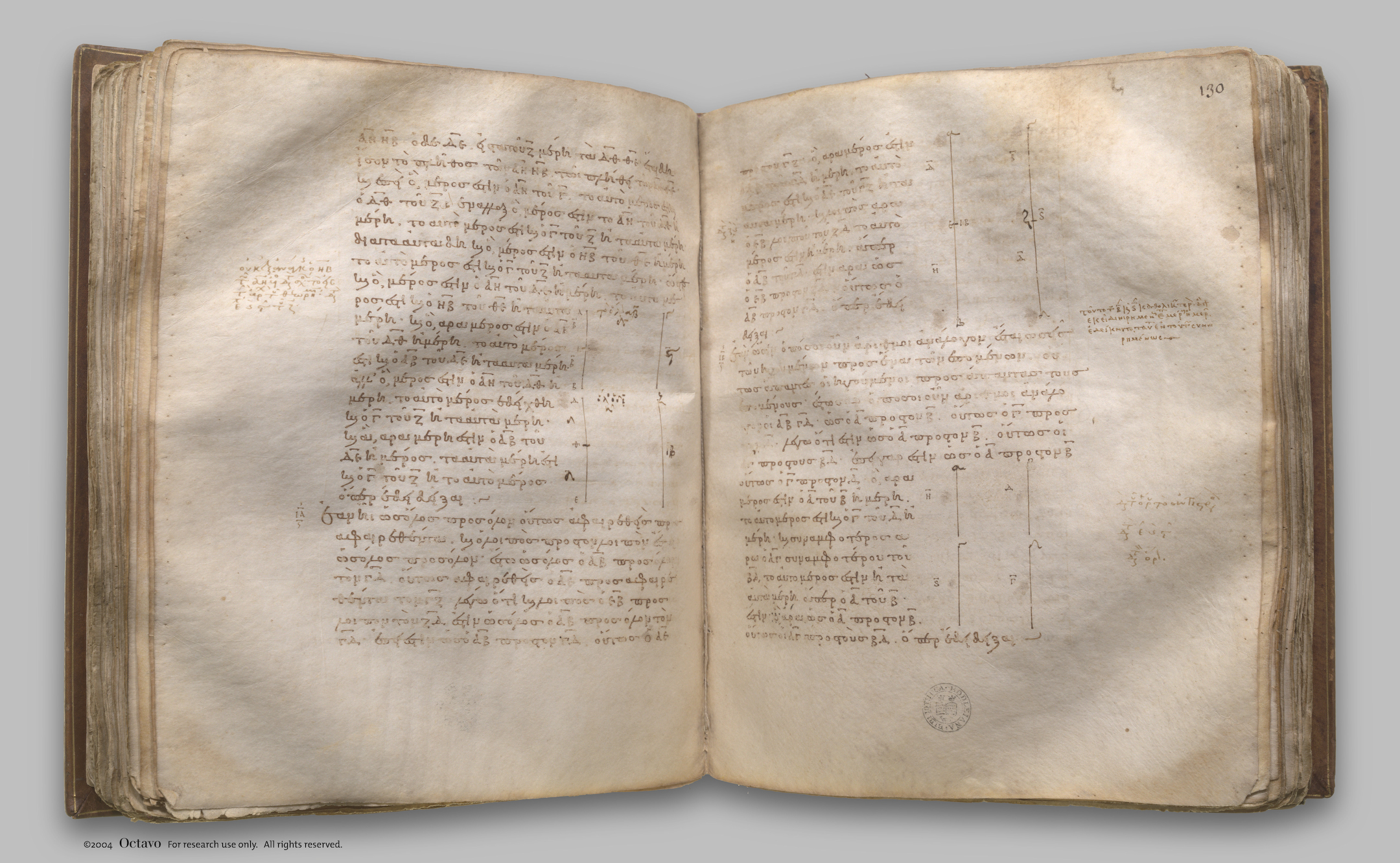
| elem.7.4 | Any number is either a part or parts of any number, the less of the greater. | f. 130 digilib |
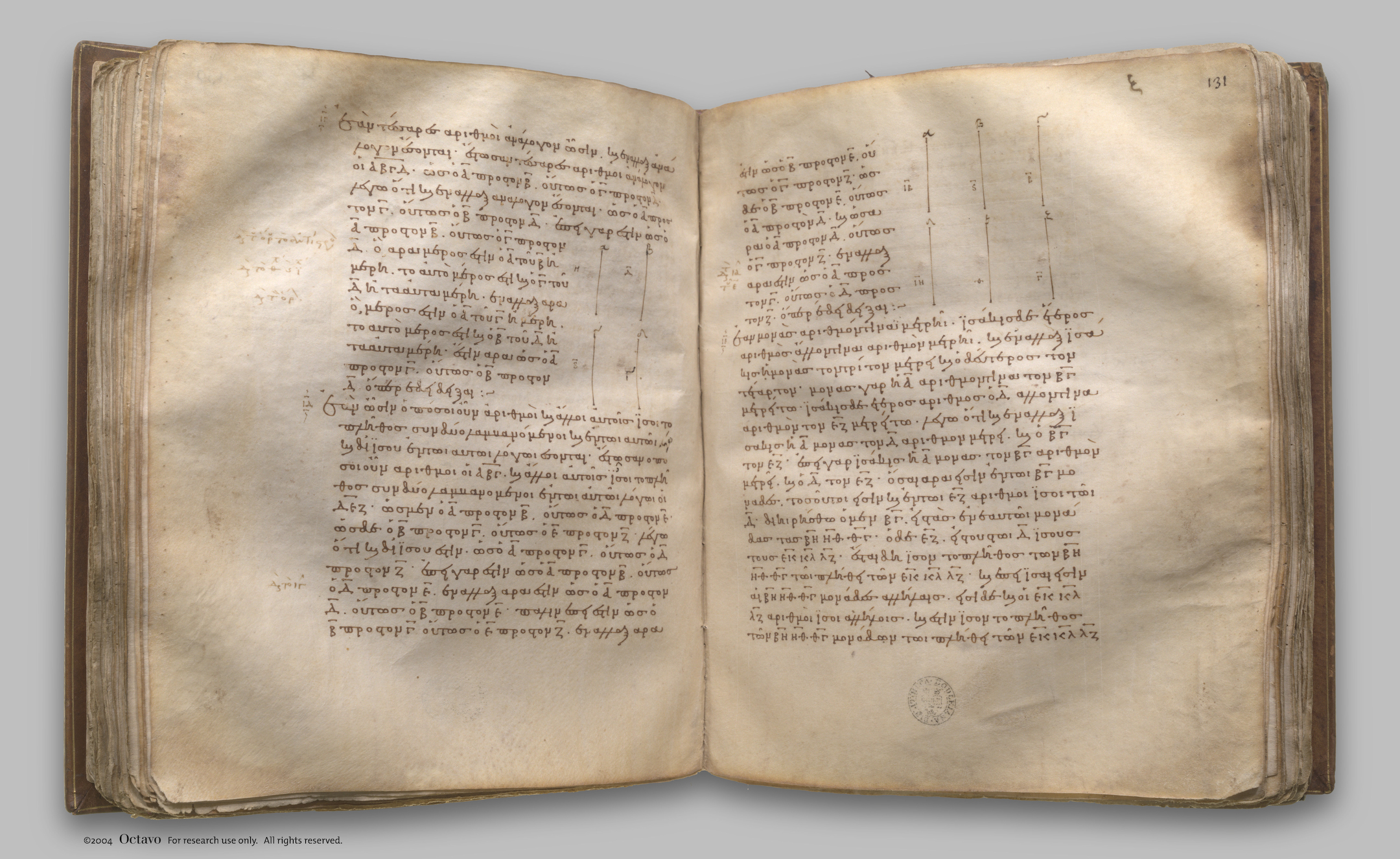
| elem.7.5 | If a number be a part of a number, and another be the same part of another, the sum will also be the same part of the sum that the one is of the one. | f. 131 digilib |
| elem.7.6 | If a number be parts of a number, and another be the same parts of another, the sum will also be the same parts of the sum that the one is of the one. | f. 131 digilib |
| elem.7.7 | If a number be that part of a number, which a number subtracted is of a number subtracted, the remainder will also be the same part of the remainder that the whole is of the whole. | f. 131 digilib |
| elem.7.8 | If a number be the same parts of a number that a number subtracted is of a number subtracted, the remainder will also be the same parts of the remainder that the whole is of the whole. | f. 132 digilib |
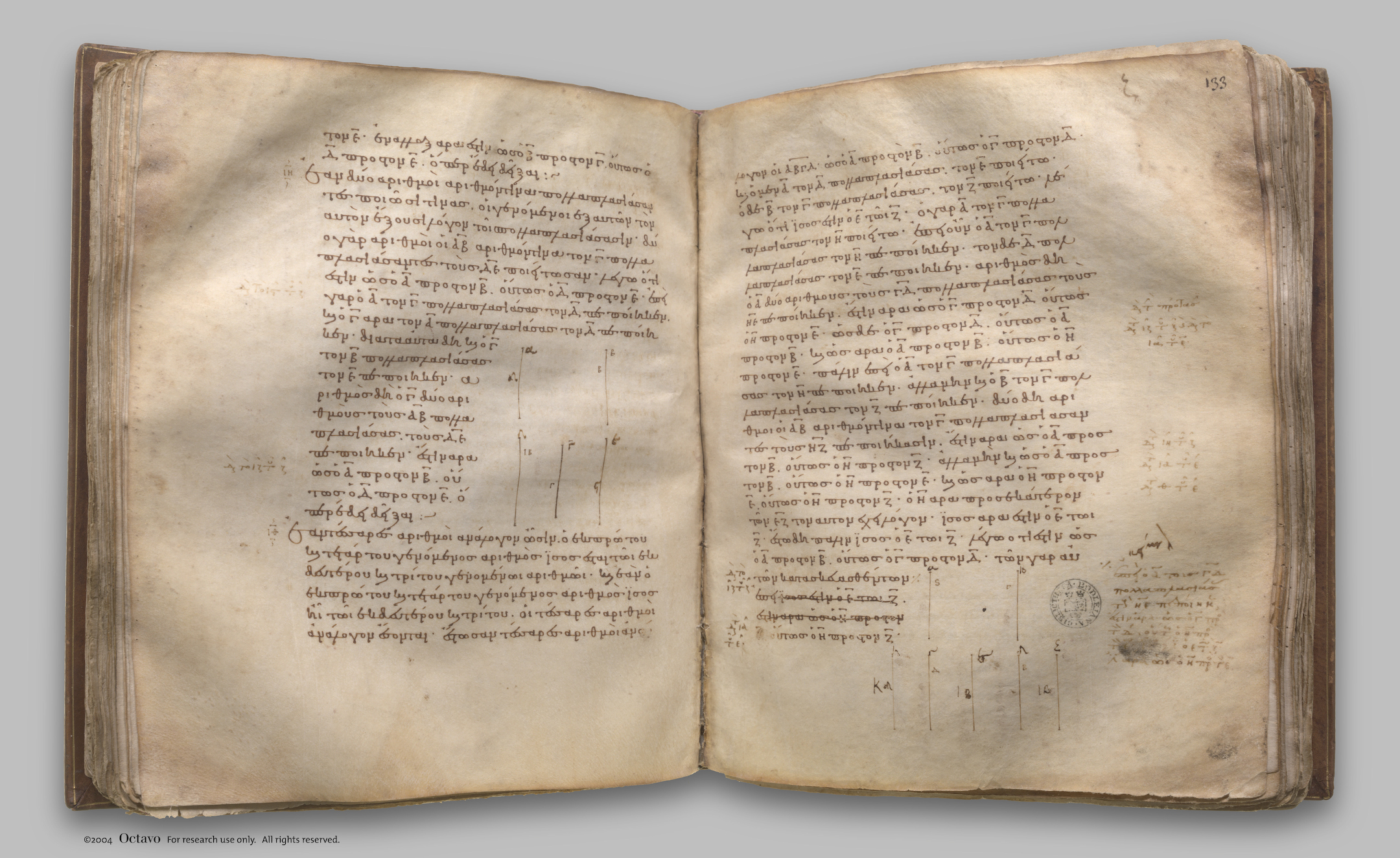
| elem.7.9 | If a number be a part of a number, and another be the same part of another, alternately also, whatever part or parts the first is of the third, the same part, or the same parts, will the second also be of the fourth. | f. 133 digilib |
| elem.7.10 | If a number be parts of a number, and another be the same parts of another, alternately also, whatever parts or part the first is of the third, the same parts or the same part will the second also be of the fourth. | f. 133 digilib |
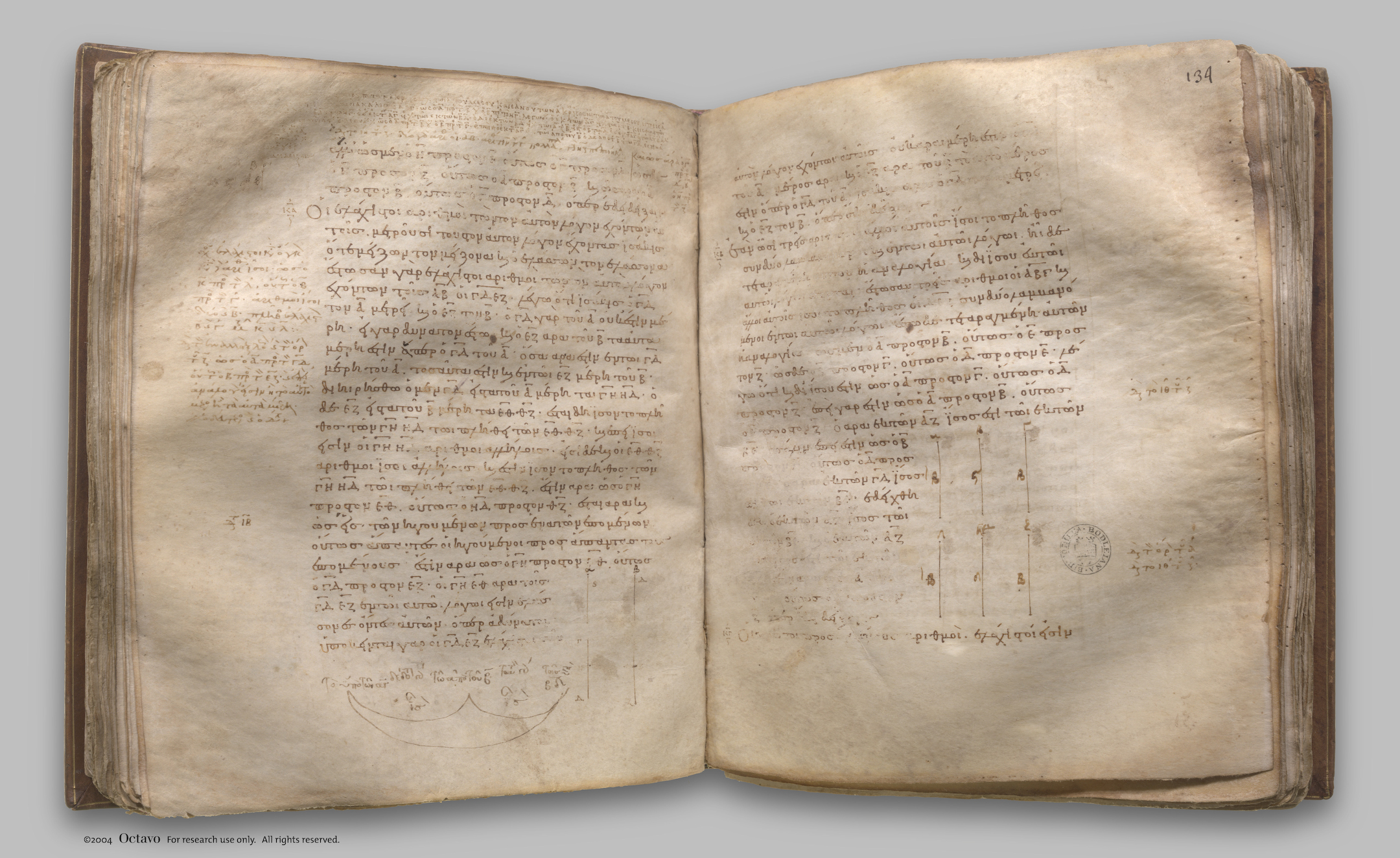
| elem.7.11 | If, as whole is to whole, so is a number subtracted to a number subtracted, the remainder will also be to the remainder as whole to whole. | f. 134 digilib |
| elem.7.12 | If there be as many numbers as we please in proportion, then, as one of the antecedents is to one of the consequents, so are all the antecedents to all the consequents. | f. 134 digilib |
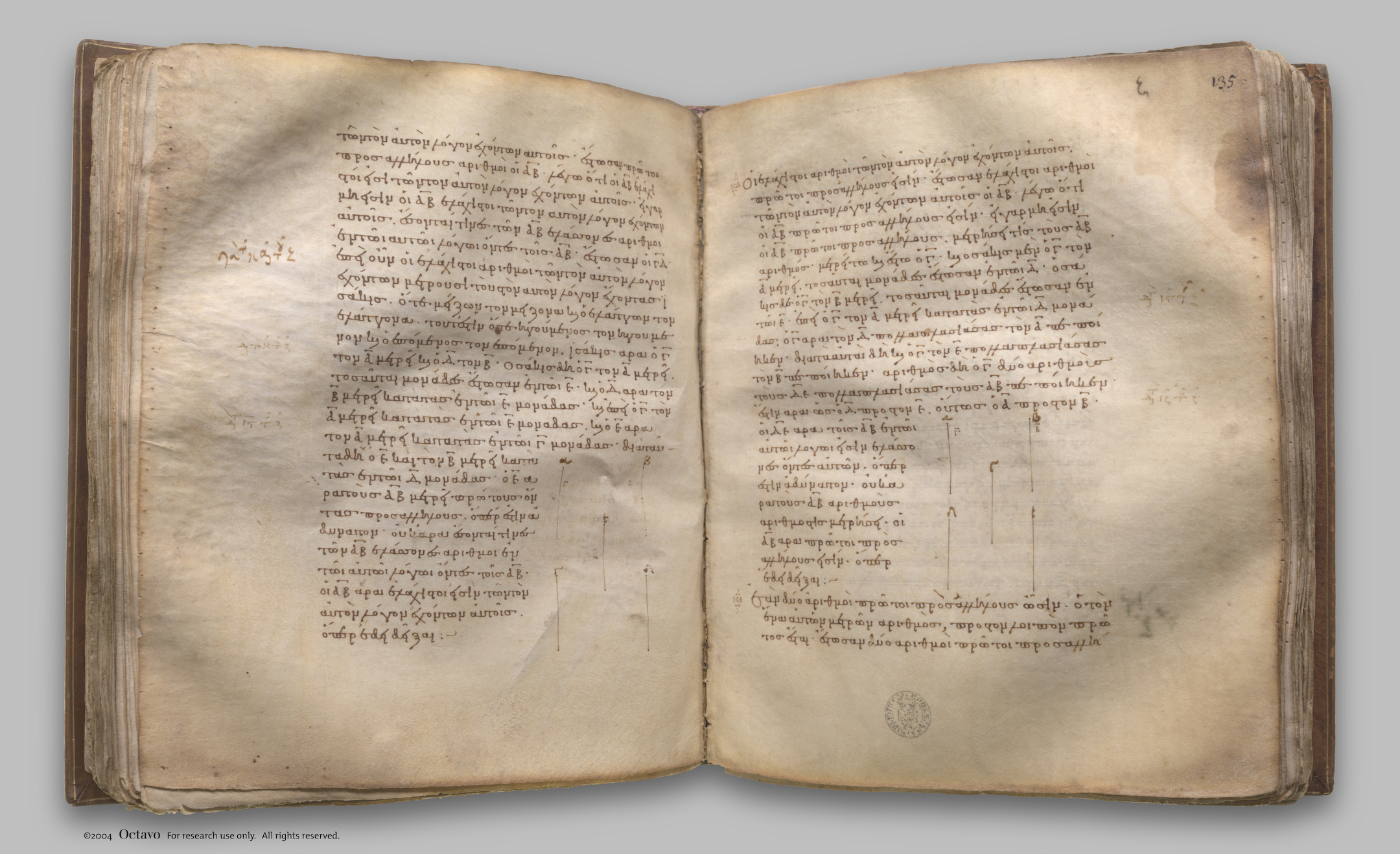
| elem.7.13 | If four numbers be proportional, they will also be proportional alternately. | f. 135 digilib |
| elem.7.14 | If there be as many numbers as we please, and others equal to them in multitude, which taken two and two are in the same ratio, they will also be in the same ratio ex aequali. | f. 135 digilib |
| elem.7.15 | If an unit measure any number, and another number measure any other number the same number of times, alternately also, the unit will measure the third number the same number of times that the second measures the fourth. | f. 135 digilib |
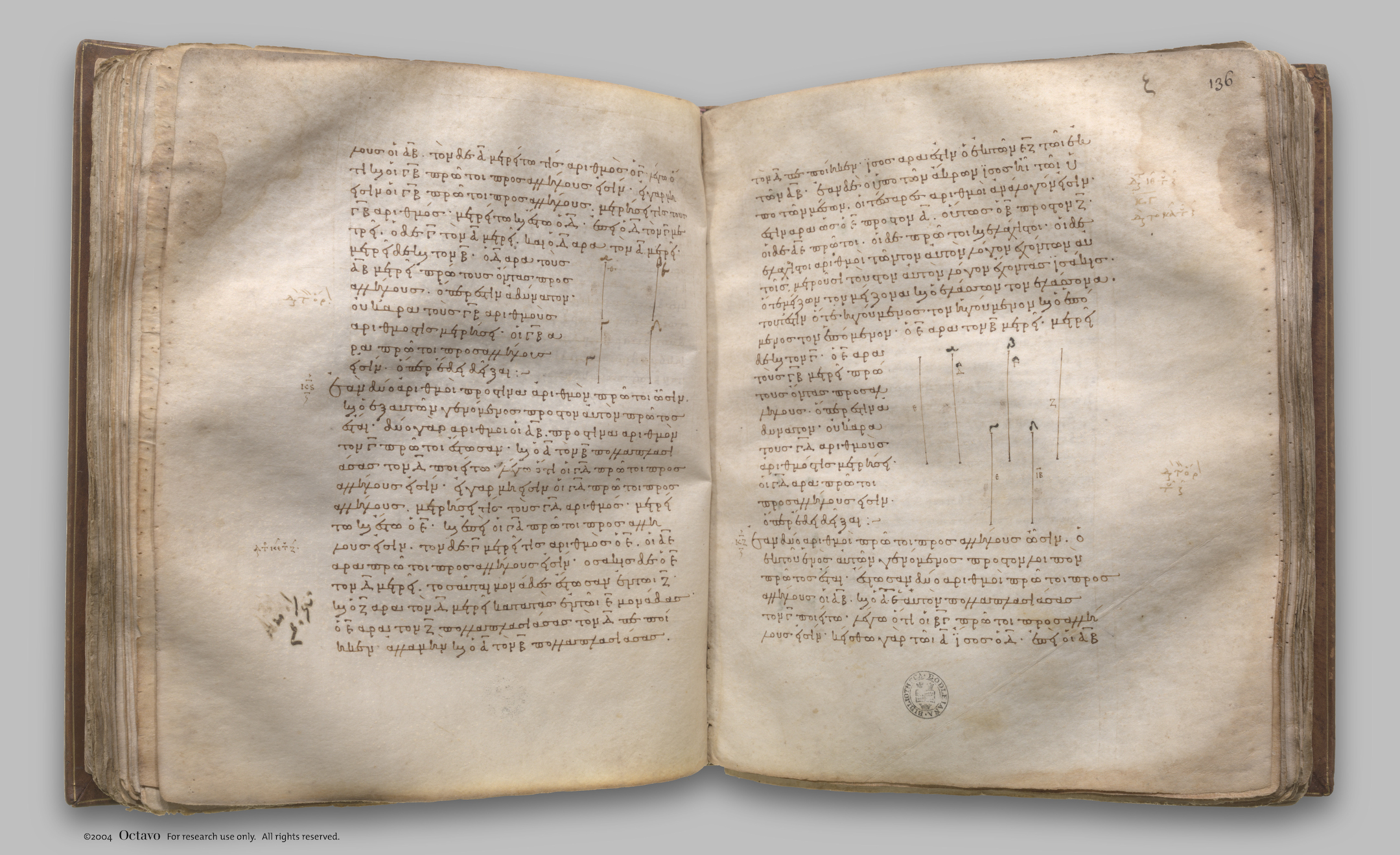
| elem.7.16 | If two numbers by multiplying one another make certain numbers, the numbers so produced will be equal to one another. | f. 136 digilib |
| elem.7.17 | If a number by multiplying two numbers make certain numbers, the numbers so produced will have the same ratio as the numbers multiplied. | f. 136 digilib |
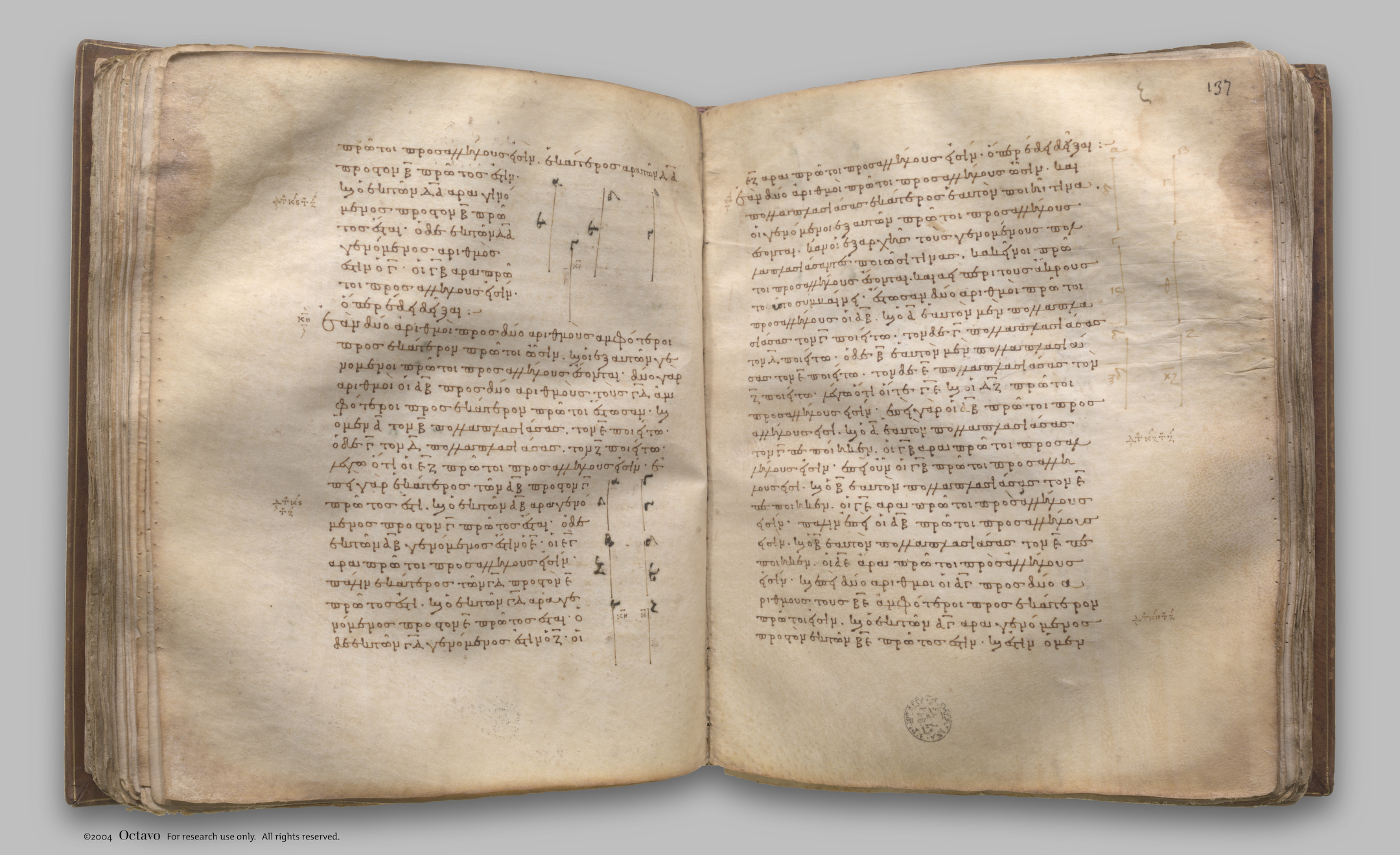
| elem.7.18 | If two numbers by multiplying any number make certain numbers, the numbers so produced will have the same ratio as the multipliers. | f. 137 digilib |
| elem.7.19 | If four numbers be proportional, the number produced from the first and fourth will be equal to the number produced from the second and third; and, if the number produced from the first and fourth be equal to that produced from the second and third, the four numbers will be proportional. | f. 137 digilib |
| elem.7.20 | The least numbers of those which have the same ratio with them measure those which have the same ratio the same number of times, the greater the greater and the less the less. | f. 138 digilib |
| elem.7.21 | Numbers prime to one another are the least of those which have the same ratio with them. | f. 138 digilib |
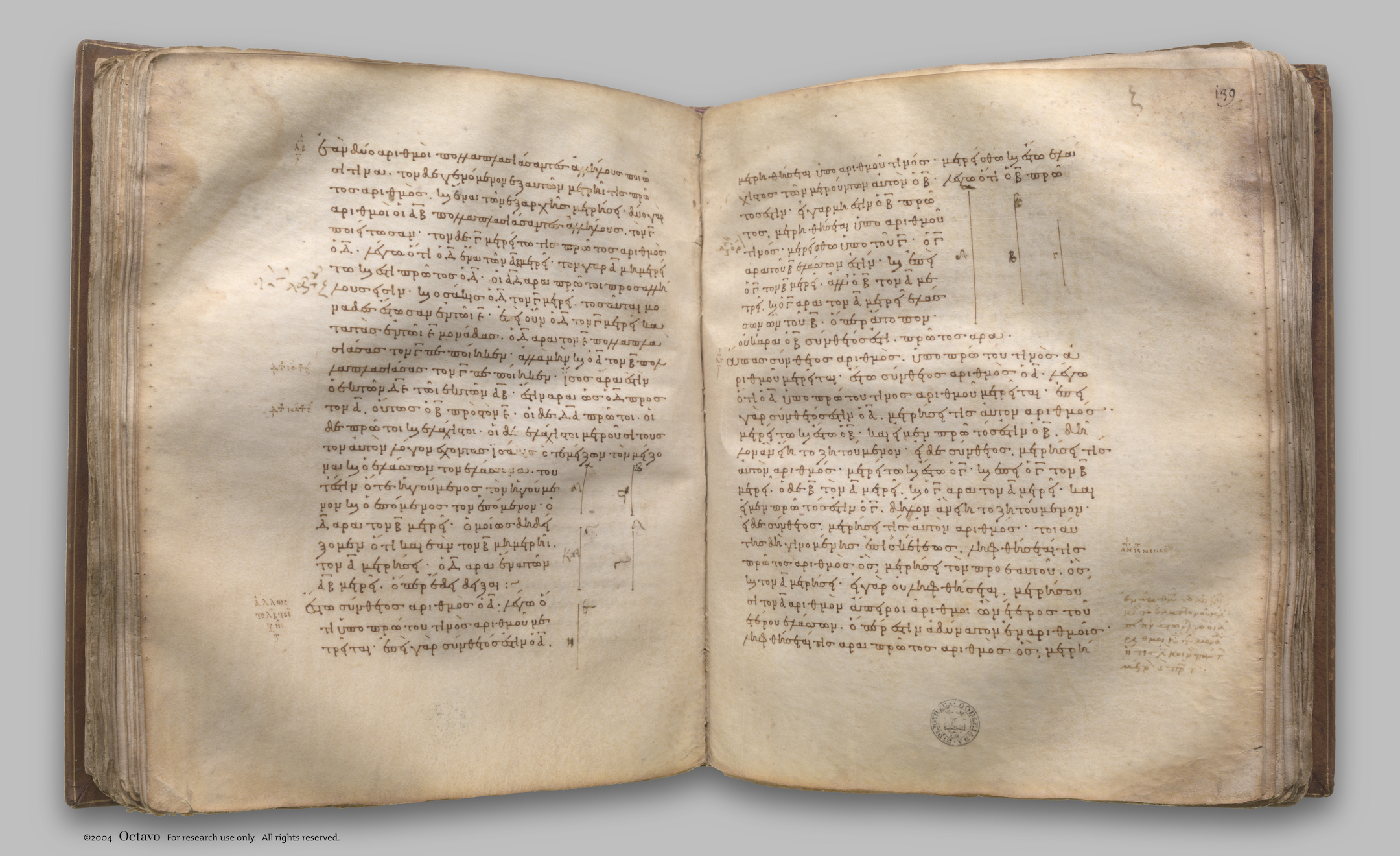
| elem.7.22 | The least numbers of those which have the same ratio with them are prime to one another. | f. 139 digilib |
| elem.7.23 | If two number be prime to one another, the number which measures the one of them will be prime to the remaining number. | f. 139 digilib |
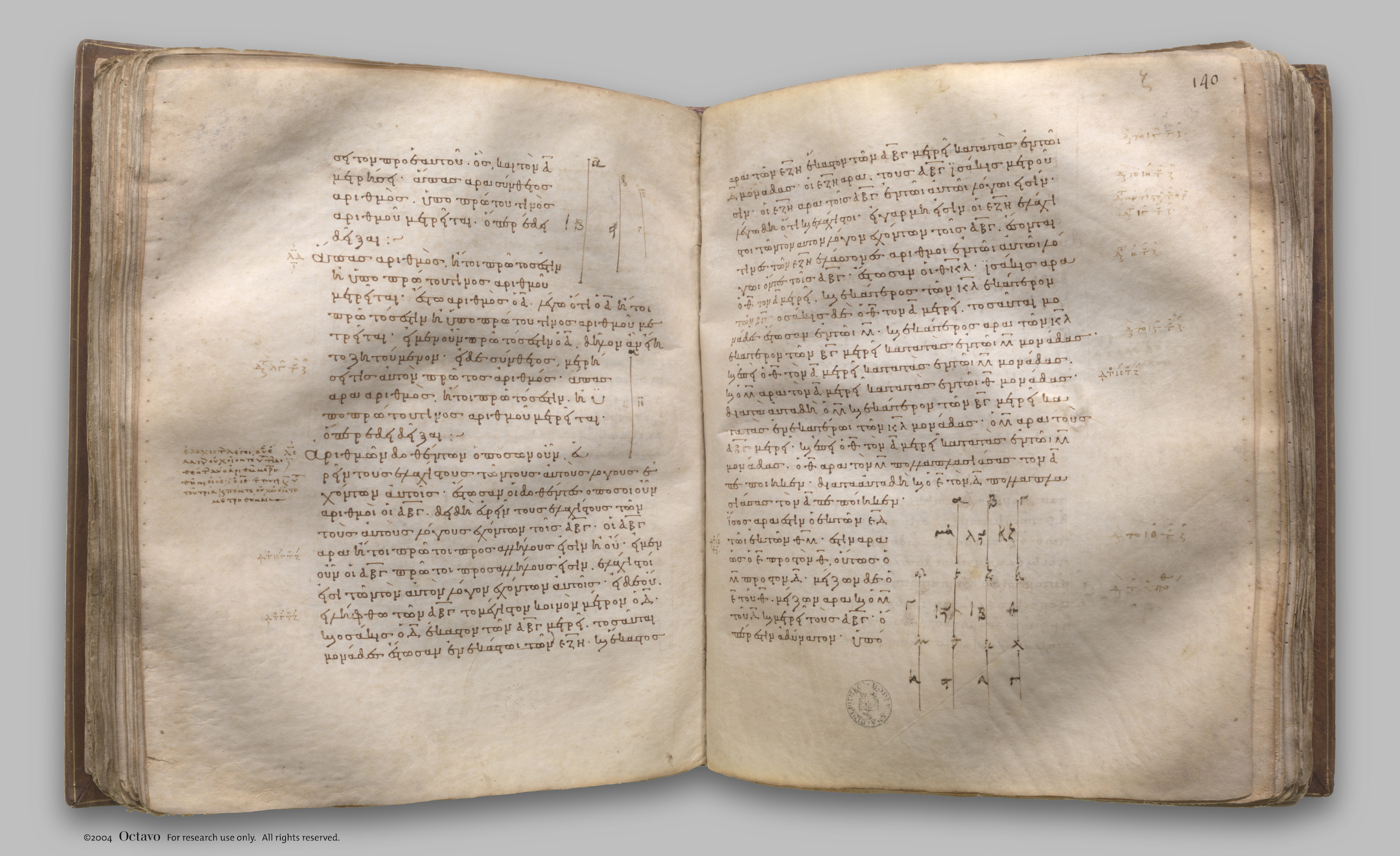
| elem.7.24 | If two numbers be prime to any number, their product also will be prime to the same. | f. 140 digilib |
| elem.7.25 | If two numbers be prime to one another, the product of one of them into itself will be prime to the remaining one. | f. 140 digilib |
| elem.7.26 | If two numbers be prime to two numbers, both to each, their products also will be prime to one another. | f. 141 digilib |
| elem.7.27 | If two numbers be prime to one another, and each by multiplying itself make a certain number, the products will be prime to one another; and, if the original numbers by multiplying the products make certain numbers, the latter will also be prime to one another [and this is always the case with the extremes]. | f. 141 digilib |
| elem.7.28 | If two numbers be prime to one another, the sum will also be prime to each of them; and, if the sum of two numbers be prime to any one of them, the original numbers will also be prime to one another. | f. 142 digilib |
| elem.7.29 | Any prime number is prime to any number which it does not measure. | f. 142 digilib |
| elem.7.30 | If two numbers by multiplying one another make some number, and any prime number measure the product, it will also measure one of the original numbers. | f. 143 digilib |
| elem.7.31 | Any composite number is measured by some prime number. | f. 143 digilib |
| elem.7.32 | Any number either is prime or is measured by some prime number. | f. 144 digilib |
| elem.7.33 | Given as many numbers as we please, to find the least of those which have the same ratio with them. | f. 144 digilib |
| elem.7.34 | Given two numbers, to find the least number which they measure. | f. 145 digilib |
| elem.7.35 | If two numbers measure any number, the least number measured by them will also measure the same. | f. 146 digilib |
| elem.7.36 | Given three numbers, to find the least number which they measure. | f. 146 digilib |
| elem.7.37 | If a number be measured by any number, the number which is measured will have a part called by the same name as the measuring number. | f. 147 digilib |
| elem.7.38 | If a number have any part whatever, it will be measured by a number called by the same name as the part. | f. 147 digilib |
| elem.7.39 | To find the number which is the least that will have given parts. | f. 147 digilib |
Clay Mathematics Institute Historical Archive
Published May 8, 2008. Copyright 2008, Clay Mathematics Institute
Proposition 7.3
You may also enter Greek text in the search box, e.g. cut and paste from the Greek text on this site.